Friday, August 16, 2024

The J-Drama Drop #34 (Part 1)

Not gonna lie, I'm feeling unprecedented levels of weird about my existence and my writing right now, but I've also been itching to write reviews again, so here I am! This round of The J-Drama Drop will be a two-parter, because I went from not having enough material to write about when I started watching one J-drama in November, to finding another J-drama I liked and also watching a bunch of films from Japanese Film Festival Online (JFF+) as 2024 progressed, to just recently finishing that second J-drama in August. (And by recently I mean Monday, as in four days ago.) So part 1 of this review will cover those two J-dramas (both of which are odd couple romantic comedies!), plus an honorable mention film about teen moms. Part 2 of this review will cover the JFF+ films.
 
マイ・セカンド・アオハル (My Second Aoharu/My Second Youth) - TBS, 2023
  • As a high school student in her hometown of Shizuoka, Sayako (Hirose Alice from 'Koi Nante, Honki de') initially wasn't interested in college because she figured she couldn't afford it, and because she felt a responsibility as the eldest of four children to help keep the family store afloat. Sayako's teacher helped her realize that she actually wanted to become an architect, but Sayako missed the university entrance exam when she got seriously injured on the way there. Still preferring not to be stuck in Shizuoka after high school graduation, she moved to Tokyo on a whim and worked for 11 years up to the present, just barely making ends meet with various non-permanent roles. But after a string of bad luck upon turning 30 (losing her wallet, her phone, and her office job, plus getting hit by a motorcyclist and seriously injured again while visiting Shizuoka), she's forced to move back in with her parents.
  •  Fortunately, the 1,000,000 yen that the motorcyclist gives Sayako as a form of atonement (currently the equivalent of $6,700 USD but used to equal $10,000 USD) is just enough to cover the admission fee and first year of tuition for her university of choice. That money, in addition to an encounter with a surly yet uplifting young stranger sporting a baby face, prompts her to finally pursue her dream of going to college as a 30-year-old freshman. This is her "second youth" that the show title refers to, with aoharu being an alternative and more literal reading of the word seishun (青春) meaning youth. Upon admission, Sayako moves into a sharehouse for architecture undergrads called "Sagrada Familia", where that baby-faced stranger happens to live too. This stranger is Taku (Michieda Shunsuke from 'Haha ni Naru'), a design genius and secret lovechild who resents following in his rich and famous architect father's footsteps.
  • After kissing in the sharehouse pool one night, Sayako and Taku agree to treat it like a one-off and act like it never happened so as not to disrupt their rapport as friends, but in the year to follow their feelings for each other only intensify. When Sayako tries to move out (because the sharehouse has a rule about kicking out housemates who date each other), Taku confronts her about it, they admit their feelings, and then they have sex. After the other housemates find out, the no-dating rule is eventually lifted. Nonetheless, Sayako and Taku reluctantly break up later when Taku receives a job offer in Switzerland; she doesn't want to be his excuse to miss out on this opportunity, and he doesn't want to keep her waiting on him when she could be progressing in her own career and starting a family with someone else. As the next two years pass, will Sayako and Taku get back together? And more importantly, despite being perceived as too old and unskilled for her dreams, will Sayako be able to establish herself as a professional architect like she's always wanted?
Meh: Full disclosure, it's literally been six months since I finished this series, so my notes and my memory may not be serving me well in this moment. But I honestly can't think of anything I genuinely dislike about this show. It's chill. It's cute but also grown. It taught me a few things about the field of architecture. No real complaints.

Better: I appreciate how 'My Second Aoharu' conveys the idea that architecture can comprise many different kinds of projects, from utilitarian and commonplace to artful and innovative, and that there's a difference between being able to design something new from scratch versus being able to renovate or revitalize something while still respecting its original use, structure, and integrity. Sayako gradually discovers that while she kinda sucks at designing from scratch, she thrives at improving upon what's already been built, which helps guide her toward what she wants to specialize in career-wise.
 
Speaking of Sayako, while I could imagine some viewers criticizing Hirose Alice's performance as "cringe" or too much, I was endlessly amused by her her ability to play such an awkward character and be unafraid of making ridiculous motions or facial expressions to achieve that. Plus switching so abruptly between that and acting normal, between light and serious, between inspired and devastated. Her range of expression is wide, believable, and well-timed.
 
I also couldn't help but notice that, similar to 'Unicorn ni Notte', this show tries to throw in some progressive representation here and there. There's an outspoken marginally plus size housemate (played by Yumena Yanai whom I follow on Instagram!) who wears a different wig every day, perhaps even in every scene she's in, and she's fabulous! I laughed at the randomness of her wig colors and styles, but the size of her body was never made to be a joke, and that was a relief. There's another housemate who's revealed to be gay (or at least somewhere on the queer spectrum) when he explains to Sayako that he initially had to move out of his parents' house because they would antagonize him for wearing makeup and even threw his makeup collection away.
 
Best: Thank GOODNESS that this older woman/younger man age gap relationship isn't as unsettling as the one portrayed in 'Shijuu kara'! I can appreciate a J-drama being a little different, taking some swings, and in hindsight I'm pretty sure that that show was trying to make viewers uncomfortable on purpose. I can appreciate weirdness that's intentional! But despite being a legal adult, the baby-faced young man in 'Shijuu kara' looked too much like an actual child for me to not be a little scarred for life from watching that show (no shade to Itagaki Rihito's performance, I'm sure he was doing his best). Conversely, Michieda Shunsuke as Taku reads much less like "child" and more like "moody but mature twenty-something who happens to have boyish charm", which makes a world of difference.

Eye Love You - TBS/Netflix, 2024
  • Twelve years ago, when Yuri went sea otter watching with her dad and almost drowned trying to save the otters from an oil leak, she came away from the accident with the ability to hear people's thoughts (心の声, kokoro no koe, "the voice of their hearts") when she makes eye contact with them. Hence the show's title, 'Eye Love You'. This becomes the only way she can communicate with her father (who had a stroke after saving her from drowning), because the injuries he sustained have left him alert but immobile in a hospital bed, with a permanent tracheotomy and an inability to speak.
  • Today, Yuri is the CEO of an eco-friendly company called Dolce & Chocolat which sells chocolate and coffee produced from recycled cacao husks. Her gift of telepathy is advantageous for anticipating customers' needs (making her business successful so she can afford her father's long-term care), but she is still notoriously reluctant to open up to people and has been unlucky in love. She founded this company with her no-nonsense best friend from college, Hanaoka, who is secretly in love with her, but in this series Yuri's love interest is actually a Korean wildlife conservation grad student named Tae-o (Chae Jong-hyeop). Tae-o is also a part-time food delivery person, and Yuri repeatedly encounters him when he delivers Korean food to her apartment. Like Yuri, he's also a foodie and a sea otter obsessive, and his expertise in environmental issues leads him to work at Dolce & Chocolat post-graduation. (Tae-o is initially recruited by Hanaoka without Yuri's knowledge, because Hanaoka handles hiring.) Yuri tries to keep things professional but Tae-o has already declared his feelings for her and is determined to woo her, so they eventually find a way to date discretely.
  • Yuri can hear Tae-o's thoughts but not understand them because she only speaks Japanese, meanwhile Tae-o speaks Korean, Japanese, and English. But rather than linguistic or cultural differences, what really threatens to tear them apart is the controversy surrounding Yuri's gift. Yuri is still scarred by the shame and rejection she faced in high school when she told her first and only boyfriend about her gift, and she'd rather find a way to relinquish her gift (and painfully risk never communicating with her father again) than jeopardize her relationship with Tae-o by telling him her truth. As for Tae-o, he receives repeated warnings about Yuri from two former neighbors from his childhood in Seoul: his grad school mentor and father figure (a professor who moved Tae-o to Japan with him when Tae-o's mother died), and a Korean Dolce & Chocolat investor who has the same gift as Yuri. This investor lady, named Ha Na, previously published a picture book about how people with their gift are cursed to be alone forever, because whoever they fall in love with will die. Believing this folklore to be true, the professor and Ha Na pressure Tae-o to break up with Yuri. Can these cross-cultural lovers find a way to stay together without Tae-o risking death or Yuri losing what makes her special?
Meh:  *Spoiler alert!* I was wondering how the show was going to resolve this dilemma, and while the resolution does allow Yuri and Tae-o to continue their relationship as they are, it also makes the entire dilemma seem like an overinflated waste of time. Because the whole thing about Yuri being cursed and Tae-o being in danger isn't even true! This "conflict" really just amounts to Ha Na projecting her grief onto everyone else (via the picture book and her direct attempts to intervene between Yuri and Tae-o), because she blamed herself for her college boyfriend's sudden death. All this, instead of asking his family or checking his medical records herself to see that he died from coronary artery disease! How is Hanaoka, a Japanese man who has only a business relationship with Ha Na and presumably no access to the Korean healthcare system, the one to explain this to her at the end of the series? It makes no sense to me.
 
Better: Such a strong first episode! If nothing else, Tae-o may be silly but he's also DIRECT, so by the end of episode 1 he's already decided he likes Yuri romantically and is asking her if she likes him too. And then for the show to turn around and reveal him to be the new intern at Yuri's company at the very last minute of that episode? Setting the stakes early and clearly. Bravo!
 
And how adorable are the handwritten notes that Yuri (as a customer) and Tae-o (as a delivery person) leave for each other outside Yuri's door? Tae-o even draws little cartoonish sea otters on the ones he leaves for her! The notes start with him recommending Korean restaurants and dishes that are better than what she's initially ordering, then progress to more. This mode of communication was especially endearing to me because I started watching 'Eye Love You' in the midst of finishing a romance novel called The Neighbor Favor, where a couple literally falls in love via email, before falling in love again in person as neighbors.
 
On a separate but related note, I respect how mature Hanaoka is about accepting that he's not the one for Yuri. He clocks that Yuri and Tae-o have something going on by episode 4, and after getting over whatever initial jealousy he feels, he's surprisingly supportive. Yuri doesn't even learn of his feelings for her until she reads his mind while he's in the middle of encouraging her to date Tae-o. (They're alone in her office, and Hanaoka points out that Dolce & Chocolat doesn't have a non-fraternization policy, subtly acknowledging that nearly everyone in the office knows that Yuri and Tae-o fancy each other and that it's fine if she wants to date Tae-o. At the same time, she hears him mentally trying to convince himself that he's okay with letting her go despite having always loved her.) Then in episode 6, at the end of a Hokkaido business trip when Hanaoka and Yuri are about to leave for Tokyo ahead of Tae-o (because Tae-o has distanced himself from Yuri, who's not ready to admit that she wants him as much as he wants her), Hanaoka is the one urging Yuri to stay and mend things with Tae-o before returning to Tokyo. As a manager it's his job to properly assess situations, and even when it comes to his unrequited love, Hanaoka is secure enough to accept the reality that Yuri will not love him back, and gracefully step aside so she can be happy with someone else. It takes so much self-awareness to quietly bow out like that, and even though he might remain in love with Yuri for a long time, he knows that's his own problem to deal with.
 
Best: Chae Jong-hyeop. Without a doubt. He not only has to act in two languages (mostly Japanese) in addition to his native Korean, but he has to make his charisma shine through in every single scene, no matter what language he's speaking. And he nails it! I started watching 'Eye Love You' for its premise alone, but I stuck around for Chae Jong-hyeop. My introduction to him (and my only other frame of reference for his acting) was the 2023 K-drama 'Castaway Diva', where he played a guarded but caring TV producer living under a false name after escaping from his abusive father. His performance in that was wonderful, but for his sake I was relieved to see him play a more carefree love interest this time.
 
I can only speak for myself, but this show must be a DREAM for linguists and other multilingual people like me! There's so much meat to intellectually chew on here! So much bilingual Japanese-Korean conversation happening, so many translation tools and methods being used! The fact that Yuri can't understand Tae-o's thoughts because he supposedly only thinks in Korean is such an interesting choice to make narratively because... does Tae-o not think out what he's going to say in Japanese before or as he speaks to her? I know it's not just me who does that when I'm speaking my other languages. Perhaps allowing Tae-o to think in multiple languages would complicate the show's premise too much and I'm overthinking this aspect of it, but it's still fascinating to consider what assertion or assumption the show might be making about people's (in)ability to think in more than one language. That assertion/assumption feels false to me, but it's still fun to think about. Speaking of Tae-o, even the subtitles provided for his character are intentional! I watched this show on Netflix, and for both the English and Japanese versions with subtitles (I checked), the show is selective with what Korean dialogue or voiceover is translated and what isn't. Most of Tae-o's thoughts go transcribed and untranslated, so just like Yuri viewers are left to guess the meaning based on the context of the scenes, or based on whatever Korean comprehension they may have (of which I only have a smattering from 15 years of watching K-dramas).

And I'm sure 'Eye Love You' is a treat for folklorists too, because the show lays out some intriguing (even if slightly underdeveloped) threads about how myths are made/created/passed on, while linking ancient Ainu legends in Hokkaido with Ha Na's book in Seoul and Yuri's own experience in Tokyo.

Lastly, I was so touched by the show's use of coffee and chocolate as metaphors for our ability to respond to life by making situations bitter or sweet, depending on the choices we make and the perspectives we take. This is something that Yuri's dad (who used to be a chef) taught her as a child when he would serve her coffee and chocolate together at his restaurant, and in adulthood it remains a guiding principle that Yuri references in her personal life and her business. (Coffee and chocolate come from different plants, but cacao can still be used to make both, which Yuri's company does.)

Honorable Mention: 朝が来る (Asa ga Kuru/Morning Comes/True Mothers) - 2020
 
I watched this film on Kanopy on a whim back in March, and didn't take any notes because this was going to be one of those "just for me" watches. But after watching so many Japanese films through JFF+ that I plan to tackle in part 2 of this review, I feel it necessary not to leave this one out. In 'True Mothers', the Kuriharas are a couple who dealt with fertility issues before adopting a newborn son named Asato, and who are dealing with Asato's alleged behavioral issues at school now, when they're suddenly called and then visited by a disheveled young woman claiming to be the little boy's birth mother Hikari. At first she claims to want her son back, and then threatens to expose the fact that Asato isn't their biological son if they don't give her money. The Kuriaharas stand firm, and don't believe that she is who she says.
 
I needed to include 'True Mothers' in this review because I am still enthralled by how director Naomi Kawase plays with perspective! You think the film is going to be about this couple handling the unfair nuisance and intrusion of this young woman. But then most of the film turns out to be a flashback of Hikari's life: how she was impregnated by her very first boyfriend at 14, how her reputation-obsessed family quietly shuffled her away to a temporary home for expecting and ill-equipped teen moms in Hiroshima, how she struggled to survive on her own in Tokyo after having Asato and dropping out of school and escaping her family for good, and what led her to reach out to the Kuriharas now. This switcheroo reminds me so much of Kiana Davenport's novel Song of the Exile, which uses an international wartime romance as a cover for a more excruciating and confrontational story about "comfort women" being victimized by imperial Japanese forces during World War II, and the ongoing colonization of Hawaii as U.S. statehood loomed. I also felt similarly okey-doked (in the best way) by Bernice McFadden's novel Nowhere Is a Place, where an estranged mother-daughter road trip story transitions into a detailed history of the impact slavery and assault have had on generations of women in their family. But I digress. My point is that, of course the Kuriharas don't recognize Hikari as the quiet, polite, innocent-looking girl they met when they first adopted Asato, because life has been beating Hikari's behind ever since then! Her approaching them might be impulsive and self-centered, but she's still in desperate need of their compassion.

I've still got a bunch of other films to talk about! Check out part 2 of this review here!

Monday, February 26, 2024

BOOKS! (Just for the Cameras + The School for Good Mothers)

(Happy New Year, I guess? February is almost over, my grandpa is still dead, and nothing makes sense, but sure, Happy New Year to you and yours. This is my first post of 2024, after all.)

One of my goals for 2024 has been to get back to reading two books a month and writing one book review a month like I used to do, and sure I've already missed January, but a girl can still keep hope alive, can she not? So here I am reviewing the first book I purchased in 2023, and the first book I've finished in 2024. That's my only rationale for pairing them together. First up, a softhearted raunchfest of a romance novel about three queer British Nigerian roommates in Manchester (comprised of a sex worker couple and their best friend), who eventually become a polyamorous unit after filming videos together. And then, an emotionally torturous but necessary debut novel with flecks of dark humor, about a Chinese American mom in Philadelphia who's forced into a new tech and surveillance-obsessed parenting program for a year, after unintentionally leaving her toddler at home alone for two hours. 

Just for the Cameras by Viano Oniomoh
 
When I wrote my review for Sweet Vengeance, Just for the Cameras was her newest release. I declared back then that I'd be reading Viano Oniomoh's next book as soon as I could get my hands on it, and was I lying? I surely was not! I ordered this novel in October and started reading it in November, but we all know how November turned out for me. So I ended up finishing this romance novel  in January.

The romantic leads of Just for the Cameras are three British Nigerian twenty-somethings in Manchester, England. Luka (a demisexual biromantic photographer) has been friends and roommates with Kian (a bisexual interior designer and sex worker) and Jordanne (also a bisexual sex worker) for years, and their supportive presence was instrumental in helping Luka recover from being left at the altar by his ex-fiancée Dolores. (Which was unintentionally hilarious to me because the name Dolores literally means "pain" or "sorrow." Like, you know... might've predicted that one. But I digress.)  While Luka isn't necessarily heartbroken anymore, being jilted in such an abrupt way, in addition to a lifetime of emotional manipulation and neglect by his parents, have only worsened his fear of abandonment and the sense that he is undeserving of love.
 
What Luka doesn't know is that Jordanne and Kianwho are in a committed relationship and generate most of their income from making sexual content togetherhave secretly been in love with him for ages, but they keep their affections for him confined to the realm of fantasy. When they have sex they fantasize about Luka being in the room, at first unaware, but then noticing them, watching them, responding to them, joining them, ordering them around...  But of course they would never actually put their friend in that situation. Luka respects what they do, and they respect him by cleaning up after themselves when they use common areas of the apartment to record, but Luka has never seen any of their videos, much less expressed any interested in getting involved with them on or off camera. Until Luka comes home early one day, walks in on Jordanne and Kian having sex on the living room sofa, and aroused curiosity wins out over embarrassment for all three of them. So much so, that after the couple mentions wanting to shoot some voyeurism scenes to reinvigorate their content, Luka shocks them by volunteering to play their voyeur and see how it goes. 
 
The trio agrees to collaborate on just one video, but wind up shooting three, each beginning with Jordanne and Kian trying to discretely do the do under a blanket or bed covers when Luka enters the scene. With each video Luka becomes a progressively more active and authoritative participant, and by the end of the third filming they're all tangled in bed together. The videos are a massive hit with Jordanne and Kian's subscribers, and the roommates' desires for each other have been set ablaze, but every moment of increased intimacy between the trio (on and off camera) is followed by Luka getting shy and distancing himself from the other two. Despite how desperately he yearns to be closer to them, he can't allow himself to believe that his best friends' interest in him ventures beyond no-strings physical interactions. Even after the couple eventually invites him to join their relationship, which Luka immediately accepts, his impulse to run away remains strong. All the while, as Luka agonizes over whether Jordanne and Kian truly want to be with him or not, Kian and Jordanne agonize over scaring him away by coming on too strong. Can this trio of overthinking and overly considerate individuals turn "just one more time" into something that lasts?

As someone who also needs an inordinate amount of reassurance but usually resists asking for it, I connected with Luka as a character right away. What also endeared me to him was his burgeoning ability to allow himself to want things for simple reasons that don't need expounding or interrogation. He's risk-averse and constantly catastrophizing, but he also sports rose tattoo sleeves that he had done simply because he likes pretty things. He's a demisexual babe who's been detached from feeling desire or arousal since his break-up, and he's terrified of being rejected by his roommates, but he also chooses to do porn with them simply because he wants to. (And because they're hot! Props to Viano Oniomoh for writing a romance novel about Black people who are unambiguously big and also hot! Jordanne is fat. Kian is fat. Luka is thick-bodied with abs. They all find each other endlessly sexy. Bravo!) My review thus far has focused mostly on Luka, but Just for the Cameras provides some meaty backstory for Jordanne and Kian as well. Jordanne was disowned by her parents when an ex-boyfriend outed her for doing sex work, and she stumbled through learning to trust and rely on people when she started dating Kian, so they both have an abundance of patience for Luka's fear-induced flightiness. They never tire of having to keep reassuring him that their affection for him is real and true, that they want him to feel safe and secure with them, and I found such tirelessness remarkable. 
 
I was also impressed by the pride that Jordanne and Kian take in their work. Having sex on camera for money is both not a big deal (nothing to be ashamed of), and also an integral form of expression for them. They do porn because they genuinely enjoy it, and because it pays! They have control over how their content is made and distributed, and they earn more than enough from their videos to sustain themselveseven enough for Kian to quit his job at an architectural firm, which he later does because he hates that job. Plus, getting featured as the cover story of a Black erotic magazine helps Jordanne reaffirm how integral sex work is to her purpose of destigmatizing Black women's desires. And this destigmatization is evident within their community too. Most of their close friends are also Black queer sex workers. By the end of the novel, Jordanne and Kian have each spoken clearly to their respective (very traditional, very Nigerian) parents about their commitment to doing sex work full time, and all of the parents respect Jordanne and Kian's choices with astonishingly little judgment. (Except for Jordanne's dad, who's a lost cause.) And while Luka is reluctant to claim the title of "sex worker" by the end of the novel, he's still continuing to film videos with is boyfriend and girlfriend and get paid from them too, since Jordanne and Kian always insisted that he receive his cut, even from the very first video they collaborated on.

Just for the Cameras can feel only the slightest bit long, but I actually commend that Oniomoh takes her time laying the foundation for exactly how and why Luka becomes comfortable with joining Jordanne and Kian's relationship, and how their polyamorous arrangement morphs into a new relationship all its own. Rebekah Weatherspoon's Harbor is the only other romance novel about Black polyamorous people that I have to compare JFTC with, and there are some notable differences. First, where Harbor has a woman joining a relationship between two men, JFTC has a man joining a relationship between a man and a woman. That progression happens more quickly and with comparatively less emotional back-and-forth in Harbor; since that trio's main priority at the outset is having their kinky needs met, there's more hashing out terms and consent than reflecting endlessly on feelings. Whereas in JFTC, while the trio is also somewhat kinky, their main priority is doing everything possible to not jeopardize their pre-established friendship. Also, while in both novels a casual sexual arrangement transforms into a fully-committed union by the end of the story, in JFTC it's clear that despite attempts at denial, each member of the trio yearns for a deeply romantic three-person relationship with each other from the beginning. If someone were wondering which book to try first to learn about polyamory, I suppose it would depend on what that someone is looking for. Harbor focuses more on recovering from grief and is more informative about BDSM rules and expectations, while Just for the Cameras is more sentimental in a mushy kind of way and gives a behind-the-scenes perspective on how porn creators live.
 
Looking at Oniomoh's work alone, between the two novels of hers that I've read so far, Just for the Cameras comes in second for me. Sweet Vengeance is more tightly written, plus it'll always have that indirect "Demon 79" ('Black Mirror') connection in its favor because of how I discovered it. But make no mistake, Just for the Cameras is way too lovely to pass up, especially for readers who can handle the raunch that it's serving. And as usual, Oniomoh wrote, self-published, illustrated the cover, and designed the pages for this book herself. If you're interested in Black romance novels, examples of Black polyamory, exceedingly explicit sex scenes, healing from shame and trauma, the (independent) sex industry, Black people in Britain, or adult children asserting agency in their relationships with their parents, then read this book!

Favorite quotes:
"Stretch marks decorated their bellies, thighs and hips like pretty, pale firebolts zigzagging against their dark skin" (58).
 
"It overwhelmed her, the thought of itLuka dating them. Both of them. All of them dating each other. It made her feel like she couldn't breathe, like she was flying so high in the sky she'd met the vastness of space; limited and infinite at the same time... When she'd first realised she loved Kian, she'd never thought she'd love anyone else the way she loved him. Down to her soul, she'd thought, this is it. This is the love everyone's been talking about. I finally get it. I finally understand.
 
Now, here she was, doubled up on the very love people had sworn to her happened only once in a lifetime" (107-108).
 
"It's natural, considering everything you've been through, to want to ruin something good when you finally have it... But your anxiety and your trauma are lying to you. They're telling you this good thing is surely too good to be true, that you should probably save yourself before you get hurt, using your previous history as apparent proof. But most times, oftentimes, they're just flat-out wrong... Sometimes, a good thing is simply a good thing" (255).
 
"I know this is going to be difficult, but here's an assignment. For this weekend, and this weekend only, I want you to let yourself have this. Every gesture, every kiss, every intimate momentput all of yourself into it. Give yourself permission to be happy, for just this one weekend. Pretend you're in a time capsule, if you must, and nothing of the past or the future matters. Just you, in precious moments with your partners. Can you do that for me?" (255).

The School for Good Mothers by Jessamine Chan
 
I can't remember how this novel got on my radar, but it was on my book list for a while, and then I happened to spot it at Costco in early 2023. Now mind you, Costco used to have an unexpectedly robust book section. I found Giovanni's Room, my first James Baldwin novel (and perhaps his gayest one) at Costco. I found Pachinko at Costco. But at some point, probably around the election of 45, the book section got whittled down to "stuff Republicans would read" (how I joke about it with my mom now). So although my copy of this book was printed with a permanent sticker endorsement from a certain Republican president's daughter turned news correspondent on the front cover, I was pleasantly surprised to find The School for Good Mothers at Costco that day. Who let something so progressive, so transgressive, slip onto the display? To whomever was or wasn't doing their job and allowed that to happen, I am thankful. 
 
At the beginning of this novel, depressed 39-year-old Frida Liu is divorced, a single mother, and living in Philadelphia, despite never expecting to be any of those things. Originally raised by Chinese professor parents in the Chicago area, she gave up her career and social life in New York City to move to Philly because her (white) husband Gust wanted to, only for him to begin an affair with a (younger, richer, also white) woman named Susanna while Frida was pregnant with her and Gust's first child. Gust fully left Frida for Susanna when said child (named Harriet) was still a newborn. Which is to say that in the 18 months that Harriet has been alive, Frida has had adapt to an incredibly difficult reality—renting a house for just herself and Harriet, splitting custody with her ex-husband, receiving a paltry $500 per month in child support, and writing full-time for an old and unaccommodating Wharton business professor. One early September day, after a string of consecutively stressful and sleepless nights trying to meet an article deadline while tending to Harriet's non-stop crying due to an ear infection, Frida is desperate for air. So leaves she places Harriet in an ExerSaucer so she can quickly go get coffee and retrieve some notes from her office. But this excursion unintentionally lasts two and a half hours, which is long enough for a neighbor to call the police, for police to seize Harriet and place her in Gust (and Susanna's) custody after interrogating Frida, and for a cold-blooded social worker to further chastise Frida before informing her that it'll take at least 60 days for a decision to be made about her revised custody rights (or lack thereof). All this because of one "very bad day," as Frida will frequently refer to it.

And unfortunately for Frida, timing is not on her side. After the deaths of two children under their watch, Child Protective Services is now trying to cover its own behind by implementing new, extreme, yet mysterious policy changes. These changes put an even crueler onus on parents (especially mothers) to prove that they don't deserve to be criminalized and permanently stripped of their parental rights, even for relatively minor missteps. It's like in the 80s when the US started militarizing the police force with war-standard gear and guns and tanks, except CPS is being militarized with technology. Frida submits to 10 weeks of violently invasive surveillance (cameras in her home, phone activity monitored), severely limited visits with Harriet that are supervised by the aforementioned hostile social worker, and interviews with a court-appointed psychologist. But this merely enables the cops, the CPS surveillance people, the social worker, and the psychologist to each use their findings against Frida, framing and interpreting her every behavior in the most unforgiving ways, in order to paint her as an irredeemably unfit mother. Based on these findings, the family court judge gives Frida the "choice" of attending a new year-long "rehabilitation" program that bad moms are currently being funneled into. If she succeeds at improving as a mother, she just might get her daughter back. (This is the titular School for Good Mothers, but in the book it has no specified name. I'll refer to it as TSFGM anyway.) Philly is hosting the pilot of this program, which will later expand nationwide. And since it begins in November, Frida and her hundreds of peers will miss Thanksgiving with their children along with all other holidays, birthdays, and milestones to come for the next year.

The school is a former liberal arts college campus turned quasi-prison. Frida and her peers are repeatedly told they're not in prison, but in some ways it's the same or even worse. They all must wear the same uniform, and can't receive care packages or letters. They're each limited to one 10-minute video call with their children per week. The campus is surrounded by an electrified fence. And they have the constant threat of the termination of their parental rights held over their heads. If they don't convince the state that they've sufficiently unbecome themselves and improved their parenting by the end of the program? Termination. If they get expelled from the program? Termination. Quit the program? Termination. Possess or use drugs or alcohol during the program? Termination. If they ever tell anyone anything about the program, even long after they've completed it, even if their full parental rights have been restored? Termination, and a spot on the Negligent Parent Registry, which has the same tracking and consequences as the sex offender registry but specifically for bad parents. (The moms are even required to sign NDAs, so as arrogant as the powers that be are about this supposedly groundbreaking program, those powers are serious about preventing any details about it from getting out to the public.)  Frida and her fellow moms are basically in a state-mandated hostage situation. 
 
Aside from her roommates, Frida spends most of her time in class with four other inmates mothers who have toddler daughters just like she does. The two instructors assigned to retool and evaluate this class's mothering neither have children themselves, nor offer any credentials that would attest to expertise in childhood development, child and maternal health, or parenting. The main fixture of these classes are "dolls" (or "demon robot doll children", as I often referred to them in my notes) that have been manufactured to be as lifelike as robotics and artificial intelligence will allow. These dolls are the main tool with which the moms' mothering skills are measured, and they're designed to, however vaguely, resemble every mom's real child in both age and appearance. With cameras in their eyeballs, the dolls also serve as an additional layer of surveillance on top of all the other forms of monitoring that the moms are subjected to. Frida names her Eurasian robot toddler Emmanuelle. 
 
The school operates on the notion that there's only one way to be a good mom, and despite incorporating such advanced technology, the standards for womanhood and motherhood that the school insists upon are stuck in the 1950s to an absurd degree. I recently watched 'Fellow Travelers' (a 2023 miniseries about closeted gay men working on Capitol Hill during the Red and Lavender Scares), so that era was fresh in my mind as I finished The School for Good Mothers. And I remember telling my therapist how I usually avoid thinking about the 1950s because it seems like after the Great Depression and WW2, (white) America was desperate to reaffirm itself, so the most stringent ideals for true Americanness and moral superiority reigned supreme. Which only fostered more suffering. TSFGM is no different in its capacity to foster suffering, to require it in order for the moms to redeem themselves, and yet insist that making them suffer is not the point. I'll let you discover the inane, reductive curriculum and all its subsequent horrors for yourself, since I'm sure Jessamine Chan put a lot into laying them out the way she did. But consider the following as indicators. 
 
The first mom to quit is Helen, a 50-something white woman and Frida's initial roommate, who quits on the second day after being freaked out by the demon robot dolls; she's genuinely frightened by the six-foot doll she's assigned as a stand-in for her teenage son. The first mom to be expelled is Lucretia, a Black schoolteacher, one of Frida's classmates, and Frida's first friend at the school. In addition to already being required to reimburse the school for her doll "dying" from water damage after insisting on playing in the snow (a debt Lucretia absolutely cannot afford), Lucretia gets expelled for defending herself when her high school rival Linda (another classmate of hers and Frida's) picks a fight with her. The first mom to die by suicide is Margaret, a young Latina woman who is part of the first lesbian couple to get caught by staff during a boom of clandestine lesbian activity on campus. (Moms are people, people get lonely, loneliness sometimes begets horniness, especially in such close quarters.) The first moms to escape are Roxanne, a 20-something Black college student who replaces Helen as Frida's roommate, and Meryl, a white teen mom and classmate of Frida's whom Roxanne has a crush on despite Meryl having an appetite for Black men (including her baby's father back home, one of the guards, and one of the guys from the school for good fathers). Notably, rather than having her parental rights terminated when she gets caught, Meryl is still allowed to return and finish the program after a week-long solitary confinement in a dark basement room. Her whiteness seems to be the only explanation for such leniency. (As the only Asian mom at TSFGM, Frida repeatedly observes how the school treats Black and Brown moms with more suspicion and more punitive measures than any of the other moms, including herself.)

As I just alluded to, there is a school for good fathers not too far away, but the two groups of detainees only interact on each other's respective campuses for co-ed training during the last five months of the program. Not surprisingly, three times more women have been institutionalized as "bad mothers" than men as "bad fathers", since patriarchy (especially 1950s-style patriarchy) weighs the pressure of being a good parent and therefore a good person more heavily against women. And of course, good father school has fewer rules, allows more privilegesa full hour to speak to their children once a week, for instance, compared to the moms' 10 minutes—and revolves around the idea that it's important for them to stay in their children's lives. Meanwhile, the mothers are constantly made to internalize the idea that they're a danger to their children, that their children would probably be better off not interacting with them, that they might not be suited to be parents at all. Frida herself has her call privileges revoked twice as punishment for not performing well enough on evaluations; she isn't allowed to speak to her daughter for months at a time because her counselor keeps moving the goalposts for what she must do to earn those privileges back.

So obviously The School for Good Mothers is giving The Handmaid's Tale, especially with the reduction of women to their mothering capabilities and the color-coding of social role by uniform. (Moms wear blue jumpsuits, instructors and other female staff wear pink lab coats, male guards wear... whatever they wear.) It's also giving demented summer camp, especially when the mom and dad schools are made to socialize during the summer and some of the fall; there's an introductory picnic and an end-of-summer dance, both pacification tactics that feel infantilizing and just plain weird. TSFGM is also giving results-obsessed corporate culture, with privileges being dangled in moms' faces while rules are changed and benchmarks are pushed farther and higher. It's giving cult, especially with all the self-flagellating mantras that the moms are prompted to repeat. The main one is, "I am a bad mother, but I am learning to be good," but there are also countless other situationally-dependent mantras that follow the same structure, "I am a bad mother for/because [insert supposed infraction here]." It's giving high school health class fake baby assignment, taken to the extreme, with data treated like gospel. And it's been years since I've read or watched Girl, Interrupted and One Flew Over the Cuckoo's Nest, but the circumstantial solidarity, rivalry, and rebellion that the moms exhibit in TSFGM reminded me of those stories as well. All of this to say that while Chan has created something scarily original with this novel, it's also in good company with previous works that examine or predict the ruinous consequences of institutionalizing people on such a massive and cruel scale.

There's so much more I wanted to touch on, especially how Frida's self-esteem (which she admits is influenced by growing up in predominantly white spaces) intersects with her romantic history and sexual desires, but I'll close with this instead. With its similarities to The Handmaid's Tale, I'd hoped that The School for Good Mothers would have a similarly hopeful ending. (Margaret Atwood's Offred is supposedly whisked off to freedom by the resistance, and the Christofascist regime she's been living under is later studied as an era of the past, no longer in power.) For Frida, I was desperately hoping along with her that she would have her parental rights restored and be reunited with Harriet for good. To her credit, Frida does complete the program, but... let's just say that hope and this novel's ending are in two separate "galaxies." While I can't say I'm in a rush to re-read The School for Good Mothers anytime soonmy heart needs a break, and I can't be feeling despondent and enraged like this all the time!I can say that I'd recommend this novel to anyone. It reads like a movie, it reads like something that should be taught in high school and university classrooms, and Chan has readers living every minute right alongside Frida in a way that makes her loneliness and suffering feel like our lot as well. And an extra little tidbit I couldn't help but notice: Crystal Hana Kim (author of another splendid Costco find titled If You Leave Me) is included in Chan's "Acknowledgments" section. If you care about women and children in a sincere and non-paternalistic way, are wary of tech and government getting even more in bed with each other to encroach upon your life, want a The Handmaid's Tale-esque story that's modern and focuses more on women of color, have any interest in or connection to Philadelphia, or simply want more literature written by Asian American women in your life, then read this book! 

Favorite quotes:
"On her bad day, she needed to get out of the house of her mind, trapped in the house of her body, trapped in the house where Harriet sat in her ExerSaucer with a dish of animal crackers. Gust used to explain the whole world that way: the mind as a house living in the house of the body, living in the house of a house, living in the larger house of the town, in the larger house of the state, in the houses of America and society and the universe. He said these houses fit inside one another like the Russian nesting dolls they bought for Harriet... she felt a sudden pleasure when she shut the door and got in the car that took her away from her mind and body and house and child... The pleasure of the drive propelled her. It wasn't the pleasure of sex or love or sunsets, but the pleasure of forgetting her body, her life" (13-14).

"If she ever tells Harriet about this place, she'll say that she had to store her devotion somewhere. Emmanuelle, a vessel for her hope and longing, the way people used to invest tablets and sacred trees with their faith and love" (184).

"When they reach the tree line, they begin howling. They're beginning to understand. Beginning to mourn. They sound like Lucretia on the day of her snow-angel disaster. Like the dolls on the day they were hit. The only word Frida can make out is no. She waits and listens then decides to join them... Many mothers screamed until they lost their voices. They held each other. Some knelt. Some prayed. Some bit their hands... A body could produce pure fear. Pure sound. Sound that eclipsed thought. Meryl screamed louder still.... felt something life from her as she howled, as if she were jumping out of her own skin" (291-92).

Sunday, December 3, 2023

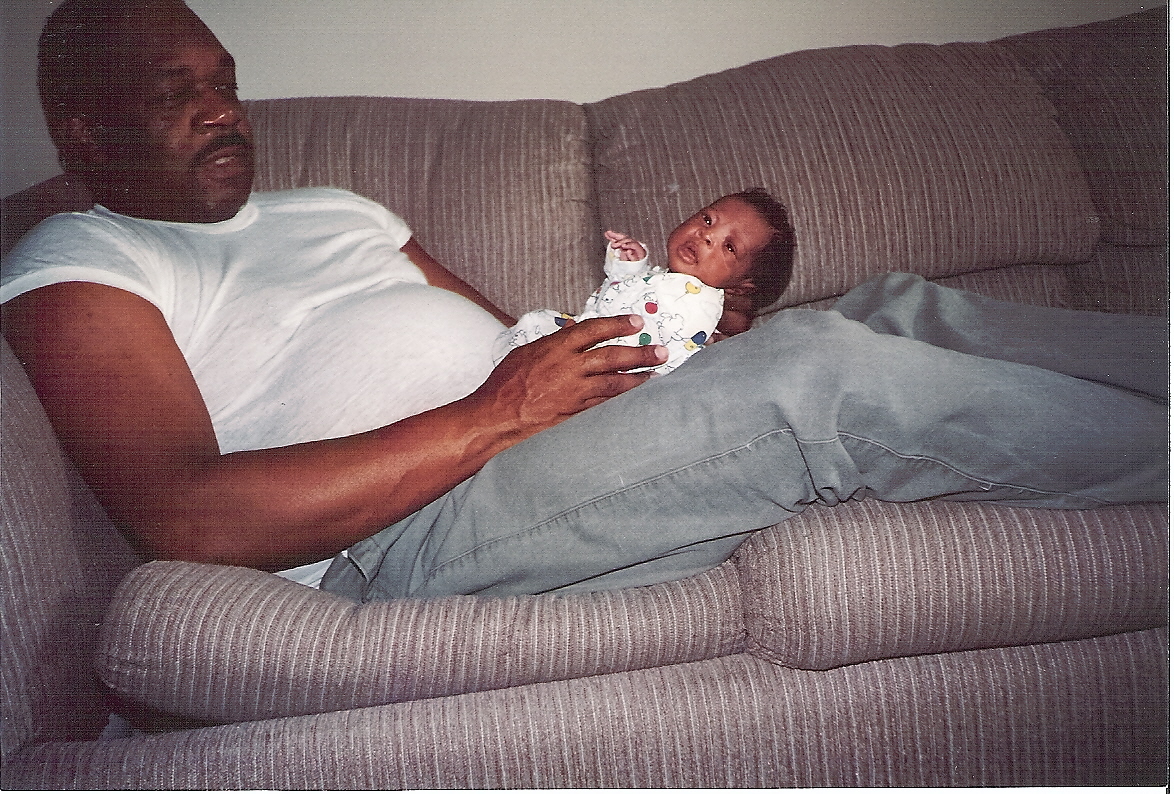
FOR GRANDPA (PT. 2)

(I wrote this statement on November 22nd, the day after my grandpa passed away. It's written as if I were giving a eulogy to an audience of loved ones, but I actually wrote it just for myself, to help myself begin processing the loss. After being affirmed by the handful of people with whom I shared this statement privately, I'm using my 31st birthday today as an occasion to share my sentiments about Grandpa publicly.)

Roger Conwell, Jr. was known by many affectionate names. Uncle Sonnie, Daddy, Pops, Grandpops, Roger C. To me, at first he was Granddaddy, but for most of my life I ended up calling him Grandpa. And I knew Grandpa much the same way you all did. He was brilliant. He was hard-working. He was loving. He was generous. He was stubborn. He was sarcastic. He was quick-witted. He was kind. He was a believer and an educator. He valued family. He had a grateful heart.

And he valued his independence. I know how hard it was for him to gradually lose that in the years following his stroke, and in those years I became more acquainted with Grandpa's fears. He was afraid of wasting away. He was afraid of being a burden and having people get tired of him. He was afraid of losing himself, of losing his mind. He was afraid of not being able to do anything. He was afraid of not being here anymore, and missing out on things that were important. 

But as many of you know, "Perfect love casts out all fear." That's 1 John 4:18. And I remain so moved by the love I saw extended toward him and toward us, his children and grandchildren, at the hospital on Tuesday, November 21st. I'm thankful that so many family and loved ones got the chance to come see him and say goodbye. I'm thankful that he was surrounded by love, and that so many of you were a part of that. I'm thankful that Grandpa was not alone in the end. I hope that he knows he wasn't alone.

There's a movie called The Farewell, where a family learns that their elderly matriarch has terminal cancer, and instead of telling her about her diagnosis, they decide to focus on helping her enjoy the time she has left. And when asked why, one of her sons explains, "It's our duty to carry this emotional burden for her." While sitting in that hospital room, as uncomfortable and heartbreaking as it was to see Grandpa in the state he was in, that idea gave me solace. Because it's our responsibility to carry him through his departure. It's our responsibility to be witnesses to his transition, witnesses to everything he was and everything he did in life. That's our role right now. And thankfully, because of all the lives Grandpa touched, none of us have to do that alone.

For now, I will simply say the prayer that I quietly pray to myself whenever I hear about someone passing away. "Dear Lord, please welcome your beautiful creature back into your loving arms. Please comfort and cover all who mourn today." It just so happens that today, we are the ones who mourn. 

Thanks for everything, Grandpa. We love you. See you later.
 

FOR GRANDPA (PT. 1)

I'm 31 today. (Let's not dwell on it, gonna have bingsu for "breakfast" and go see Beyoncé, whatever.) Who I really want to talk about today is my grandpa, Roger Conwell, Jr. Grandpa became an ancestor at the age of 86 on Tuesday, November 21st (two days before Thanksgiving). We laid him to rest on Tuesday the 28th. I am not well. 

But I want to thank all of the loved ones in/from Louisville, Henderson, Indianapolis, and elsewhere who showed up (in person or in spirit) for my family during that impossible week. I never once felt alone or unsupported. My Uncle Rod wrote a wonderful obituary for Grandpa, my cousin Reilly spoke representing Alpha Phi Alpha, my preacher cousin Jaqua spoke on behalf of the family as a whole, and I wrote my own statement for myself that y'all can read here if you'd like.

Please share your love and your presence with everyone you need to share them with. Today. You think you'll have more time or more chances... until you simply don't. 


Monday, October 23, 2023

The J-Drama Drop #33

Welp! It took me all summer and some of fall to find what I was interested in and decide what would stick. But here I am, in October, happy to finally have the material and presence of mind to write a new J-drama review! For this edition of "The J-Drama Drop" I'm covering two shows that premiered in July, and two honorable mentions including a Korean comedic docuseries and a Japanese indie film. 
 
御手洗家、炎上する (Mitarai ke, Enjou suru/The House of Mitarai Will Burn/The Mitarai Family Will Burn/Burn the House Down) - Netflix, 2023
  • Until middle school, Anzu (Nagano Mei from 'Unicorn ni Notte') enjoyed a peaceful and cushy life with her little sister Yuzu, their mother Satsuki, and their prestigious doctor father. Together they lived in a fancy house on the grounds of the hospital that had been directed by members of the Mitarai family (Doctor Dad's side) for generations. Then one day, their home suddenly burned down. Believing the fire was her fault, Satsuki had a breakdown and was hospitalized with long-term amnesia for years to follow. And within no time Doctor Dad divorced Satsuki, severed ties with her and their daughters, and replaced his family with Satsuki's less-well-off best friend Makiko (Suzuki Kyoka from 'Kyouen NG'), and Makiko's sons (who were Anzu and Yuzu's classmates before the fire).
  • Thirteen years later, a now-grown Anzu (whose last name is now Murata instead of Mitarai) infiltrates her former home under an alias, having been hired by Makiko to be the new housekeeper. Makiko had been copying Satsuki and coveting her life for their entire friendship, and Anzu never forgot the sight of Makiko among the crowd of onlookers, smiling and laughing with exuberant relief as the house burned. So now Anzu is determined to expose Makiko for committing arson and for being a fraud. (Makiko is now a hugely successful homemaking and lifestyle influencer/media personality who hides the fact that she can't cook and doesn't clean.)
  • Unfortunately, Anzu gets clocked and subsequently blackmailed by Makiko's elder son Kiichi, a hikikomori with a violent streak who seldom leaves his room, and who makes money by proliferating misinformation (especially celebrity-bashing rage articles) online. But with the help of her sister, their friend and neighbor who lets Anzu use her name as an alias, and a woman who knew Makiko during her blogging era (when her fraudulent activities first began), Anzu might just succeed at taking Makiko down after all.
Meh: Part of the sisters' scheme relies on Makiko, Makiko's sons, and even Anzu and Yuzu's own father not recognizing Anzu (at least not at first) after 13 years have passed, and I don't really buy that. The sisters and Makiko's sons spent a lot of time together when they were younger; I highly doubt that natural aging would make most people look completely unrecognizable compared to how they looked in middle school (which Anzu and Kiichi were both in by the time the fire happened). And workaholic or not, how could even Anzu and Yuzu's father not recognize Anzu when she confronts him in his office? Sure it's been a decade, but your daughter's gotta announce her identity because you forgot the very essence of your own child that easily?
 
Another "meh" of the show is its romantic subplots. Anzu and Yuzu each develop romantic feelings for their corresponding stepbrothers (older for older, younger for younger, and the feelings are mutual in both regards), which thankfully didn't feel as weird as it could have because the four of them never lived in the same household. In other words, although they were school friends, they never lived as siblings, so neither pair fell for each other as siblings. What is weird to me is that Anzu and Kiichi not only end up being together, but that Anzu is the one who pushes to make their relationship official. Call me biased due to personal experience, but I don't think most men who act violently toward women and/or children ever do enough to warrant being considered fully redeemed. Granted, it's not like Kiichi was beating Anzu up, and he is humbled by the end of the series. But humbled or not, while he may still be deserving of love in a humanistic sense, I maintain that he's not deserving of Anzu's. Not after how he terrorizes her earlier in the series.

Better: The dynamic between Satsuki and Makiko reminds me of that one WOWOW drama I watched years ago ('Kenja no Ai'), where between two frenemies, the initially richer friend plots for decades to ruin her initially-less-rich-but-more-demanding friend's life, after the latter steals the richer friend's man. As line-crossing as 'Kenja no Ai' is, I like being reminded of that show, so I'll give 'Burn the House Down' bonus points for that.

Also, I was genuinely impressed by the show's way of demonstrating how the social media era has differed from the blog era in Japan, and how Makiko's addiction to attention has morphed to frightening proportions across both eras. The only difference is that in the social media era (the present), while she still fakes the funk as the perfect homemaker, she doesn't have to pretend to own Satsuki's apparel or live Satsuki's life anymore because she's already seized Satsuki's house, husband, and wealth.

Best: 'Burn the House Down' isn't as obvious as it seems! You think the show is just going to be about Anzu sinking her claws into all aspects of that lady's life in order to gather evidence against her and get her to admit to doing what we all know she did. But it turns out... (*SPOILER*) that lady really didn't do it! To be clear, Makiko's still a miserable, cutthroat, self-obsessed piece of work. (Consider that she was relieved the Mitarai house burned down because it meant no one would find out or care about her stealing her friend's clothes, jewelry, and accessories, some of which she wasn't able to return because she'd pawned or misplaced them.) And she's still responsible for covering up who actually did cause the fire. But she herself did not commit that arson. Viewers (and Anzu) can hate her for many reasons, but being an arsonist isn't one of them, and I appreciate the show for subverting my expectations.
 
18/40 ふたりなら夢も恋も (18/40: Futari nara Yume mo Koi mo/Together Even Dreams and Love are Possible/ Unbreakable Bond of Dreams) - TBS, 2023
  • Arisu is an 18-year-old aspiring art curator whose interest in art was nurtured by her mother, an art teacher who died when Arisu was still a little girl, leaving Arisu's father to raise her on his own. On the day of her high school graduation, Arisu takes a pregnancy test and learns that she's pregnant. With her now-former classmate and boyfriend (the baby's father) being rushed off to university in Canada by his mother who fails to strong-arm Arisu into abortion, and with her best friends being the only two people she can turn to for support, Arisu keeps the pregnancy a secret from her father and proceeds with her previously-set plans to move into her own Tokyo apartment and study art curation at university.
  • One day, well-established art curator Toko happens upon Arisu while Arisu is crouched on the sidewalk with stomach pains, near the women's health clinic that's run by Toko's OB/GYN and best friend Kaoru (Matsumoto Wakana from 'Angel Flight' and 'Fukushuu no Miboujin'). After their respective appointments, Arisu and Toko commiserate over Arisu's pregnancy and Toko's fertility issues. They part ways, but it turns out Toko is the corporate rep overseeing the art cafe that Arisu just started working at part-time.
  • Admittedly-nosy Toko continues advising and encouraging Arisu, and after seeing Arisu's apartment, insists that Arisu move in with her so Arisu can have a more stable environment to balance her studies and her approaching motherhood. Arisu's community grows to also include her dad, Toko's mom who visits from Kanazawa, and Yuma (a dancer and classmate of Arisu's who defends her from being shamed at school, and who also happens to be the son of the art company CEO who's technically both Toko and Arisu's boss). As affection grows between Arisu and Yuma, Toko also finds unexpected romance with Kase, an art delivery driver who got himself transferred to Tokyo to be closer to her after she drunkenly kissed him back in her hometown of Kanazawa.
Meh: I honestly can't think of anything I genuinely find "meh" about this show. At first I couldn't tell whether '18/40: Futari nara' would be full of fluff or not, but after the second or third episode it's packed with so much meaty commentary on the harrowing and heartbreaking choices women often have to make just to find fulfillment (or at least try), that I grew to appreciate the show's fluffier moments. At first I also thought that Arisu's whole deal of, "I know I was dumb for getting knocked up at 18 and now I'm going to be a single mother because my boyfriend and his mom want nothing to do with me, but I still want to keep my baby" felt forced. She doesn't spend too much time exploring other options, despite knowing how difficult it will be to raise a child on top of pursuing an extremely niche and competitive career field, and that didn't make sense to me. It felt like the folks behind '18/40: Futari nara' forced Arisu to remain pregnant simply because they'd already decided to make a show about a teen mom. But I still ended up enjoying the show, which allowed me to suspend my disbelief.
 
Better: As Toko gets to know Kase, Kase reveals that he was so ashamed after his short-lived professional baseball career and first marriage came to an end, that he decided to become a delivery driver so he could still support himself without having to talk to anybody. And all I could think in response to that was, YES! FELT! Why didn't I think of that? Because when talking to people seems to have diminishing returns, why try to stem the tide of introversion instead of simply creating your own solitude? Jokes aside, while I would probably be creeped out or angry if a dude I'd only met once moved to my city "for" me in real life, something about the way Kase communicates his interest while still respecting Toko's privacy and busy schedule, not demanding or expecting anything from her that she's not ready to give, makes him more endearing than I'd expected him to be.
 
One of Arisu's cafe co-workers is played by Sakaguchi Ryotaro, who also played the demon on 'Kyoufu Shinbun', and it was so off-putting for me to recognize who he was and believe him as a regular friendly guy, when I know the potential he has to chill viewers' bones and make their skin crawl. But good on him for getting the chance to play someone normal! Something light to nibble on, as far as roles go. It was also off-putting yet refreshing to hear Ado singing this show's ending theme song "Himawari", which is a lot softer than her usual style. Based on what I've listened to from her discography, I'm so much more used to hearing her let it rip with her voice! Hearing her theme song for the first time at the end of episode 1 also confirmed for me that the earlier scene of a large group of newly-graduated teens singing-shouting "Usseewa" together in a karaoke room was not a coincidence. ("Usseewa" was Ado's debut single and first hit song.)

And last but not least, one of Arisu's best friends (the long-haired one who makes clothes and accessories for Arisu's baby) is alluded to being asexual! Look at this show trying to be up with the times!
 
Best: It's so smart how even though Arisu and Toko acknowledge that their relationship is unusual, they never feel the need to define it. Sometimes Toko acts like Arisu's bossy aunt or older sister, sometimes she offers a motherly presence (despite not being able to become a mother herself), and sometimes she's simply Arisu's 40-year-old roommate who's generous and helpful but also just as confused about life as Arisu is. If there is one word to encapsulate all that, the show intimates that that word isn't worth grasping for. Arisu and Toko simply are, until they're not. Until it's time for each of them to move on with their lives and continue as friends but no longer roommates. Also, I didn't realize until episode 2 that 18/40 isn't some random fraction, but a reference to their ages and how their perspectives as women differ based on their contrasting life experiences. I don't know what the thought process was behind titling the show '18/40' as apposed to '18 and 40' or '18 to 40', but I like it as is.
 
And how can I not praise Matsumoto Wakana's performance as Kaoru? The "your body your choice" speech that she gives Arisu in episode 1 is A-plus! I swear Matsumoto is everywhere, or at least she's been a familiar face in the J-dramas I've watched in 2022 and 2023. First in 'Kingyo Tsuma' (my introduction to her), then 'Fukushuu no Miboujin' (which I watched specifically for her), then 'Angel Flight' (which I didn't even know she was in), and now '18/40: Futari nara' (which I also didn't know she was in)! Maybe it's just my viewing choices, but Matsumoto seems to be having a similar run to that of Takahashi Maryjun, who also kept popping up in seemingly every J-drama I watched for a period of time. 
 
Kaoru is the fun friend who respects people's boundaries, reins in Toko's busybody tendencies, and doesn't seem to take anything too seriously besides her profession as a doctor... until episode 9 reveals how much more layered she truly is. In it, there's a scene where Kaoru informs Toko that she's giving up on having a baby, after eight years of unsuccessful fertility treatments, because she and her husband can no longer withstand the disappointment and the toll it's taken on her body. But the thing is, this is the first time that she's ever mentioned her fertility struggles to Toko. Her best friend, of all people. I may or may not have shed a tear. Kaoru tries to keep her composure when discussing it at first, but the more she confides in Toko the more she breaks down, and listing how blessed her life still is even without a baby only makes her cry more, and Toko cries along with her. Because gratitude doesn't erase how devastated Kaoru is. And the pain of having to let this thing go that meant so much to her because her best efforts simply weren't enough was so visceral to witness. I've been there (of course not in terms of wanting a baby, God no), and the scene made me think of the chorus to "Heat Lightning" by Mitski:
 
And there's nothing I can do, not much I can change
So I give it up to you, I hope that's okay

There's nothing I can do, not much I can change
I give it up to you, I surrender
 
Matsumoto Wakana absolutely sells that scene, and even as a supporting character in this series, her contributions are among my favorite.
 
Honorable Mention: Risqué Business Japan - Netflix, 2023

At this point I can't remember how I found out about this show, although it might have been the same way I found out about 'Chihiro-san' (and if that's the case, then thanks again Farrah!). My only sense of familiarity with the hosts is that singer Sung Si Kyung did a song called "Ai wa Naze" with Crystal Kay (my forever fave) in 2018. I'm also not sure what the rationale was behind having these two specific Korean male entertainers, Sung Si Kyung and comedian Shin Dong Yup, host this show exploring aspects of the sex industry and cultural attitudes about sex in in Japan. (We're taking multi-floor adult toy stores, VR porn-viewing rooms, female and male porn actors, the Tenga office, host bars, and so on.) But having watched the Japan edition in full, I actually believe the hosts being in their 40s and 50s is one of this show's greatest assets. They're not so old as to be prudish or act like they're wholly uninterested in sex, but they are old enough to get flustered reacting to certain information in a way that makes great TV. They're also not so young as to be distracted by all the stimuli or so horny that they fail to get a solid interview out of interviewees, but they are young enough to approach every place they enter or person they interview with an open mind. They both listen to learn, and Shin Dong Yup especially surprised me with how he was able to turn his silliness on and off. I assumed he'd just be telling dirty jokes for the entire series, but he strikes an impressive balance between doing that and asking questions out of genuine curiosity. And Sung Si Kyung amazed me with his ability to pull double duty, actively participating in the show while also interpreting between Japanese and Korean for his counterpart.

The only drawback I felt when watching this series, which is due to patriarchal societies and not 'Risqué Business: Japan' itself, is the fact that even with all the options there are for any and everyone to get off in Japan, most of those options are still centered around men. Women can visit (certain floors of) sex toy stores too, they have host bars they can visit to feel catered to (non-sexually), and female porn stars earn more than their male counterparts. But men still have the widest and easiest access when it comes to objects, places, and services that facilitate their sexual gratification. Just something I couldn't help noticing. But 'Risqué Business' is incredibly fascinating nonetheless, and I'm probably going to watch the new Taiwan edition once I finish writing this review!
 
Honorable Mention: 左様なら今晩は (Sayonara Konbanwa/Goodbye, Good Evening/A Girl in My Room) - Dir. Takahashi Natsuki, 2022, streamed via JFF+ Independent Cinema
 
So the first round of JFF+ Indepent Cinema that ran from December 2022 to June 2023 must have been a big hit, because JFF+ made another batch of indie programming available from August through October this year. (If you're reading this before November 1st, you still have time to watch them! Also, you can read my review of the films I watched from the first indie round here.) This time, the only film I felt compelled to finish was 'Sayonara Konbanwa'.
 
A girl who died in an apartment and whose ghost has been haunting the place since before lackadaisical Yohei and his girlfriend moved in, finally makes her presence known immediately after Yohei's girlfriend moves to Tokyo/Yokohama. (The now ex-girlfriend presumably leaves for a more interesting life and the possibility of a less lackadaisical boyfriend in the future.) Ghost girl hasn't been able to appear before because of the talisman the girlfriend had hung on one of the walls. She's bound to the apartment, so standing on the balcony and looking out is her only means of connecting to the outside world. Yohei grows increasingly curious about the ghost girl as he gets used to having her presence around, but the girl's foggy memory of her past and his realtor's refusal to tell him what happened in that apartment make his search for answers difficult. Meanwhile, the ghost girl just wants to experience some of the romantic things she knows she missed out on because she died so young (touching an Adam's apple, kissing, going on a date), and with Yohei's assistance she's able to do all three.
 
Let me first say that the view from Yohei's balcony is gorgeous! You can kind of tell this town is in the middle of nowhere, but it's surrounded by these lush green mountains and this painting-esque sky that make you want to go there anyway. Which is fitting, because reading the film's synopsis told me that this entire film was shot in Onomichi, a small port city that I've wanted to visit for years! (Long story, I applied for a job there many moons ago, didn't get the job, but did remain drawn to the place and its name for some reason. In fact, I still occasionally look up #Onomichi on Instagram just to see what's going on and what people are eating there. But I digress.) 'Sayonara Konbanwa' could stand to be 15 minutes shorter, but the actors (especially the ghost girl) really had me invested. The shots of various Onomichi locations, the mystery of how the girl died (we never find out), and the uncertainty over whether she'll ever depart from the apartment (she does!), were worth the lingersome pace for me.
 
As for my favorite J-drama this time around, of the two options I gotta give it to '18/40: Futari nara'. Even as a woman who DOES NOT EVER want kids, that show was pulling at my heartstrings! Now, off I got to find more review-worthy material to watch! Maybe I can have another "J-Drama Drop" out before 2023 is over?  

Tuesday, September 5, 2023

BOOKS! (Adèle + Sweet Vengeance)

Here I am! Back for a new book review, and a spicy one at that. To be honest, I'm slightly nervous about this one. A very small part of my nervousness is due to the explicit nature of today's selections. (I thought my review of Harbor was pushing it in terms of exposing my appreciation for raunchiness, but, well... the raunch keeps finding me.) And a very large part of my nervousness is due to finding out this summer that I wasn't selected for either of the arts writing fellowships I worked hard on applying for in the spring. (One of which I thought I'd be a shoe-in for since it's for rising book critics, and I've been writing about books for 10 years now.) It was a real and unexpected blow to my confidence; I took the rejection emails in stride at first, but they somehow weighed on me more as time passed. As a glutton for external validation who's terrible at not making every single rejection and failure my middle name, suffice it to say that I was not chomping at the bit to put out a new review because... Who wants or needs it, anyway? Apparently nobody. Right?
 
And yet. I can't neglect the fact that, for me, writing reviews on this blog is part of the payoff of reading. If I finish a book and write a review about it, then I feel doubly accomplished. And I feel more secure (and sometimes even invigorated) to move on to the next one, because I know I've given each work its due. So here I am, still showing up. Good enough or not, fellowship-worthy or not, sure, whatever. Y'all are still gon' get these reviews! First up today is a French novel about a 30-something Parisian journalist, wife, mom, and sex addict who blows her life up having countless affairs because cheating makes her life feel meaningful. And then, a romance novel about a Nigerian woman in her late 20s, the demon she summons to help kill her rapist, and the intimacy they develop while exacting her revenge. Buckle up!
 
Adèle by Leïla Slimani
(translated from French by Sam Taylor)
 
I found a used copy of this novel at the same store where I found a used copy of Will to Love. I bought it because I enjoyed reading The Perfect Nanny (Slimani's other super famous novel) and had heard Adèle was similarly tortured and contemplative... but with lots of trysts. 
 
The French title, Dans le jardin de l'ogre (In the Ogre's Garden) is a brilliant allusion to Adèle's character, because she's a serial cheater who feigns innocence and normalcy but secretly enjoys feeling ravaged by men. Getting fisted in an alley by a dumpster, ravaged. Hiring two male sex workers to come to her apartment to have a violent coke-filled threesome with her, ravaged. And those are only two of her brief yet vivid dalliances. 
 
She's independent enough to have her own career as a journalist (all the more press trips and foreign places to boink random people), but her livelihood and social status in Paris still derive from her husband Richard, a doctor from a well-off Normandy family. So while on one hand Adèle is an average white wife and mother (half-Algerian mais peu importe!), who relishes not having to make it in the real world on her own, on the other hand she resents how ordinary she is, and tries to play against type with delusions of grandeur and rough sex with men whom she mostly doesn't bother remembering. And though Adèle does feel some guilt for forsaking all else when her sexual cravings hit, and she exhausts herself covering her tracks so as not to jeopardize her cushy Parisian life, she simply will not and cannot stop cheating because she's addicted to sex. She tries to quit or pause her activities, and yet always finds herself back on the prowl. (Until she gets outed for having an affair with one of Richard's richer colleagues, of course, and Richard moves their family of three to the countryside where he places her under his own version of house arrest and she becomes a shell of herself.) For Adèle, illicit sex is about more than just the thrill of assuaging her horniness without attachments, or getting away with the forbidden, or trying to feel or seem interesting. Hers is an example of how, for some people, the erotic gives life meaning and makes equilibrium possible. In the countryside, six months of being on housewife house arrest inevitably wears on her, and her father's funeral might be just the opportunity she needs to escape for good.

As a person, Adèle fascinates me to no end because she embodies the sentiment of, "But I'm not like the rest of them." She's consistently inconsistent. She sleeps around, a ton, but resents the possibility of being regarded as easy or a slut by her co-workers (who are also married yet sleeping around like she is). She yearns for a glamorous, idle life, but when she and Richard get invited to a dinner party at his richer colleague's mansion, she's disgusted by the vapidness of the colleague's wife and the other wives she's seated with, even though they are part of the echelon she supposedly aspires to join. She often hooks up with strange men at night, but is also sometimes perplexingly anxious and terrified of walking through Paris alone and being approached, by strange men, at night. And while the concept of women (especially women of certain means) staying with husbands they don't love for the status and financial security they provide is not new to me, Adèle has made me realize how much deeper it goes than that. Because for her, security and stability also enable her to be out of touch with reality. Even as scandalous as her doings and fantasies are, she still expects to be shielded from the harshest realities and most boring minutiae of daily life, and being married to Richard affords her that. And I guess it just hit me in a new way that maybe it's not so much that certain wealthy and/or white women are unaware of how out of touch they are. Maybe being out of touch with reality is exactly what they prefer. Maybe it's what they seek from marriage in the first place.
 
I'm not sure if Slimani meant to make a big deal out of it, but I was stunned to read the latter passages written from Richard's point of view and have it truly sink in that his and Adèle's marriage has always been doomed because they have always been sexually incompatible. Sure, Richard married Adèle because he wanted to take care of her and had the financial means to do so, and Adèle (who grew up poorer than him) has always wanted a life where she felt taken care of. However, Adèle has also felt drawn to the erotic, lewd, and lascivious from a young age, whereas Richard has been disinterested in sex his entire life aside from achieving his dream of fathering a son. (Slimani doesn't label him as asexual, but given his opinions on how unimportant sex is and how crude discussions of sex are, it wouldn't be a stretch to call him that.) I'm not arguing that Adèle is right to cheat, although I don't believe she deserves to be snatched away from her city life, surveilled like a criminal, and given the stingy allowance and limited privileges that Richard gives her. But even if Adèle had not cheated, their relationship would likely still have fallen apart because sex is of inestimable importance to her, Richard has never been capable of meeting her sexual needs, and she has a habit of getting destructively bored with normalcy despite craving the protection it provides. Which makes Richard's methods of curing (read: punishing and taming) her even more heinous, because he's desperately trying to force a relationship to continue in the same shape it started in, or in the same shape he has in his mind, and that's simply not going to happen. In short, it's not just Adèle. Both of these people are severely out of touch! 

It's been a while since I read The Perfect Nanny, but if my memory serves me correctly there are some noteworthy commonalities between it and Adèle, which was published in 2014 two years before The Perfect Nanny. In both, the main couple is a pair of 30-something Parisian professionals who aren't RICH rich but have done well for themselves. In both, the husband is white, the wife is of North African descent, and the wife is anywhere from apathetic to ashamed about her heritage. In both, the couple has a very young son (the couple in The Perfect Nanny actually has two young children). In both, the wife is educated, has her own career, and rejects any expectations of being a stay-at-home wife and mother. And in both, the husband and wife kind of hate each other even though they won't admit it. But that last point might be me projecting too much of Adèle's relationship onto the couple from The Perfect Nanny.
 
If you're interested in French literature, portrayals of sex addiction, self-absorbed women, women (particularly wives and mothers) who cheat, eroticism, funneled rage, love as obsession and possession, barely-concealed marital misery, and characters with both mommy and daddy issues (Adèle's mom has always hated and competed with her, while her dad was affectionate but basically a stranger), then read this book! 

Favorite quotes:
"Adèle felt for the first time that mix of fear and longing, disgust and arousal. That dirty desire to know what was happening behind the doors of those seedy hotels, in the dim depths of those back alleys, in the seats of the Atlas Cinema, in the back rooms of sex shops whose pink and blue signs pierced the twilight. Never since that eveningnot in the arms of men, nor during the walks she took years later on the same boulevardhas she ever rediscovered that magical feeling of actually touching the vile and the obscene, the heart of bourgeois perversion and human wretchedness" (61-62).
 
"Then she decides that it's not worth living while fighting against such a desperate desire, such an absolute need. That she would have to be insane or utterly stupid to inflict this deprivation on herself, to watch herself suffering and hope that it lasts as long as possible" (92).

"In the depths of her amnesia there exists the reassuring sensation of having existed a thousand times through the desires of others. And when, years later, she happens to bump into a man who tells her in a deep and slightly shaky voice: 'It took me quite a while to get over you,' she draws an immense satisfaction from this. As if all of it has not been in vain. As if, in spite of her best intentions, some sort of meaning is somehow mixed up in this eternal repetition... She wanted them to burn for her, wanted them to love her to the point of losing everything, even though she has never lost anything" (121-122).
 
"A wave of calm surges through her. She has the feeling that she is cut off from the world, that she is experiencing a moment of grace. She rediscovers the pleasure she used to feel as a teenager, when she would dance for hours, sometimes alone on the dance floor. Innocent and beautiful. She never felt any embarrassment then. Never worried about the danger. She gave herself over completely to what she was doing, on the cusp of a future that she imagined glorious, higher, greater, more exhilarating" (209-210).

Sweet Vengeance by Viano Oniomoh
 
Okay, so... I've been aware of "monsterf*cking" as a romance subgenre for a while, but I've always steered clear from it because it seemed weird and disgusting. And as someone who was raised in a Black Christian household, I just don't play with demons like that! But my reading of Sweet Vengeance was actually inspired by two recent influences that I now profoundly appreciate: a monster erotica anthology podcast called Monstica, and the "Demon 79" episode of 'Black Mirror' season 6, which just released in June. I gave Monstica a try last year while searching for erotic and/or queer audio dramas, and was surprised by how exquisitely well-written and produced it was. (Episodes 3 and 8 are my favorites.) Cut to June of this year, when I was BLOWN AWAY by "Demon 79", in which a British South Asian woman named Nida is required by a demon named Gaap to kill three people within three days in order to save the world. I searched Twitter to see if anyone else was obsessed with it too, and I happened to spot romance author Tati Richardson recommending Sweet Vengeance by Viano Oniomoh as having the "same vibes" as the episode. I've mentioned before how enthralling sci-fi morality tales like 'Black Mirror' are to me, and in an effort to make the magic of "Demon 79" last longer, and keeping in mind how much more I enjoyed Monstica than expected, and being swayed by how lush and gorgeous this book's cover is... I ordered Sweet Vengeance straight away.
 
When I think of our protagonist, a plus size bisexual graphic designer in Nigeria named Joy, I recall one of the Jade and X.D. podcast's old catchphrases: "Say No to Co-Workers!" It was a half-joking warning against socializing too much with co-workers and letting them know too much of your business. That catchphrase resonated with me as a "show up, do my work, go home" type of person who was vigilant about compartmentalizing work as separate from the real me and my real life. But now having read Sweet Vengeance, I can't think of anyone who has more of a right to take swearing off co-workers as gospel than Joy. After two years of grief and grinding due to the death of her parents in a plane crash and being screwed out of any available inheritance or keepsakes (except for her father's dagger), Joy was finally ready to have a social life again. So she went to hang out at a bar with her co-workers from her grocery store day job... only to be drugged, taken back to her apartment, and raped there by one of them. (The unnamed co-worker isn't the one who spiked Joy's drink at the bar, but he was still aware of what was happening to her and took advantage of her condition.) Being raped sent Joy into a lengthy depressive episode and frightened her into uprooting her whole life for safety's sake; she moved to an apartment in a different part of town that was tiny enough for her to see all of her surroundings at once, she changed jobs to work at a different grocery store, she deleted her social media, and she nearly eliminated all interactions with people. Anything to avoid crossing paths with her rapist and taking a chance on anyone, since she was more doubtful about who to trust than ever.

Now, Joy has emerged from her depressive episode raring for revenge. She's sick of bearing the weight of having been raped while her rapist lives free and unbothered, so she's decided one of them's gotta die, and it ain't gonna be her. After consulting her wealthy witchy Aunty Paloma, Joy plans to stab the rapist with her father's dagger and summons a demon in advance to make the rapist's death look like an accident. The demon who appears in her apartment is a 200-something-year-old (30 in human years), touch-starved, deep purple demon named Malachi. He's been living discretely in the mortal realm ever since escaping hell, where he was imprisoned from birth and used to reap human souls and emotions for his captors to feed on. Joy is prepared to offer herself sexually to Malachi as a sacrifice that would make him amenable to striking a deal with her, but Malachi declines at first, opting to drink a bit of blood from her finger instead. But over the next few days, as Malachi alternates between spending time with Joy in her apartment and using his powers to help her terrorize her rapist (in the rapist's waking and non-waking hours), these two death and cartoon-obsessed loners fall in (blood)lust, in like, and ultimately, in love. And Joy not only reclaims her power as an avenger of rape survivors, but also discovers unprecedented power in her plus size body and sexual prowess, as Malachi enthusiastically defers to her in the bedroom.

So about Joy becoming a dom. I love how BDSM is part of the natural progression of her and Malachi's already unconventional relationship. It's not something they ever outrightly negotiate, but rather a result of Malachi automatically prioritizing Joy's comfort, even before knowing that she's a rape survivor. And it just so happens that he prioritizes her comfort by making gentle requests, and by waiting for her to give him permission to act and instructions for exactly how she wants it. Hence, Joy becomes the dom and he becomes the sub. And it's genuine! Malachi's gentleness and willingness to follow directions aren't mere courtesy or patronization; he genuinely enjoys accommodating her and feeling owned/claimed/dominated by her when they're being physically intimate. Meanwhile, Joy never feels pressured to perform or do anything with him that she doesn't want to do. So it works out for them both.
 
I also love that Joy never changes her mind about murdering the man who raped her. There's no sense of anticipatory guilt about potentially stooping to her rapist's level by doing something evil to him like he did to her. And forgiveness is not even an option worth considering. Naw. Joy decides that that man needs to die, she recruits a demon to help her stalk him so that he will fear her properly, and then she she stabs him multiple times in his own bed, making sure her face is the last thing he sees as he dies. Not only that, but besides not feeling any remorse afterward, Joy goes a step further by later killing her best friend Iyore's pedophile rapist uncle in a similar way (with Malachi's assistance of course), so that Iyore no longer has to delay her wedding for fear of the uncle showing up. Joy is a self-described "proud murderer of rapists," and although I won't say I condone murder, I respect how committed she is to her vengeance even while still being traumatized.
 
As for whether the "Demon 79" comparison holds up, it actually does! I was skeptical, but then pleased to make my way through Sweet Vengeance and clock so many similarities. In both, the protagonist is a young woman of color who works a service job and is targeted by a co-worker (Joy is a supermarket cashier, whereas Nida sells shoes in a department store). In both, the protagonist summons a demon into her apartment by making a blood pact with it (except Nida does so accidentally). In both, the demon appears to the woman in a form she finds attractive, and he can only be seen and heard by her. In both, the demon can communicate with the woman non-verbally (Malachi can smell human emotions and sense Joy's intentions through the invisible bond formed by their contract; Gaap shows Nida visions of the peril that awaits if she doesn't kill enough people in time). In both, the demon is low-ranking and must abide by rules set by other demons who are much older and more powerful than him. In both, the woman and the demon live incredibly lonely lives, find companionship in each other, and choose to face oblivion together (except Nida and Gaap's union reads as more platonic than Joy and Malachi's). And of course, in both Sweet Vengeance and "Demon 79", the female protagonist is motivated to commit murder, with the major difference being how she's motivated. Whereas Nida's goal is thrust upon her and forces her to question her understanding of morality and humanity, Joy's goal is self-assigned, she doesn't believe killing her rapist detracts from her humanity, and while she does have a strong sense of justice, she's not preoccupied with being perceived by others as good.
 
While Sweet Vengeance hasn't made me eager to read more monster romances, it has enabled me to understand more of the subgenre's appeal with less judgment, and it has definitely made me a new fan of Viano Oniomoh. (She's got a new romance novel out called Just for the Cameras that's giving me Harbor flashbacks from the premise alone, so best believe I'll be snapping that one up too.) Sweet Vengeance is the most audacious and imaginative book I've read in a while, it's my favorite read of 2023 so far, it balances the silly with the morbid and the delectable with the dire while still making every page count, and Oniomoh not only wrote and self-published this novel but also illustrated the cover herself! That's undeniable talent right there! If you're interested in "paranormal erotic romance" (as Oniomoh categorizes it on her website), romance novels set in Nigeria, survivors getting revenge against their rapists, recovery from grief and depression, cartoons (especially 'The Amazing World of Gumball'), or stories about Black plus size women getting all the love and tenderness they deserve, then read this book!

Favorite quotes:
"He let out another airy chuckle. Joy's lips twitched for a moment. And like clockwork, there was the sweet, bright scent. Was this the scent of her pleasure? Her happiness?
    Fuck, Malachi had been wrong. If her bloodthirst tasted divine, then it was nothing on her happiness. He wanted to cause her to form that scent againand again and again and again, just because" (38).
 
"'Sweet, murderous Joy,' Malachi husked, his wings flaring, wanting to wrap around them both, like he could shelter them from the world. 'You are exquisite.'" (45).

"And so what? He suddenly thought, almost viciously. So what if Joy was using him? So what if he couldn't have her after this? So what if he never saw her again? Was he going to pretend he didn't want her now, just because their contract would soon come to an end?" (72).

"Malachi was hit suddenly by the force of her beauty. The glow of the moonlight, along with the slowly morphing colours of the flowers around them turned her into a living, breathing painting. She looked like something ethereallike a Sovereignlike if he reached out to try and touch her, she'd disappear, burst into a shower of sparks" (130).