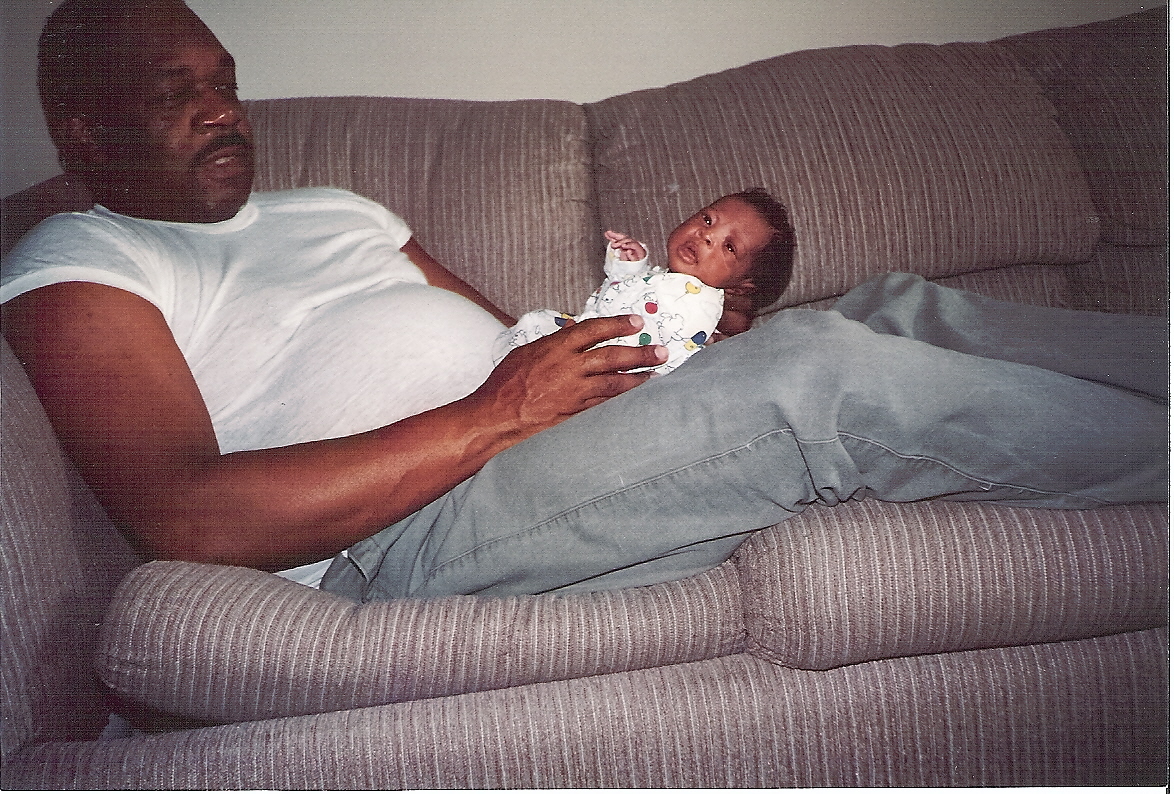
(Happy New Year, I guess? February is almost over,
my grandpa is still dead, and nothing makes sense, but sure, Happy New Year to you and yours. This is my first post of 2024, after all.)
One of my goals for 2024 has been to get back to reading two books a month and writing one book review a month like I used to do, and sure I've already missed January, but a girl can still keep hope alive, can she not? So here I am reviewing the first book I purchased in 2023, and the first book I've finished in 2024. That's my only rationale for pairing them together. First up, a softhearted raunchfest of a romance novel about three queer British Nigerian roommates in Manchester (comprised of a sex worker couple and their best friend), who eventually become a polyamorous unit after filming videos together. And then, an emotionally torturous but necessary debut novel with flecks of dark humor, about a Chinese American mom in Philadelphia who's forced into a new tech and surveillance-obsessed parenting program for a year, after unintentionally leaving her toddler at home alone for two hours.
Just for the Cameras by Viano Oniomoh
When I wrote my review for
Sweet Vengeance,
Just for the Cameras was her newest release. I declared back then that I'd be reading Viano Oniomoh's next book as soon as I could get my hands on it, and was I lying? I surely was not! I ordered this novel in October and started reading it in November, but we all know how November turned out for me. So I ended up finishing this romance novel in January.
The romantic leads of Just for the Cameras are three British Nigerian twenty-somethings in Manchester, England. Luka (a demisexual biromantic photographer) has been friends and roommates with Kian (a bisexual interior designer and sex worker) and Jordanne (also a bisexual sex worker) for years, and their supportive presence was instrumental in helping Luka recover from being left at the altar by his ex-fiancée Dolores. (Which was unintentionally hilarious to me because the name Dolores literally means "pain" or "sorrow." Like, you know... might've predicted that one. But I digress.) While Luka isn't necessarily heartbroken anymore, being jilted in such an abrupt way, in addition to a lifetime of emotional manipulation and neglect by his parents, have only worsened his fear of abandonment and the sense that he is undeserving of love.
What Luka doesn't know is that Jordanne and Kian—who are in a committed relationship and generate most of their income from making sexual content together—have secretly been in love with him for ages, but they keep their affections for him confined to the realm of fantasy. When they have sex they fantasize about Luka being in the room, at first unaware, but then noticing them, watching them, responding to them, joining them, ordering them around... But of course they would never actually put their friend in that situation. Luka respects what they do, and they respect him by cleaning up after themselves when they use common areas of the apartment to record, but Luka has never seen any of their videos, much less expressed any interested in getting involved with them on or off camera. Until Luka comes home early one day, walks in on Jordanne and Kian having sex on the living room sofa, and aroused curiosity wins out over embarrassment for all three of them. So much so, that after the couple mentions wanting to shoot some voyeurism scenes to reinvigorate their content, Luka shocks them by volunteering to play their voyeur and see how it goes.
The trio agrees to collaborate on just one video, but wind up shooting three, each beginning with Jordanne and Kian trying to discretely do the do under a blanket or bed covers when Luka enters the scene. With each video Luka becomes a progressively more active and authoritative participant, and by the end of the third filming they're all tangled in bed together. The videos are a massive hit with Jordanne and Kian's subscribers, and the roommates' desires for each other have been set ablaze, but every moment of increased intimacy between the trio (on and off camera) is followed by Luka getting shy and distancing himself from the other two. Despite how desperately he yearns to be closer to them, he can't allow himself to believe that his best friends' interest in him ventures beyond no-strings physical interactions. Even after the couple eventually invites him to join their relationship, which Luka immediately accepts, his impulse to run away remains strong. All the while, as Luka agonizes over whether Jordanne and Kian truly want to be with him or not, Kian and Jordanne agonize over scaring him away by coming on too strong. Can this trio of overthinking and overly considerate individuals turn "just one more time" into something that lasts?
As someone who also needs an inordinate amount of reassurance but usually resists asking for it, I connected with Luka as a character right away. What also endeared me to him was his burgeoning ability to allow himself to want things for simple reasons that don't need expounding or interrogation. He's risk-averse and constantly catastrophizing, but he also sports rose tattoo sleeves that he had done simply because he likes pretty things. He's a demisexual babe who's been
detached from feeling desire or arousal since his break-up, and he's terrified of being rejected by his roommates, but he also chooses to do porn with them simply because he wants to. (And because they're hot! Props to Viano Oniomoh for writing a romance novel about Black people who are unambiguously big and also hot! Jordanne is fat. Kian is fat. Luka is thick-bodied with abs. They all find each other endlessly sexy. Bravo!) My review thus far has focused mostly on Luka, but Just for the Cameras provides some meaty backstory for Jordanne and Kian as well. Jordanne was disowned by her parents when an ex-boyfriend outed her for doing sex work, and she stumbled through learning to trust and rely on people when she started dating Kian, so they both have an abundance of patience for Luka's fear-induced flightiness. They never tire of having to keep reassuring him that their affection for him is real and true, that they want him to feel safe and secure with them, and I found such tirelessness remarkable.
I was also impressed by the pride that Jordanne and Kian take in their work. Having sex on camera for money is both not a big deal (nothing to be ashamed of), and also an integral form of expression for them. They do porn because they genuinely enjoy it, and because it pays! They have control over how their content is made and distributed, and they earn more than enough from their videos to sustain themselves—even enough for Kian to quit his job at an architectural firm, which he later does because he hates that job. Plus, getting featured as the cover story of a Black erotic magazine helps Jordanne reaffirm how integral sex work is to her purpose of destigmatizing Black women's desires. And this destigmatization is evident within their community too. Most of their close friends are also Black queer sex workers. By the end of the novel, Jordanne and Kian have each spoken clearly to their respective (very traditional, very Nigerian) parents about their commitment to doing sex work full time, and all of the parents respect Jordanne and Kian's choices with astonishingly little judgment. (Except for Jordanne's dad, who's a lost cause.) And while Luka is reluctant to claim the title of "sex worker" by the end of the novel, he's still continuing to film videos with is boyfriend and girlfriend and get paid from them too, since Jordanne and Kian always insisted that he receive his cut, even from the very first video they collaborated on.
Just for the Cameras can feel only the slightest bit long, but I actually commend that Oniomoh takes her time laying the foundation for exactly how and why Luka becomes comfortable with joining
Jordanne and Kian's relationship, and how their polyamorous arrangement morphs into a new relationship all its own. Rebekah Weatherspoon's
Harbor is the only other romance novel about Black polyamorous people that I have to compare
JFTC with, and there are some notable differences. First, where
Harbor has a woman joining a relationship between two men,
JFTC has a man joining a relationship between a man and a woman. That progression happens more quickly and with comparatively less emotional back-and-forth in
Harbor; since that trio's main priority at the outset is having their kinky needs met, there's more hashing out terms and consent than reflecting endlessly on feelings. Whereas in
JFTC, while the trio is also somewhat kinky, their main priority is doing everything possible to not jeopardize their pre-established friendship. Also, while in both novels a casual sexual arrangement transforms into a fully-committed union by the end of the story, in
JFTC it's clear that despite attempts at denial, each member of the trio yearns for a deeply romantic three-person relationship with each other from the beginning. If someone were wondering which book to try first to learn about polyamory, I suppose it would depend on what that someone is looking for.
Harbor focuses more on recovering from grief and is more informative about BDSM rules and expectations, while
Just for the Cameras is more sentimental in a mushy kind of way and gives a behind-the-scenes perspective on how porn creators live.
Looking at Oniomoh's work alone, between the two novels of hers that I've read so far, Just for the Cameras comes in second for me. Sweet Vengeance is more tightly written, plus it'll always have that indirect "Demon 79" ('Black Mirror') connection in its favor because of how I discovered it. But make no mistake, Just for the Cameras is way too lovely to pass up, especially for readers who can handle the raunch that it's serving. And as usual, Oniomoh wrote, self-published, illustrated the cover, and designed the pages for this book herself. If you're interested in Black romance novels, examples of Black polyamory, exceedingly explicit sex scenes, healing from shame and trauma, the (independent) sex industry, Black people in Britain, or adult children asserting agency in their relationships with their parents, then read this book!
Favorite quotes:
"Stretch marks decorated their bellies, thighs and hips like pretty, pale firebolts zigzagging against their dark skin" (58).
"It overwhelmed her, the thought of it—Luka dating them. Both of them. All of them dating each other. It made her feel like she couldn't breathe, like she was flying so high in the sky she'd met the vastness of space; limited and infinite at the same time... When she'd first realised she loved Kian, she'd never thought she'd love anyone else the way she loved him. Down to her soul, she'd thought, this is it. This is the love everyone's been talking about. I finally get it. I finally understand.
Now, here she was, doubled up on the very love people had sworn to her happened only once in a lifetime" (107-108).
"It's natural, considering everything you've been through, to want to ruin something good when you finally have it... But your anxiety and your trauma are lying to you. They're telling you this good thing is surely too good to be true, that you should probably save yourself before you get hurt, using your previous history as apparent proof. But most times, oftentimes, they're just flat-out wrong... Sometimes, a good thing is simply a good thing" (255).
"I know this is going to be difficult, but here's an assignment. For this weekend, and this weekend only, I want you to let yourself have this. Every gesture, every kiss, every intimate moment—put all of yourself into it. Give yourself permission to be happy, for just this one weekend. Pretend you're in a time capsule, if you must, and nothing of the past or the future matters. Just you, in precious moments with your partners. Can you do that for me?" (255).
The School for Good Mothers by Jessamine Chan
I can't remember how this novel got on my radar, but it was on my book list for a while, and then I happened to spot it at Costco in early 2023. Now mind you, Costco used to have an unexpectedly robust book section. I found
Giovanni's Room, my first James Baldwin novel (and perhaps his gayest one) at Costco. I found
Pachinko at Costco. But at some point, probably around the election of 45, the book section got whittled down to "stuff Republicans would read" (how I joke about it with my mom now). So although my copy of this book was printed with a permanent sticker endorsement from a certain Republican president's daughter
turned news correspondent on the front cover, I was pleasantly surprised to find
The School
for Good Mothers at Costco that day. Who let something so progressive, so transgressive, slip onto the display? To whomever was or wasn't doing their job and allowed that to happen, I am thankful.
At the beginning of this novel, depressed 39-year-old Frida Liu is divorced, a single mother,
and living in Philadelphia, despite never expecting to be any of those things.
Originally raised by Chinese professor parents in the Chicago area, she gave up her career and
social life in New York City to move to Philly because her (white) husband Gust
wanted to, only for him to begin an affair with a (younger, richer, also white) woman named Susanna
while Frida was pregnant with her and Gust's first child. Gust fully left Frida for Susanna when said child (named Harriet) was still a
newborn. Which is to say that in the 18 months that Harriet has been alive, Frida has had adapt to an incredibly difficult reality—renting a house for just herself and Harriet, splitting custody with her ex-husband, receiving a paltry $500 per month in child support, and writing full-time for an old and unaccommodating Wharton business professor. One early September day, after a string of consecutively stressful and sleepless nights trying to meet an article deadline while tending to Harriet's non-stop crying due to an ear infection, Frida is desperate for air. So leaves she places Harriet in an ExerSaucer so she can quickly go get coffee and retrieve some notes from her office. But this excursion unintentionally lasts two and a half hours, which is long enough for a neighbor to call the police, for police to seize Harriet and place her in Gust (and Susanna's) custody after interrogating Frida, and for a cold-blooded social worker to further chastise Frida before informing her that it'll take at least 60 days for a decision to be made about her revised custody rights (or lack thereof). All this because of one "very bad day," as Frida will frequently refer to it.
And unfortunately for Frida, timing is not on her side. After the deaths of two children under their watch, Child Protective Services is now trying to cover its own behind by implementing new, extreme, yet mysterious policy changes. These changes put an even crueler onus on parents (especially mothers) to prove that they don't deserve to be criminalized and permanently stripped of their parental rights, even for relatively minor missteps. It's like in the 80s when the US started militarizing the police force with war-standard gear and guns and tanks, except CPS is being militarized with technology. Frida submits to 10 weeks of violently invasive surveillance (cameras in her home, phone activity monitored), severely limited visits with Harriet that are supervised by the aforementioned hostile social worker, and interviews with a court-appointed psychologist. But this merely enables the cops, the CPS surveillance people, the social worker, and the psychologist to each use their findings against Frida, framing and interpreting her every behavior in the most unforgiving ways, in order to paint her as an irredeemably unfit mother. Based on these findings, the family court judge gives Frida the "choice" of attending a new year-long "rehabilitation" program that bad moms are currently being funneled into. If she succeeds at improving as a mother, she just might get her daughter back. (This is the titular School for Good Mothers, but in the book it has no specified name. I'll refer to it as TSFGM anyway.) Philly is hosting the pilot of this program, which will later expand nationwide. And since it begins in November, Frida and her hundreds of peers will miss Thanksgiving with their children along with all other holidays, birthdays, and milestones to come for the next year.
The school is a former liberal arts college campus turned quasi-prison. Frida and her peers are repeatedly told they're not in prison, but in some ways it's the same or even worse. They all must wear the same uniform, and can't receive care packages or letters. They're each limited to one 10-minute video call with their children per week. The campus is surrounded by an electrified fence. And they have the constant threat of the termination of their parental rights held over their heads. If they don't convince the state that they've sufficiently unbecome themselves and improved their parenting by the end of the program? Termination. If they get expelled from the program? Termination. Quit the program? Termination. Possess or use drugs or alcohol during the program? Termination. If they ever tell anyone anything about the program, even long after they've completed it, even if their full parental rights have been restored? Termination, and a spot on the Negligent Parent Registry, which has the same tracking and consequences as the sex offender registry but specifically for bad parents. (The moms are even required to sign NDAs, so as arrogant as the powers that be are about this supposedly groundbreaking program, those powers are serious about preventing any details about it from getting out to the public.) Frida and her fellow moms are basically in a state-mandated hostage situation.
Aside from her roommates, Frida spends most of her time in class with four other inmates mothers who have toddler daughters just like she does. The two instructors assigned to retool and evaluate this class's mothering neither have children themselves, nor offer any credentials that would attest to
expertise in childhood development, child and maternal health, or
parenting. The main fixture of these classes are "dolls" (or "demon robot doll children", as I often referred to them in my notes) that have been manufactured to be as lifelike as robotics and artificial intelligence will allow. These dolls are the main tool with which the moms' mothering skills are measured, and they're designed to, however vaguely, resemble every mom's real child in both age and appearance. With cameras in their eyeballs, the dolls also serve as an additional layer of surveillance on top of all the other forms of monitoring that the moms are subjected to. Frida names her Eurasian robot toddler Emmanuelle.
The school operates on the notion that there's only one way to be a good mom,
and despite incorporating such advanced technology, the standards for womanhood and motherhood that the school insists upon are stuck in the 1950s to an absurd degree.
I recently watched 'Fellow Travelers' (a 2023 miniseries about closeted gay men working on
Capitol Hill during the Red and Lavender Scares), so that era was
fresh in my mind as I finished The School for Good Mothers. And I remember telling my
therapist how I usually avoid thinking about the 1950s because it seems
like after the Great Depression and WW2, (white) America was desperate to reaffirm itself, so the most stringent ideals for true Americanness and moral superiority reigned supreme. Which
only fostered more suffering. TSFGM is no different in its capacity
to foster suffering, to require it in order for the moms to redeem
themselves, and yet insist that making them suffer is not the point. I'll let you discover the inane, reductive curriculum and all its subsequent horrors for yourself, since I'm sure
Jessamine Chan put a
lot into laying them out the way she did. But consider the following as
indicators.
The first mom to quit is Helen, a 50-something white woman
and Frida's initial roommate, who quits on the second day after being
freaked out by the demon robot dolls; she's genuinely frightened by the six-foot
doll she's assigned as a stand-in for her teenage son. The first mom
to be expelled is Lucretia, a Black schoolteacher, one of Frida's classmates,
and Frida's first
friend at the school. In addition to already being required to reimburse the school for her doll "dying" from water damage after
insisting on playing in the snow (a debt Lucretia
absolutely cannot afford), Lucretia gets expelled for defending herself
when her high school rival Linda (another classmate of hers and Frida's)
picks a fight with her. The first mom
to die by suicide is Margaret, a young Latina woman who is part of the
first lesbian couple to get caught by staff during a boom of clandestine
lesbian activity on campus. (Moms are people, people get lonely, loneliness sometimes begets horniness, especially in such close
quarters.) The first moms to escape are Roxanne, a 20-something Black
college student who replaces Helen as Frida's roommate, and Meryl, a
white teen mom and classmate of Frida's whom
Roxanne has a crush on despite Meryl having an
appetite for Black men (including her baby's father back home, one of the guards, and one of the guys from the school for good fathers). Notably,
rather than having her parental rights terminated when she gets caught,
Meryl is still allowed to return and finish the program
after a week-long solitary confinement in a dark basement room. Her whiteness seems to be the only explanation for such leniency.
(As the only Asian mom at TSFGM, Frida repeatedly observes how the school treats Black and Brown moms with
more suspicion and more punitive measures than any of the other moms, including herself.)
As I just alluded to, there is a school for good fathers not too far away, but the two groups
of detainees only interact on each other's respective campuses for co-ed training during the last five months of the program. Not
surprisingly, three times more women have been institutionalized as "bad mothers"
than men as "bad fathers", since patriarchy (especially 1950s-style patriarchy) weighs the pressure of being a good parent and therefore a good person more heavily against women.
And of course, good father school has fewer rules, allows more
privileges
—a full hour to speak to their children once a week, for instance
, compared to the moms' 10 minutes—and revolves around the
idea that it's important for them to stay in their children's lives. Meanwhile, the mothers are constantly made to internalize the idea that
they're a danger to their children, that their children would probably
be better off not interacting with them, that they might not be suited to be
parents at all. Frida herself has her call privileges revoked twice as
punishment for not performing well enough on evaluations; she isn't allowed
to speak to her daughter for months at a time because
her counselor keeps moving the goalposts for what she must do to earn
those privileges back.
So obviously
The School for Good Mothers is giving
The Handmaid's Tale, especially with the reduction of women to their mothering capabilities and the color-coding of social role by uniform. (Moms wear blue jumpsuits, instructors and other female staff wear pink lab coats, male guards wear... whatever they wear.) It's also giving demented summer camp, especially when the mom and dad schools are made to socialize
during the summer and some of the fall; there's an introductory picnic
and an end-of-summer dance, both pacification tactics that feel infantilizing and just plain weird.
TSFGM is also giving results-obsessed corporate culture, with privileges being dangled in moms' faces while rules are changed and benchmarks are
pushed farther and higher. It's giving cult, especially with all the
self-flagellating mantras that the moms are prompted to repeat. The main one is, "I am a bad
mother, but I am learning to be good," but there are also countless other
situationally-dependent mantras that follow the same structure, "I am a bad mother
for/because [insert supposed infraction here]." It's giving high school health class
fake baby assignment, taken to the extreme, with data treated like gospel. And it's been years since I've read or watched
Girl, Interrupted and
One Flew Over the Cuckoo's Nest, but the circumstantial solidarity, rivalry, and rebellion that the moms exhibit in
TSFGM reminded me of those stories as well. All of this to say that while Chan has created something scarily original with this novel, it's also in good company with previous works that examine or predict the ruinous consequences of institutionalizing people on such a massive and cruel scale.
There's so much more I wanted to touch on, especially how Frida's self-esteem (which she admits is influenced by growing up in predominantly white spaces) intersects with her romantic history and sexual desires, but I'll close with this instead. With its similarities to
The Handmaid's Tale, I'd hoped that
The School for Good Mothers would have a similarly hopeful ending. (Margaret Atwood's Offred is supposedly whisked off to freedom by the resistance, and the
Christofascist regime she's been living under is later studied as an era of the past, no longer in power.) For Frida, I was desperately hoping along with her that she would have her parental rights restored and be reunited with Harriet for good. To her credit, Frida does complete the program, but... let's just say that hope and this novel's ending are in two separate "galaxies." While I can't say I'm in a rush to re-read
The School for Good Mothers anytime soon
—my heart needs a break, and I can't be feeling despondent and enraged like this all the time!
—I can say that I'd recommend this novel to anyone. It reads like a movie, it reads like something that should be taught in high school and university classrooms, and Chan has readers living every minute right alongside Frida in a way that makes her loneliness and suffering feel like our lot as well. And an extra little tidbit I couldn't help but notice: Crystal Hana Kim (author of another splendid Costco find titled
If You Leave Me) is included in Chan's "Acknowledgments" section. If you care about women and children in a sincere and non-paternalistic way, are wary of tech and government getting even more in bed with each other to encroach upon your life, want a
The Handmaid's Tale-esque story that's modern and focuses more on women of color, have any interest in or connection to Philadelphia, or simply want more literature written by Asian American women in your life, then read this book!
Favorite quotes:
"On her bad day, she needed to get out of the house of her mind, trapped in the house of her body, trapped in the house where Harriet sat in her ExerSaucer with a dish of animal crackers. Gust used to explain the whole world that way: the mind as a house living in the house of the body, living in the house of a house, living in the larger house of the town, in the larger house of the state, in the houses of America and society and the universe. He said these houses fit inside one another like the Russian nesting dolls they bought for Harriet... she felt a sudden pleasure when she shut the door and got in the car that took her away from her mind and body and house and child... The pleasure of the drive propelled her. It wasn't the pleasure of sex or love or sunsets, but the pleasure of forgetting her body, her life" (13-14).
"If she ever tells Harriet about this place, she'll say that she had to store her devotion somewhere. Emmanuelle, a vessel for her hope and longing, the way people used to invest tablets and sacred trees with their faith and love" (184).
"When they reach the tree line, they begin howling. They're beginning to understand. Beginning to mourn. They sound like Lucretia on the day of her snow-angel disaster. Like the dolls on the day they were hit. The only word Frida can make out is no. She waits and listens then decides to join them... Many mothers screamed until they lost their voices. They held each other. Some knelt. Some prayed. Some bit their hands... A body could produce pure fear. Pure sound. Sound that eclipsed thought. Meryl screamed louder still.... felt something life from her as she howled, as if she were jumping out of her own skin" (291-92).