Wednesday, May 31, 2023

BOOKS! (Now Is the Time to Open Your Heart + Will to Love)

I started these two books in March, and now I'm ready to review them! I have accepted the reality that I've been in a reading slump as a result of dealing with my mom's health issues in the fall and winter, and I have also accepted the reality that I'm still feeling greatly fatigued and uninspired this spring. However, I am choosing to honor the fact that I have read what I can, little by little, and that I'm still managing to write a new review before May is over. That's still a win! Today's review is about two books written by Black women in the early 2000s. First up, a novel about a queer woman whose midlife crisis sends her on a spiritual journey that acquaints her with the "Grandmother" spirit of ayahuasca. Then, a romance novel about an obsessively commitment-averse doctor who meets his match when a corporate finance phenom agrees to date him for only one month. And lastly, an honorable mention that celebrates the intimacies of cuddling.
 
Now Is the Time to Open Your Heart by Alice Walker
 
When I reviewed In Love & Trouble, I mentioned that I hadn't read any other Alice Walker besides The Color Purple, and that I had a novel of hers that's been tucked away ever since I bought it at my local library. Well, In Love & Trouble put me in the mood to read more Walker, so I figured, Now Is the Time to Open This Book!
 
At 57 years old, Kate suddenly realizes that too many things in her life aren't doing it for her anymore. Her Buddhism practice, once a refuge from her COGIC upbringing, gives way to a new faith crisis. Her body feels like it's falling apart in more ways than one. She's just about ready to dump her painter boyfriend Yolo, who now seems too young and too male to understand her needs and the changes she's going through. And she's having dreams about frozen anacondas and the river of her life running dry. Sensing (and being told by her friends) that she must get close to a river to start finding answers, Kate disassembles the altar room in her house, leaves the house in Yolo's care, and joins a three-week boat trip down the Colorado River with a group of other women. During that trip, she learns about the Hopi people and purges some of the trauma of her failed familial and romantic relationships. 
 
Following her return, Kate starts visiting a local shaman, a Black woman named Anunu who administers ayahuasca to her. (This is not Kate's first time drinking the "Grandmother medicine", also called yagé.) Kate then joins a two-week ayahuasca retreat near a jungle river in an unspecified Latin American country, under the guidance of an indigenous Latino shaman named Armando (Anunu's past mentor). Here, participants spend most of their time fasting, tripping off of ayahuasca, and engaging with whatever lessons the Grandmother spirit has to teach each of them, but the ayahuasca stops working on Kate fairly early in the retreat. So she instead journals about her dreams, reflects on slavery and colonialism in Latin America and the American South, and listens mindfully as her fellow participants confide in her about their breakthroughs, which are liberating but unpretty. While Kate is on her ayahuasca retreat, Yolo has his own revelations in Hawaii, where a touristy vacation evolves into a careful meditation on Pacific Islanders' despair after he's invited to help memorialize a former girlfriend's dead son. By the end of the book, Kate and Yolo have returned to her house spiritually reinvigorated, at greater ease with each other, and inspired to make changes in their lives together that they are hopeful about seeing through.

Despite seeing the online backlash Alice Walker received in March for defending J.K. Rowling's TERF views, I continued reading Now Is The Time to Open Your Heart anyway because I'd already decided I wanted to know what this novel has to say. So imagine how astounded I was to discover its laudatory representation of Mahu, healers and traditional hula teachers in Polynesian culture who are born male but live as women as an expression of the divine. Walker does not describe them as "trans", "nonbinary", "gender non-conforming", or "genderfluid" in the book, but basic googling today offers multiple descriptions of Mahu as "third gender", so it can be argued that transness is a core part of their calling and the spiritual, educational, and caretaking roles they fulfill within their communities. In other words, Walker may not have employed the word when writing NITTTOYH, but the concept of people being trans is clearly not new to her at all. So to see this transphobic turn in 2023 confuses the heck out of me, especially knowing what I now know about what she went out of her way to write in this book (and presumably do the research for) nearly 20 years ago. You use a Mahu character (Aunty Pearlua) to depict how living beyond the gender binary has proved vital in fighting against colonization's efforts to destroy Polynesian culture and subjugate women. You give multiple examples of how global suffering from colonialism is enduring and interconnected amongst Black Americans, Native Americans in the continental U.S., Native Hawaiians, indigenous people in Latin America, and Aboriginal people in Australia. Just to turn around two decades later and align with this white British woman on the idea that real women are being erased and replaced? Unacceptable!

On a less controversial note, I know some people keep a journal of their dreams in real life just like Kate does, and I wish I'd had the foresight to do the same for the dreams and visions described in NITTTOYH. I wish I would've kept track of the specific moments they come up in the novel and what they mean. There are so many of them, recounted by multiple characters, and they're all so vivid and dripping with symbolism. For example, I haven't been able to stop thinking about Kate's enslaved ancestor Remus, whose bloody-mouthed spirit she feels haunted by for a long time. During the ayahuasca retreat Kate has a dream where she walks and talks with Remus about being tortured due to white obsession and jealousy toward his physical beauty. And in that dream, she finally realizes that all her nth-great uncle wanted was for her to listen to his story, take in what he's learned since becoming an ancestor, acknowledge how pretty he used to be, and give him new "teeth" (made of corn because the dream is set in the countryside), so he could feel pleased with himself again. Lalika, a Black woman from Mississippi who also attends the ayahuasca retreat, has her own story of objectification to tell, revealing to Kate how Saartjie Bartmann became her patron saint because she and her friend Gloria would each have visions of Saartjie while being sexually exploited in jail. Those visions gave Lalika and Gloria someone to believe in, someone to identify with and help them dissociate during those perilous months. But belief in "Saint Saartjie" wasn't enough to counter the harm of putting their trauma on display after they were released and had to go on a press run to raise legal funds.

Now Is the Time to Open Your Heart is something special, but I think readers need to be open to the abstract in order to fully appreciate it. There's so much yearning for maternal love and guidance in it. So much reverence for indigenous ways and wisdom from multiple continents. So much growth in Kate and others' awareness of how alive nature is, always moving and communicating with those who dare to pay attention. The book has an overall plot but plays with not telling every facet of its story (stories) linearly. It's way more philosophical than I was anticipating yet still manages to be accessible and grounded, constantly grappling with how existential, spiritual, and environmental principles can be applied in the real world that people have to return to once their retreats are over. If you are in a transitional period in your life, concerned about aging and times changing, curious about psychoactive plants, interested in decolonizing your imagination, due for a healing journey of your own, and not set against reading any more Alice Walker (which is your prerogative), then read this book!
 
Favorite quotes:
"She was a baby again; she realized how much she must have enjoyed being one. She seemed to remember, feeling the diapers on her bottom, that when she was a baby people were always kissing her. Um, she thought. Happy... When was the last time someone had stood outside the toilet waiting for her? Kate asked herself... She liked it. Oh, she thought to herself, I am someone who enjoys being pampered! Usually, raising her children, she'd received no such pampering, though always giving it to others. She had forgotten her own need" (70). 

"It was clear to Kate, sitting across the room from Missy, that she had every intention of being healed, but lacked the courage to let it happen. Her body grew as tight as a ripe tomato, and every orifice seemed closed: eyes, mouth, ears. She crossed her legs and became rigid. Nothing is coming into me, she seemed to say, and nothing is going out" (153).

"It is hard to believe, but there is something inside of you, no matter how sick and fed up with your sickness you are, that does not want you to heal. It will actually fight you. Sometimes I think of it as a small boy... He is there having a good time at your expense and if you get well he worries there will be nothing left to do. No games to pay with your sick body, no games to play with your mind... He will have to be negotiated, just like you would talk to a lawyer. If I am well, you must tell him, there will actually be lots more for you to do. More games for you to play, because we will be much stronger. If we are much stronger, we can go more places. We can have more fun. He is an odd little boy, this part of yourself that wants to control you while you are sick. And sometimes we are all charmed by him" (153-54).

"The land does not like being sold. It haunts me... It is offended by my disrespect. It wasn't meant to be bought and sold, you know. It was meant to be loved and sung to; it was meant to be appreciated for its wonderfulness. And admired. Shared, yes. Bought and sold and abandoned over and over, no" (176).

Will to Love by Doreen Rainey
 
I found a beaten-up copy of this book while browsing through a deceptively low-key indie bookstore called Carol's Paperbacks Plus, which specializes in used paperbacks and has a surprisingly massive layout. This book's condition almost made me set it back down on the shelf, but then I looked it over and realized it was a Black romance novel of the 2000s variety that my mom used to read, and with some further internet sleuthing I learned that the author doesn't even write anymore. (She's a life coach now.) So in a way, this find was one of a kind! I was actually surprised to see that this book was published in 2007, because the illustrated cover design—which I love, don't get me wrong—is giving me Black Expressions circa 1998, or the opening credits of 'The Nanny' if 'The Nanny' were a Black dating sitcom. But that only adds to Will to Love's nostalgic charm.

The titular Will is a doctor in DC who co-owns a private practice with three other doctors, including his best friend Derek. He also owns an adorable big-footed German Shepherd named Apollo. Romantically, Will is a bachelor who takes pride in showing women a good time, but he's also infamous for wielding a five-point list of rules to keep things strictly casual: Don't assume exclusivity, There's no need to talk every day or know everything about each other, His medical practice comes first, Don't expect commitment (including marriage or cohabitation) from him because it ain't gonna happen, and The relationship is over if the woman breaks any of the rules (because he's never the one to break them). On every first date, he gives "The Speech" to clearly communicates these rules, what he's willing and unwilling to do for his lovers, and what the result will be for crossing his boundaries. And even though many women seem to understand and agree to his terms at first, without fail they all eventually start believing that they can be the exception, only to get dumped for trying to convince Will of the same. As a result, none of Will's relationships last longer than four months, which he's consistently unbothered by. Until he meets Caryn.

Caryn, a DC native, has had her mind set on climbing the corporate ladder ever since she left home for college in Boston, where she's now based. For a decade she's busted her behind facilitating mergers and acquisitions between companies all over the world, and she doesn't even have time to decorate the condo she bought two years ago, much less be in a real relationship. Her professional and financial goals have always been more important to her than dating. (Will has his rules, and Caryn has her master plan.) But she has enough self-awareness to know she's overdue for a break and has neglected her family and friends for too long, so she goes on a one-month vacation back to her hometown, staying at her parents' house in Alexandria. When Caryn goes to meet her best friend Sherisse at Sherisse's office, she also meets Will, because Sherisse and Will are colleagues; Sherisse is one of Will's business partners and the only female doctor at the private practice. And despite vehemently disapproving of Will's dating style and fiercely warning him against trying to seduce her friend, Sherisse gives him Caryn's number at Caryn's request. Because Caryn doesn't want anything serious from him either; she simply wants to be spoiled and taken on dates around DC for a few weeks, and is curious if Will can live up to his own hype.
 
So their fling begins, and Will unexpectedly falls for Caryn. Hard. While she's ignoring her feelings and shutting him down when moments between them get too intense, he's breaking his own rules left and right: meeting her parents, attending her family cookout, talking about him and Caryn as "we", and wanting more from their relationship than Caryn is willing to give. After they realize, mid-coitus, that they truly are in love with each other, Caryn panics and skips town back to Boston in the middle of the night, cutting her vacation short before Will has the chance to verbally tell her he loves her. They then spend the next month agonizing over whether to call the other person first; Will refuses because his pride has been wounded and he's experiencing heartbreak for the first time, and Caryn uses work to distract herself from how terrible she feels about leaving him the way she did. However, with some prodding from Caryn's dad and an impromptu reunion in Paris, Caryn and Will officially become a couple, assuring each other that they're in it for the long haul. That is, if a huge promotion that moves Caryn to San Francisco doesn't strain their relationship beyond repair.
 
First let me declare that Will is not wrong about his pre-Caryn dating rules! Now, far be it from me to stand in the gap for a man (God forbid). And perhaps I am biased in favor of his non-commitment policy due to my introversion, my vigilance against disappointment, my as-yet lifelong disinterest in romantic relationships, and the fact that I'm viewing aughts 30-something Black professional dating culture from a 2023 perspective. But I truly can't remember the last time I was on a male character's side as much as I was on Will's, and I truly do not agree that pre-Caryn Will is as wrong as his previous lovers and his bestie Derek argue that he is. (Although I can make an exception for Sherisse's behavior, because she was just trying to protect her friend.) He may be blunt and a little full of himself, and he could stand to be less cold-blooded when dumping people, but Will is upfront about his intentions at all times. He does not lie to women or lead them on, and it's not his fault that his previous lovers broke their own hearts by claiming they could handle a no-strings arrangement when they actually couldn't. I'm not trying to cut Will some slack in that lazy "well at least he's honest" sort of way that lets men off the hook way too often. But how is he a villain for knowing what he wants, meaning what he says, and sticking to the agreed-upon terms of his relationships?
 
As for our female lead, I applaud Doreen Rainey for being smart enough to not have Caryn need Will to be her savior. When we meet Caryn, she is cognizant of the sacrifices she's made and what she's missed out on interpersonally while excelling in her career. But she regards Will as someone who can temporarily make her feel special and knock the cobwebs off that thang, not someone to save her from herself or even be her man. Granted, after he becomes her man, their love does give Caryn the courage to quit her job of her own accord once she gets promoted and realizes for herself that: a) finally reaching the career goal that she's strived so hard for is making her miserable, and b) her priorities in life have shifted and she wants to be closer to Will again. But Will is not the one to demand or create that change for her, and I found that to be very progressive on Rainey's part. The only place that Will to Love significantly falters is its ending, which feels entirely too rushed. Considering that Caryn and Will don't officially become a couple until chapter 23 (of 25), I was initially impressed by how Rainey laid out the next phases of their relationship—including long distance troubles, and how swiftly those troubles change them as people and hinder their compatibility—in so few pages. But come on now. Will very heavily implies that that they should break up, like it's on the very tip of his tongue and Caryn doesn't even fully clock that that's what he's both saying and trying not to say at the same time... but then he's asking her to be his wife three pages later? Rainey gave me the ending I wanted, but the abruptness of it made it not feel right.

Sure, some of the book's phrasing gets repetitive at times, the early part of it spends a little too long on characters arguing with Will about how terrible he is (even though he's not!), and the ending reconciliation/proposal feels rushed, but overall I think Will to Love is really solid. I was thoroughly entertained. It hits all the customary romance novel beats while still offering some delightful surprises, Caryn's family feels like a real everyday Black family, Caryn and Will are intriguing and worth rooting for, and I'm realizing that I do greatly enjoy the Gentle Giant Dog As Wingman trope (shout-out to Apollo in this book, and Otis the Great Dane from Before I Let Go). If you're in the mood for a love story but also don't care about being in a traditional relationship, then read this book!

Favorite quotes:
"The moment I met you, I knew you were special... because of the light that shines from your heart and your soul. I promise to nurture that light. To protect that light. To love that light. It is what makes you special and I want to spend the rest of my life shining with you" (56).
 
"Please, mom... I can only defend myself against one imaginary person at a time. Why don't we stick to my invisible husband before moving on to the yet-to-be-born children?" (109).
 
"...but there were times when not only was arrogance necessary, it was critical to getting what you wanted out of life. 'Arrogance is overconfidence, audaciousness, boldness, daring and having pride in what you do. I find it impossible to believe that you didn't have some of those traits to break through that glass ceiling... A woman? A black woman? You must have had daggers coming at you form several angles... Without a healthy does of arrogance, you'd be stuck somewhere in middle management, trying to break into six figures and wondering when you were going to get a break. Now, I'm not saying you use all of that to put somebody else down or destroy others, but you do use it to pull yourself up'" (179).

"I want more than moments, Caryn. More than memories" (237).

Honorable Mention: The Cuddle Sutra by Rob Grader
(Illustrated by Leela Corman)

During this past winter, in the thick of handling my mom's health stuff, I felt the loneliest that I've ever felt. I was so lonely that I found myself longing for something I've literally never longed for before: a good, lengthy, strong but gentle cuddle. (I am a hugger but I also generally don't like people touching me. It's complicated.) If only I had a shoulder to cry on. If only I had someone who could be the big spoon and hold me as I tried to asleep, then maybe I wouldn't be so exhausted all the time right now. I remember thinking those thoughts for the very first time in my life. Even though I never received the kind of physical support that I needed back then, I also never forgot what it felt like to be desperate for that support. I was able to go without, but back then it seemed essential.

So when I popped into the dollar store on Mother's Day to get a couple cards for Ma and then happened to spot The Cuddle Sutra in the book section, I knew that this title was coming home with me. By now I have pretty comprehensively reverted back to "don't touch me" mode, but The Cuddle Sutra seemed like it'd be a cute read so I figured why not. Maybe I could use it as inspiration the next time I feel an urge to be the little spoon. Plus it has pictures! There are 50 or so cuddling positions described and illustrated in this book, divided between private and public displays of affection. And even though some of them sound made up—walking side by side while doing the "Cross My Heart" or the "Promenade", for instance, seems too awkward to be real—I was still amused by Grader's creativity and sense of humor. If any of that sounds up your alley and ordering online isn't adventurous enough for you, then see if you can find this little gem at a dollar store near you.

Wednesday, April 12, 2023

The J-Drama Drop #31

I've decided to rename my J-drama review series. Instead of calling it "ドラマ (Dorama) Time!" like I have been since I started reviewing J-dramas on this blog in 2013, I'm going to see how I feel about calling it "The J-Drama Drop" from now on. The reason or inspiration for this change? Nothing specific, other than knowing that today's review would be different from usual because I only have one actual J-drama to discuss, followed by an anime and multiple Japanese indie films as honorable mentions. (None of the winter 2023 J-dramas were speaking to me, so I circled back to a series from fall 2022 that I discovered was added to Netflix worldwide in February, while also taking advantage of a free online Japanese film festival that's currently running from January to June this year. More on that festival later in this review.) And because of that format difference, I figured why not use this as an opportunity to experiment with giving the series a new name? (But I'm counting this review as #31 rather than #1 because I am NOT starting over, ya dig?)

君の花になる (Kimi no Hana ni Naru/I Will Become Your Flower/I Will Be Your Bloom) - TBS/Netflix/2022
  • Asuka (Honda Tsubasa from 'Koinaka') excelled at her job as high school teacher and loved encouraging her students to follow their dreams, including an aspiring singer named Dan who would frequently record himself singing in empty classrooms. But Asuka's dedication and can-do attitude were taken advantage of by colleagues who harassed her and foisted their work onto her, and after misunderstandings caused most of her students to turn against her too, Asuka had no choice but to quit because her anxiety became too overpowering.
  • Four and a half years later, Asuka's now-former student Dan has already debuted as the leader and songwriter of a boy band called 8LOOM ("Bloom", originally an idol group of eight members, now only seven). But 8LOOM is currently floundering; they're not selling records, they're not ranking on the charts, and no fans are hyping them up anywhere on social media. So the president of their record company (the fictional Hanamaki Records) announces that they'll be dropped from the label unless they can reach #1 on the streaming charts within the next six months.
  • Meanwhile, Asuka has received psychiatric treatment, has recovered from most (not all) of her work PTSD, and is working for her sister's bento food truck business. She responds to a job ad and gets hired to be 8LOOM's live-in housekeeper/cook (寮母, ryoubo, "dorm mother" or "housemother") to get their lifestyle habits and self-discipline back on track. The educator in Asuka is determined to help these guys triumph, but will her past failures and anxiety flare up in the process? Will Dan learn to stop trying to be his own grumpy island? And might something "bloom" between Dan and Asuka?
Meh: I chose 'Kimi no Hana ni Naru' because it looked breezy and vibrant and seemed to offer a fairly light-hearted peek into the Japanese made idol industry. And for the most part the show delivers on all of those fronts, but I'm still left feeling "meh" about more than I would've liked. First off, the show resolves its major conflict way too early; 8LOOM reaches its goal of having a #1 single on the charts (plus a #3 single at the same time) by the end of episode 5, and they get their contract renewed early on in episode 6. So at this point we're not dealing with a cut-and-dry underdog story anymore, but we still have four episodes left, so what's the new conflict going to be? 
 
Cut to a scandal breaking out at the end of episode 8 when a stealthily-shot photo of Dan and Asuka holding hands goes viral. Holding hands (and commending each other on the good work they've done on any particular day) is all they ever do when they're alone together, because Dan has confessed his romantic feelings for Asuka but she neither verbally reciprocates his feelings nor turns him down. Their "relationship" is as chaste as they come, which was wise on the 'Kimi no Hana' production team's part since it prevents the "teacher and former student are attracted to each other" element of the show from becoming icky. But no matter! Idols are meant to appear single and sexless (or at least always available as potential love interests in their fans' imaginations), and many fans regard any indication to the contrary as betrayal. So 8LOOM's fans (8LOOMYs) start bashing the group online which puts their career in jeopardy again, Dan's pink-haired bandmate Naruse starts actin' stank (even though he knew about Dan's crush on Asuka before anyone else and was initially very supportive), Asuka moves out of the dorm and finds a new job as a teacher, and Dan gets suspended from all 8LOOM activities for three months for refusing to apologize for his involvement with Asuka. And as I watched this crisis unfold, I couldn't stop thinking, All of this over such a non-issue? Over holding hands? Y'all can't be serious. It felt like the overblown social media scandal in 'Kikazaru Koi' all over again.
 
And then the plot becomes just plain confusing; I understand what happens, but I don't understand why I'm supposed to believe it makes sense. Dan decides to recommit to the band and leave Asuka alone by the end of episode 9, but then he and his band mates have a dorm meeting where they weepily agree to disband because most of them have had other goals a-brewing that they now want to pursue. But then, at the end of the final show of their national tour in episode 10, Dan starts to announce their disbandment to the audience and then takes it upon himself to say, actually, he doesn't want 8LOOM to be over after all. His bandmates agree, but they clearly didn't discuss changing their minds before this moment, and ultimately they decide to each do their own thing until they can recongregate again (which they do three years later). I know the moment is meant to be touching, but all that talking and sobbing at each other on stage made me so uncomfortable! If I were in 8LOOM, or a concertgoer in the crowd, or one of the Hanamaki Records staff witnessing that happen, I'd be mortified! Because why are y'all discussing family business, things that fans needn't be privy to, during a concert, in front of an audience of thousands? And what was the point of y'all working so hard to get back relevant again, which you only recently achieved, if you were just going to disband anyway?
 
My last "meh" is small and ridiculous, but I just couldn't ignore it so here y'all go: Dan in episode 9, sitting in the pouring rain listening to the farewell message that Asuka left on his red Zoom H1 Handy Recorder microphone as if it's waterproof, when those mics are very much NOT? So silly. Them mics cost too much money for us—well, me—to be suspending disbelief like that! (I know because I use a Zoom H4n Pro for Young, Gifted and Abroad.)
 
Better: As much as I just ranted, 8LOOM deciding to disband after earnestly discussing the reasons why was surprisingly eye-opening to me. Idols start their careers at such young ages, auditioning for or getting recruited to entertainment companies, being placed into groups and trained for years, debuting but still struggling to get on. And by the time they finally do get on... they're old enough to dream new dreams that they didn't or couldn't consider before because they were spending so much of their youth focused on this one thing (their collective music career). Obviously idols are people too, and I'm sure plenty of them genuinely have other interests that are primarily for their own personal development or fulfillment. But I suppose I never seriously considered that more than just a few idols might prioritize those interests over their music careers if given the chance, rather than merely funneling those interests back into their record-selling or product-selling activities. So in that way, 8LOOM taught me something new.
 
Also, the interior design of 8LOOM's dorm is so inviting! As junky and full of too much stuff as the house appears at first glance, I still caught myself thinking how lovely it'd be to live in it. It feels cozy, colorful, playful, lived in, with ample sunlight during the day and every piece of clutter having its place. It's completely believable that a bunch of teens and 20-somethings live there, but it's also a space that a 30-year-old like myself wouldn't mind calling home either. Speaking of dorm life, I was also impressed to see that two characters in the 8LOOM camp are queer, and it's not treated like a big deal at all. Their queerness simply... is. During a dorm meeting when the guys discuss love and dating to help Dan come up with a love song to write, Takumi (the skincare-obsessed member) describes being bisexual or pansexual; he doesn't label himself but states nonchalantly that he "doesn't distinguish between men and women." And when the dorm is in desperate need of cleaning before a TV crew arrives for a shoot, 8LOOM's manager Kenji brings a man with him to help Asuka and the guys tidy up, gleefully and succinctly introducing the man as his boyfriend.

Best: Y'all. The production team behind 'Kimi no Hana ni Naru' made up a fictional boy band for this show about idols. Called it 8LOOM.  Cast young male actors, dancers, and musicians to portray this fictional group. But then also debuted 8LOOM as a limited-time group in real life! Had 8LOOM releasing singles, putting out music videos, performing on TV and at major festivals and events, selling merch (including plushie versions of each member), all coinciding with the October-December airing of the series! Personally, I can't stand the word "brand" and how everyone and everything has to be a "brand" now... but 8LOOM is branding, and planning, at its finest. I can't not salute what they pulled off!
 
And the casting! Oh my goodness! There's such a wide age range among the overall cast members, and it's so satisfying how well they act with each other. Whereas all the idol characters are in their teens and 20s, which is to be expected, Asuka and 8LOOM's two managers are in their 20s to 40s. Meanwhile, President Hanamaki (Natsuki Mari, the fashion boss gallivanting around with much younger men in 'FOLLOWERS') and her mysterious boy toy exec named Trinity (Takenaka Naoto, the star retiree/foodie in 'Samurai Gourmet') are in their 60s and 70s. Sure, these varying ranks and ages are a given to a certain extent, indicative of the age-based hierarchical structure within most Japanese  companies and Japanese society at large. Nonetheless, it was still so refreshing to see this show about idols not focus solely on the conventionally pretty and young-looking characters, you know? 
 
Honorable Mention: Aggretsuko - Netflix
 
I've watched all 100 of the initial アグレッシブ烈子/'Aggressive Retsuko' anime shorts (2016-2018), all five of its Netflix seasons (2018-2023), and its 2018 Christmas special also on Netflix. I don't want to make myself emotional going on and on about what this series means to me, so let me just say this. Although anime stoked my initial interest in Japan in high school, these days I watch anime only sparingly, when I feel drawn to a show for a special reason. 'Aggretsuko' became an important show in my life because it helped me make sense of my spirit-breaking experience working in corporate, as well as my struggles with finding and articulating my place in the world in my 20s. (A struggle that is ongoing, I assure you.) 'Aggretsuko' has allowed me to laugh at my pain, delight in getting to know all of Retsuko's wackadoo friends and co-workers who are never as one-note as they may seem, and learn more about Japanese society and especially Japanese millennial concerns. Most crucially, this anime has allowed me to rage vicariously through Retsuko's singing sessions, even if her fire waned considerably in the show's final season. I'm extremely thankful for Rarecho (the show creator and Retsuko's death metal voice actor), Kaolip (Retsuko's main voice actor), and everyone else involved in making 'Aggretsuko' intersect so precisely with so many poignant years in my life.
 
Honorable Mention: JFF+ Independent Cinema 2023
 
Since I only watched one drama this time around but still wanted more material for this review, I figured I'd include films that I watched during the 2023 edition of Japanese Film Festival Online. The festival is available on a website called JFF+, is free for residents of eligible countries, and has been put on by The Japan Foundation every year since 2020. I mentioned last year about watching
Her Love Boils Bathwater during the 2022 festival, and while last year's lineup focused on major releases, this year the festival is offering a new program focused on independent films. Hence, "JFF+ Independent Cinema". Here are the four indie films that I watched (out of 12 options), in the order that I watched them. Keep in mind that I didn't time the publishing of this review well, so only the latter two, plus four other films not covered below, are currently available as part of the festival's second half (mid-March to mid-June): 
 
Wonderwall: The Movie (ワンダーウォール 劇場版, Maeda Yuki, 2020). College students in Kyoto fight against the man ("the man" being their own university) to keep a student-run dorm from being demolished. This dorm has been a hub for student activism since the 1960s, and the current students must use whatever tactics they can to prevent the university administration from evicting them, demolishing the dorm, and building a new (read: more profitable) facility in its place. I liked that this film managed to tell so much story in only one hour, and that it was full of actors who were unfamiliar to me. It's possible that I had seen some of them before, but the only person I recognized without having to think about it was Okayama Amane, who played the nerdy but charming convenience store boo in 'Koi Nante, Honki de'.
 
Dareka no Hana/Somebody's Flowers
(誰かの花, Okuda Yusuke, 2021). After his older brother dies in an accident, a welder frequently checks in on his elderly parents at their apartment. One of the parents' neighbors dies when a flower pot falls on his head, and another neighbor is held responsible for it because the pot technically fell from his balcony. It's highly likely that the welder's father (who has dementia and was left home alone that day) is actually the one responsible for that incident, but the welder conceals this information, even as he becomes increasingly friendly with the dead neighbor's now-widow and her young son. I was impressed by this film's surprising non-slownessit's just slow enough but not nearly as slow or boring as I assumed it might beits human intrigue, the blurred/overlapping lines between victims and perpetrators, and the support group scenes. (The welder, the widow, and the widow's son attend the same local support group for people whose loved ones have died in tragic accidents.)

Tabidachi no Shimauta~Juugo no Haru~/Leaving on the 15th Spring (旅立ちの島唄~十五の春~, Yoshida Yasuhiro, 2013). The small Okinawan island of Minami Daito has no high school, so upcoming freshman must relocate to "the main island" (Okinawa Island) to attend high school every year. In other words, kids from Minami Daito have to leave home at 15 years old (sometimes with a parent/relative/guardian relocating with them, sometimes not), and the island organizes send-off festivities for them every spring. It's Yuna's turn to leave the island next year, and she's also been chosen to lead Minami Daito's all-girls sanshin traditional music troupe. As Yuna prepares for her farewell performance, dabbles in youthful infatuation, and explores her upcoming education and housing arrangements, she must also accept that her family—already split between Minami Daito and Naha, the big city on the main island—will never be under the same roof again. This film was the opposite of 'Somebody's Flowers' in that the pacing felt much slower than I expected. Nonetheless, I was delighted to see Yuna's father being played by Kobayashi Kaoru, the same actor who plays the lead chef/former gangster in the 'Shinya Shokudo' series.

Yume wa Ushi no Oisha-san/A Little Girl's Dream
(夢は牛のお医者さん, Tokita Yoshiaki, 2014) This documentary introduces nine-year-old Tomomi, a girl from the dwindling rural town of Matsudai-machi (now part of Tokamachi City) in the 1980s, who helps raise cows and pigs at her elementary school in addition to caring for cows at home after her parents become dairy farmers. These experiences inspire Tomomi to become a veterinarian, and the documentary continues to follow Tomomi as she pursues the studies and exams required for her desired field, and embarks on the first 10 years (2003-2013) of her career as a cow vet in her home prefecture of Niigata. I love how this film balances the preciousness of Tomomi and her classmates' childhood amongst animals, with the "dreams do come true" inspirational nature of Tomomi's journey becoming a female veterinarian from a working-class background, and the harsh realities of Tomomi having to make decisions about her patients' care based on their profitability (because they're still livestock at the end of the day). In a word, this documentary is splendid.
 
That's all for now! More than enough, don't you think? I know I started my review of 'Kimi no Hana ni Naru' with a lot of complaining (even more than I anticipated when I sat down to write this review, whoops), and I do feel like the show drags during the last few episodes. However! Overall it is quite fun, and you should watch it if you're in the mood for something light, cute, and non-committal. I would highly recommend 'Aggretsuko' to anyone, but maybe skip season 5 if you're not a hardcore fan who absolutely needs to know how the series wraps up. And as for the indies, while 'Dareka no Hana' surprised me with its intrigue, the Little Danielle in me who briefly thought she wanted to be a vet in elementary school loved 'Yume wa Ushi no Oisha-san' the most. Now, off I go to find more Japanese stuff to watch!

Tuesday, February 28, 2023

BOOKS! (The Mutations + In Love & Trouble)

RIP, Toffee. Nice meeting you.
Finally! I finally finished reading something (TWO somethings!) this year, I finally finished a pair of short books that I've been planning to pair together since I got them back in AUGUST, and I'm finally writing a new book review for the first time in 2023. Both of the following are works of fiction that I bought on August 12th, at a Detroit independent bookstore called 27th Letter Books. I remember the date because that was the day my friend Marlee had her farewell dinner in Detroit before moving to New York for grad school, and I made a point of spending hours browsing at 27th Letter beforehand because Marlee had been recommending that place to me for ages. (Thanks, Marlee!) 
 
In my post-Broken Earth recovery I tried to keep my most recent review of Before I Let Go "brief" and... we see how that went. But I mean it this time! These reads are short (under 200 pages each), and I need to move on with my life and tackle so many other books that I've kept waiting, so I'm going to keep this review as close to my version of concise as possible. First up, a darkly humorous Mexican novel about a lawyer slowly dying from tongue cancer, and the multiple people caring for him. And then, a story collection by THE Alice Walker about Black women, mostly Southern, finding love and tragedy in the same places.
 
The Mutations by Jorge Comensal 
(Translated from Spanish by Charlotte Whittle)

I bought this book because a dog told me to. While I was in the fiction section of 27th Letter, this was the book I happened to be contemplating when I felt a nose lightly nudging against my left leg. I looked down to see Toffee, the 14-year-old red nose pit bull who belonged to one of the bookstore employees. (I say belonged in past tense because I just looked up 27th Letter's Instagram account and saw an announcement from February 12th that Toffee has sadly passed away. Rest in peace, Toffee!) She was sniffing me out like she would apparently do to every customer before eventually losing interest and going off to do her own thing in the store; that day, her own thing was crying for her mom who kept popping in and out of the building to do yard work. Being intercepted by Toffee, who looked so much like an older and thinner version of my own red nose pit bull Julia, seemed as good a sign as any to take home what I already had in my hand. Since the store had so many enticing selections, and I was having trouble making up my mind anyway. Plus I'd be trying something new (Mexican literature)!
 
Ramón is nearly 50 years old and works as a lawyer in Mexico City. In other words, from arguing in court to charming his clients, Ramón talks for a living. Until he suddenly discovers a painful and cancerous tumor on his tongue, and the only viable treatment is to have his tongue surgically removed. Losing the ability to speak is not only the end of his law career, but the beginning of what is ultimately the final year of his life as his cancer eventually resists treatment, spreads to his lungs and elsewhere, and becomes terminal. His wife Carmela (who also previously worked as a lawyer) oversees his care at home with the assistance of the family's talkative and pious but well-meaning maid Elodia, while his teenaged children become increasingly depressed. (Mateo holes up in his room to touch himself and spend hours on the Internet, while Paulina goes from binge-eating to barely eating at all.) Meanwhile, Ramón communicates by writing things down and making disapproving faces, and he secretly plots to set his family up to be financially secure before dying by suicide. (Slight spoiler: Ramón does die, but not by suicide, and someone in his household has something to do with it.) The lovebird on this book's cover represents Benito, the endangered parrot that Elodia illegally buys to cheer Ramón up, because he's miserable and has made the household miserable as a result. And surprisingly, this works. The parrot's vocabulary consists of cuss words and dirty phrases that he loudly squawks when he's in a good mood, which is only when Ramón is around.
 
Although Ramón's family features heavily in The Mutations, the chapters mainly alternate between his perspective and those of two other people who are preoccupied with the history, nature, and experience of cancer for their own complex reasons: his oncologist Dr. Aldama, and his therapist Teresa. The titular mutations in Ramón's cancer cells are bewilderingly unusual, so much so that Aldama hopes that studying them will garner him widespread acclaim for making a ground-breaking scientific discovery (if not curing cancer, then at least reaching an unprecedented understanding of how cancer works). As for Teresa, she has a convenient excuse to never move on from her own bout with breast cancer because she now counsels cancer patients and survivors for a living. She operates her therapy practice—and her own cannabis greenhouse, administering some patients medicinal marijuana on the low because weed isn't fully legalized in Mexico—inside her home.
 
I am more sentimental than I usually like to admit, which means I'm always trying to pick out some sort of meaning or symbolism from my reading experiences, and on multiple occasions I've written about feeling like I "was meant to" read a certain book at a certain time. (The Fisher King, Nowhere Is a Place, and the Broken Earth trilogy immediately come to mind.) But sometimes it's just true! Like it is for The Mutations! First, as previously mentioned, there was my encounter with Toffee, which I took as a sign to buy the book. That was in August, and I started reading the book in September. So there I was, very leisurely reading this novel about how much it sucks to be a patient, how demanding it is to be a caregiver, the obstinate mystery that is cancer, and what wisdom or raw truths or even levity can be gleaned from these very particular forms of suffering. And then, my mom wound up going in and out of the hospital every month from October to February—not because of anything quite as dire as cancer, but it was still a terrifying time. Which meant my mom was (is kinda still) experiencing how much it sucks to be a patient, and I was (am kinda still) experiencing how demanding it is to be a caregiver! And all the while I'm continuing to read snatches of this book about illness and suffering. I'm just saying... my whole trajectory with this book from August 2022 to February 2023 doesn't seem merely coincidental to me! I honestly feel like God knew I would need the added humor and perspective to accompany me during what was to come, and Toffee noncommittally stepped in with the assist so that I wouldn't leave 27th Letter without those things.
 
Now. Given the story I just told, did I derive any sense of comfort from reading The Mutations? Distraction, release, sure. But comfort? Not exactly. The novel does aim to make readers laugh, and laugh I did. However, I don't think it's necessarily concerned with making readers—or any of the characters, for that matter—feel better. Some life events, such as a cancer diagnosis, simply suck. They might discombobulate or refine our priorities, establish a relationship of care and empathy deeper than we've ever known, and raise some excellent food for thought... but there's no definitive "feeling better" in situations like the specific ones presented in The Mutations. Jorge Comensal denies us that, and you know what? I don't mind it, because it still made me laugh. If you're interested in stories set in Mexico written by Mexican authors, literature translated from Spanish, disability and non-verbal communication caused by illness, family mess, sarcasm, abrupt endings, or why cancer does what it does and what it all means (if it means anything at all), then read this book!

Favorite quotes:

 "'Why me?' asked most of her patients, as they tried to comprehend the scale of their misfortune, but Teresa, who years earlier had consigned that narcissistic question to the garbage, tried to lead them down a different path, into the basement of unfulfilled desires that fed their fear of oblivion" (17).

"Good health wasn't a state of peace and harmony with the environment, as naturopathic quack healers proclaimed. In fact, it was quite the opposite—a fleeting victory over chaos, a balancing act on a tightrope stretched over an abyss of turmoil. The 'health' touted on TV was the opium of a century of narcissists, an effective illusion for marketing vitamins, salads, and activewear, but useless for understanding the body's relationship to the world. Just like the plague and tuberculosis in other eras, cancer revealed this 'natural balance' to be a gargantuan sham, the missing clothes of an emperor not only naked but wasting away" (119-120).

"He understood her anger: she had done everything she could, and the doctor had let her down. Nevertheless, it wasn't his job to apologize like a hotel manager to an unsatisfied guest. Medicine was a rudimentary and to a large extent intuitive trade, from which it was impossible to expect perfect results" (151).

 "'No, Ramón,' she said gravely, 'they're going to miss you. It'll be a huge loss for them... there's something really important you still need to do for them. Say goodbye slowly, teach them how to say goodbye. Nobody tells you this, but it's something that can be learned. My grandmother taught us how... She gave us all a gift and told us all something special. It was a master class in farewells... You can't abandon your children just like that, otherwise how will they know what to do when their own time comes?'" (166).

 
In Love & Trouble: Stories of Black Women by Alice Walker
 
I bought this book because I found it among the $10 shelves at 27th Letter, and I realized that the only work I'd ever read by Alice Walker was The Color Purple. (I do have a copy of Now Is the Time to Open Your Heart that I bought from my local library's book sale a few years ago, but it's still tucked away in my room.) No elderly pit bulls involved in my decision with this one. In 13 stories, told mostly from female characters' perspectives, Walker portrays Black women and girls who do not receive the love that they need and deserve. More pointedly, any notion of protecting their innocence, or obtaining romantic and mutually-fulfilling love with a male figure, largely takes a backseat to surviving the clutches of racism and the weight of those male figures' overbearing desires. The majority of these stories take place in the South during varying periods of the 20th century up to presumably the 1970s, given that this collection was first published in 1973. With that said, one story is partially set in New York City ("Entertaining God"), and another is set in Uganda ("The Diary of an African Nun"). I'll be focusing mostly on my favorites, which are "Really, Doesn't Crime Pay?", "The Revenge of Hannah Kemhuff", and "The Diary of an African Nun".
 
"Really, Doesn't Crime Pay?" features a housewife named Myrna who's stashed away over 20 years' worth of her own secret writings. In 1958, she has an affair with a traveling writer named Mordecai after he reads and commends the quality of her ideas, only for him to steal her best work and publish it as his own in a magazine. (He left promising that he'd take Myrna's work back north with him to get it published so she could become a famous author.) The betrayal—along with the depression she'd already sunken into waiting for Mordecai's return—leads Myrna to attempt murder on her husband with a chainsaw, after which she is institutionalized. After her release in 1961 (the present), she finds ways to amuse herself until she's ready to leave her husband for good. Like secretly taking birth control pills (frustrating her husband's baby-making efforts), using his ideal of a wife against him by excessively buying clothes she'll never wear, and indulging in copious beauty products to make her skin soft and her body smell sweet. As someone who has squirreled away over 10 years' worth of songs that I've written but have let almost no one hear, I related to Myrna's sensitivity and was exceedingly amused by the petty and willful ways she chose to resist her situation.

The titular Hannah in "The Revenge of Hannah Kemhuff" is a woman who suffered public humiliation, starvation, abandonment by her husband, the deaths of her four young children, and accelerated grief-induced aging during the Great Depression. This was all because a white woman administrator refused to redeem her and her family's food stamps, claiming they were dressed too well to need help. Now in 1963, Hannah requests that a pair of rootworker women curse the now-wealthy white woman with a miserable death so that Hannah can at least die with a sense of justice, having regained some of the pride that she lost. (Spoiler: the white woman is dead within a year.) As noted in the book, this story is a tribute to Zora Neale Hurston and her 1936 book Mules and Men, which presented her anthropological research on African-American folklore. The "curse-prayer" that the rootworker women have Hannah recite twice a day for nine days is verbatim the same curse-prayer that Hurston originally included in Mules and Men. A fictional story of divine revenge, against the devastating material and spiritual consequences of racism, based around actual documentation of Black folklore? It's maddening and heartbreaking yet exhilarating at the same time!  
 
In fact, "Hannah Kemhuff" is what finally made me pay attention to Walker's use of certain In Love & Trouble stories to implore Black Americans to cherish rather than forsake our traditions and ancestral knowledge. Whether that be by actually using family heirlooms that were made to be used rather than museum-ified ("Everyday Use"), respecting country ways of living, or even employing rootwork and home remedies as alternative methods for obtaining the care and healing that we have been denied ("Hannah Kemhuff" and "Strong Horse Tea"). Because even as we've been cut off from so much of our origins, we do still have ancestral knowledge to keep passing down, rooted in the cultures and communities we've cultivated out of necessity in the South. Even if characters or readers have no desire to replicate such traditions in their own lives, the traditions and the reasons why Black people have turned to them are still worth contemplating deeply. They're still worth remembering on purpose.
 
And then there's this mind-blowing stunner called "The Diary of an African Nun", about an unnamed celibate nun living and working at a mission school that moonlights as a hotel for Americans and Europeans, in an area of her Ugandan village that's set apart from her people. Having become a nun when she was 20 years old, she now reflects on her decision to convert, her longing to partake in the festivities of her people again, and her desire for physical intimacy that she's no longer allowed to have. She even refers to sex as "the oldest dance", and highlights the indigenous life-bringing sensuality of her people's dance rituals, their chanting, their goat-eating, and snow melting on the Ruwenzori mountains (wetness sliding down a hot, black mound) every spring to provide water for bathing and farming. All of this described in contrast with Christianity, specifically Catholicism in this case, which requires that Ugandans convert (dead themselves, die in spirit) or be penalized in some brutal way (suffer materially, die in the flesh). As someone caught between African (Black) and Western (white) religious traditions, the nun questions why faith should be mutually exclusive from eroticism and reverence for the natural, and she sorrowfully acknowledges her role in subjugating her own people through spreading the Gospel. Fully aware of how deceitful and destructive assimilation will be, she still views teaching her people to convert as her only recourse to protect them from being completely wiped out by colonization in the forms of religion and tourism, which aren't leaving Africa or making fewer demands anytime soon. If ever.

In Love & Trouble
ends with "To Hell with Dying", where an unnamed woman fondly recalls a grandfather figure from her youth named Mr. Sweet. He was her alcoholic guitar-playing neighbor who was beloved by many, and whom her family often "revived" whenever he came close to dying. As children, she and her siblings would be brought to Mr. Sweet to shower him with affection and enthusiasm that would awaken him and make him keep living for a while longer. This continued until the narrator, as a 24-year-old doctoral student in New England, was called down home to witness 90-year-old Mr. Sweet dying for the final time. But he made sure to set aside his guitar in advance, just for the narrator to have and keep. So even if some readers might regard In Love & Trouble as too raw, or a downer, because they were seeking something lovey-dovey or underestimated the "trouble" part of the title, Walker is gracious enough to at least conclude the collection with a story that's tragic like all the others, but also heartwarming and... sweet. (Pun intended.) If "unlucky in love" is a vast understatement for you or the women you know, if you believe Black women and girls still deserve better than what they are given, or if you simply want to read more of Alice Walker's work, then read this book!

Favorite quotes:
"He took me in his arms, right there in the grape arbor... After that, a miracle happened. Under Mordecai's fingers my body opened like a flower and carefully bloomed. And it was strange as well as wonderful. For I don't think love had anything to do with this at all." (from "Really, Doesn't Crime Pay?", p. 17)
 
"I gloat over this knowledge. Now Ruel will find that I am not a womb without a brain that can be bought with Japanese bathtubs and shopping sprees. The moment of my deliverance is at hand!" (from "Really, Doesn't Crime Pay?", p. 18)
 
"She will read every one of the thick books in her arms, and they are not books she is required to read. She is trying to feel the substance of what other people have learned. To digest it until it becomes like bread and sustains her. She is the hungriest girl in the school." (from "We Drink the Wine in France", p. 123)
 
"His eyes would get all misty and he would sometimes cry out loud, but we never let it embarrass us, for he knew that we loved him and that we sometimes cried too for no reason." (from "To Hell with Dying", p. 134)

Wednesday, February 8, 2023

ドラマ (Dorama) Time! 30

Happy New Year! Since this is my first time really writing something new in 2023, I figure I owe y'all that greeting. I meant to have new reviews out in January, seeing as how it was my 10th anniversary month and all, but the month got too hectic for me to write about anything. (Truth be told, I've had the October-January from hell, and February's looking like it might have beef with me too, but y'all didn't come here for those specifics.) I couldn't even finish reading anything last month! However, I did finish watching my most recent and very short Japanese drama roster, so here I am writing the 30th edition of my J-drama review series,"ドラマ (Dorama) Time!". Of the fall 2022 offerings I only had two J-dramas I was interested in, plus I did my own little 'Shinya Shokudo' retrospective where I set out to watch every episode ever made (re-watching the original three seasons and then watching the two Netflix seasons for the first time; thankfully Netflix has all five seasons). Here goes!
 
サイレント (Sairento/Silent) - Fuji TV/2022
  • Tsumugi (Kawaguchi Haruna from 'Kikazaru Koi') and Sou were high school sweethearts whose relationship was aided by their mutual friend Minato. (Minato was best friends with both and had feelings for Tsumugi, but kept those feelings to himself when he realized that Tsumugi had a crush on Sou.) Tsumugi fell for Sou's voice when he read an essay of his at a school assembly, and as a couple they bonded over their shared love of music (especially the band Spitz). 
  • But then Sou got diagnosed with hearing loss soon after the trio's graduation, and he was so overwhelmed that he hid his disability from his hometown friends by moving to Tokyo for college. After going completely deaf in college, Sou broke up with Tsumugi via a text claiming he'd fallen for someone else, when really he loved her so much that he believed it'd be too painful for both of them to no longer hear each other's voices or enjoy music together like before. Now, in the present, eight years have passed, and Tsumugi shares an apartment in Tokyo with her little brother while working at a record store and dating Minato. She thinks she's over Sou and is about to move in with Minato, until she unexpectedly crosses paths with Sou at a subway station on her way to an apartment viewing. 
  • Tsumugi almost immediately begins taking sign language classes to better communicate with Sou, and Minato—grateful to have his best friend back and sensing that Sou and Tsumugi's romance might eventually be rekindled—amicably breaks up with Tsumugi before his own potential resentment and jealousy can ruin the trio's renewed friendship. As the series approaches its conclusion, seemingly everyone in Tsumugi and Sou's lives is asking them, "Why aren't y'all together?" The lead exes do want each other back, but can they make a relationship between a hearing person and a non-hearing person work? Can Sou stop fixating on what they've lost and still might lose enough to give their love another chance?
Meh: The following isn't necessarily a demerit against the show, but rather an acknowledgement of my own misguided expectations. While Tsumugi and Sou becoming girlfriend and boyfriend again is an endgame of the series, 'Silent' is less about their romance and more about what it's like to be a deaf Japanese person. Sou's character is our main entry into this, but we also learn about this experience through his only deaf friend (a woman named Nana who was born deaf and who taught Sou sign language, played by Kaho from 'Love Song' and 'Kare, Otto, Otoko Tomodachi'), Tsumugi's sign language teacher (a hearing man who chose his profession after becoming close with Nana during their college years), and Sou's family (of which his mother played by Shinohara Ryoko and his younger sister put the most effort into learning sign language for him). To be clear, I deeply respect and appreciate that the creators of 'Silent' chose to focus more on the lives, frustrations, and dignity of deaf people than on creating another run-of-the-mill love story, because all of that was enlightening to me as a hearing viewer. I merely wish that Tsumugi and Sou's love story had a little more oomf to it, that's all. A teaspoon more of passion, maybe. Everyone's just a little too mature about everything. The love triangle gets dismantled just a little too smoothly. Tsumugi and Sou are just a little too chill with each other.

Better: Again, this is more about me than the show itself, but I like that Tsumugi and Sou's last names sound like plant names even though they aren't. Officially, Tsumugi's last name Aoba is written 青羽 and not 青葉 ("fresh leaves" or "green leaves") like I assumed before looking it up just now. Sou's last name Sakura (佐倉 and not 桜 like I assumed) has nothing to do with cherry blossoms. Nonetheless, isn't it adorable to think about a "Miss Greenleaf" and a "Mr. Cherry Blossom" falling in love with each other not once, but twice? And Sou's full name written in hiragana (さくらそう) or katakana (サクラソウ) means "primrose"! As in the flower! Maybe I'm just having a language nerd moment, but something in there's got to be intentional on the screenwriter's part, right? 
 
On a separate note, I was surprised but glad to see Itagaki Rihito playing Tsumugi's little brother Hikaru. After witnessing him play the disturbingly young romantic (?) lead in 'Shijuukara', it was a relief to see him acting alongside more people closer to his age range. I mean good on him for challenging himself with that other show, but his character in 'Silent' comes across much less like an overly intense, emotionally tortured, baby-looking young man, and for his sake and mine I am thankful.
 
Best: Oh my goodness, Meguro Ren (playing Sakura Sou) is such an excellent crier! That scene at the end of episode 1 where Tsumugi finally tracks Sou down after her initial sighting of him at the subway station, and he tries to walk away from her but she catches up to him and starts talking to him, and he's signing to her in response and sobbing from the distress of them not being able to understand each other before walking off? I was locked in from that moment forward.

 
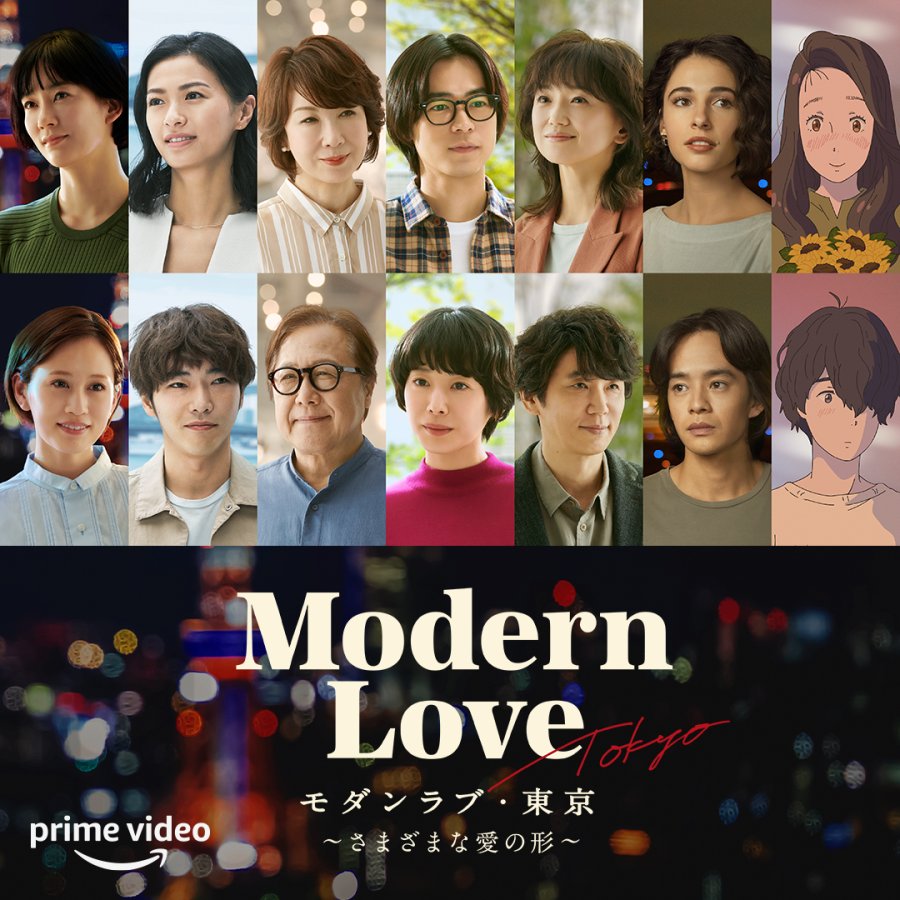
モダンラブ・東京~さまざまな愛の形 (Modanrabu・Tokyo Love in Its Many Forms/Modern Love Tokyo) - Amazon Prime/2022
  • 'Modern Love Tokyo' presents seven episodes of people finding, expressing, rediscovering, or holding onto love in Tokyo. Each episode features a different couple. 
  • This is one of multiple Asian adaptations of the American, largely NYC-focused, romantic anthology series 'Modern Love' that were released in 2022. 
Meh: Whereas I felt like I was clearly watching a TV anthology when I saw 'Modern Love' (and this Anne Hathaway scene from season 1 cemented my endearment for the series), watching 'Modern Love Tokyo' felt like sitting through a collection of short films, which made the series drag a bit. With that said, the only episode I can honestly say I disliked was episode 5, where a female journalist gets catfished by an unhoused man for two weeks, finds out, and wants to continue dating him because of their genuine connection. That episode dragged the most, and toward the end I couldn't tell what was real and what was in the journalist's imagination, or what I was meant to understand from what she may have been imagining. 
 
And while it felt progressive to see Mizukawa Asami ('Double Fantasy') and Maeda Atsuko playing a lesbian couple raising two young children together in episode 1, I didn't sense much chemistry between their characters. 

Better: Episode 6 is super cute! Naomi Scott plays a British woman temporarily hustling in LA who becomes unexpectedly smitten with one of her online English students, an advanced learner and grad student who studies corn (played by Ikematsu Sosuke). They continue communicating after his lesson subscription ends, and she even flies to Tokyo to spend time with him in person. Both of these lead actors impressed me, as this was my first encounter with Naomi Scott's acting (I only knew of her as a singer before she became Disney's live-action Jasmine), and I had no idea that Ikematsu Sosuke could not only speak English well but act well in English too. This episode is almost completely in English, and also references all the proceeding episodes and their main characters at the end, which makes me think that this was meant to be the final episode. Perhaps episode 7 is a bonus that the production team decided to add to the season later on.

Speaking of bonuses, I also thoroughly enjoyed episode 7, the shortest and the only anime episode of 'Modern Love Tokyo'. In it, an office worker named Tamami who doesn't feel special often spends time at a bar drinking wine and doodling. When the bartender unknowingly plays her favorite song from high school ("You May Dream" by Sheena & The Rokkets), Tamami reminisces about her short-lived romance with one of her schoolmates. Back then, she found a boy named Rin playing that song on the piano in their school's empty gym/auditorium, and they bonded over being Sheena & The Rokkets fans. Thinking about that time also reminds adult Tamami of how her art teacher encouraged her to have confidence in her skills, which motivates her to start posting her drawings on Instagram. She gains a following there, which leads her to reconnect with Rin, who's a professional musician now.

Best: Episode 4, hands down. Kaho (Sou's deaf friend in 'Silent') stars as a depressed graphic designer named Mai. Her debilitating depression forces her to take an extended break from work, and her dog groomer husband Kengo looks after her as she spends months at home wallowing, because wallowing (in addition to therapy and medication) is part of her healing process. That episode depicts depression so well, and it does so with a bit of humor and without relying on dim lighting and dark colors! Mai spending sleepless nights blaming herself for everything that's wrong in her life (work stress, co-workers sneak dissing her) and outside of her life (polar bears potentially starving to extinction, whales dying from consuming plastic garbage, forests dying from acid rain, cars polluting the air) seems ridiculous. Until you remember that one time in April 2019 when Notre-Dame de Paris was burning and you burst into tears, not for Notre-Dame, but because you couldn't help bemoaning how nothing ever lasts. (Indeed, that is a true story of mine.) Sometimes depression translates the sense of "I feel helpless, and that makes me feel frustrated and scared and not in control" into "Everything is my fault," which results in people like Mai blaming themselves for things that don't make sense to non-depressed people. And episode 4 displays that phenomenon in a serious but quirky way.
 
I also love how Kengo is willing to repeatedly affirm for Mai (because she asks him many times) that he won't divorce her, that he'll never hate her, and that he's going to stay by her side even if she spends most of her time laying around crying and her hair smells from lack of washing. Because he loves her, and as he reframes it, she's just "hibernating" for now. He provides the stability she needs to eventually come back to herself, and he sticks by her because he sincerely wants to, not just because he feels like it's his husbandly duty. And as an extra sprinkle on top, Mai and Kengo have the most adorable pug, who gets frequent camera time and adds a sweet touch to this heavy story.

Honorable Mention: Shinya Shokudo (seasons 1-3)/Midnight Diner: Tokyo Stories (seasons 4-5) - Netflix

Toward the end of July 2022, I randomly got inspired to watch 'Shinya Shokudo' from beginning to end. I'd already viewed all three of the original seasons (see my reviews for S1, S2, S3), and I'd been meaning to get around to the two additional Netflix seasons for years and just kept putting it off. So I finally stopped putting it off, but I started over from the beginning first. Five seasons, with ten episodes per season, spanning from 2009 to 2019, viewed by me from July 2022 to January 2023. 

Each episode is under half an hour long, but it took me a while to finish all 50 of them because I would only watch this show when I was eating. 'Shinya Shokudo' tends to be quite mellow and cozy-feeling, and since I'd already seen most of it previously, I figured watching it while eating my meals would help maintain my attention span as I progressed through the series. I wouldn't always remember to turn the show on when I sat down to eat, but I remembered often enough to start mentally referring to my viewing sessions as, "Let's eat and cry while watching other people eat and cry." (There's a lot of eating and crying on this show, y'all.)

Even though I'm not left with any more affection or nostalgia for 'Shinya Shokudo' than I already had before, there are no words to describe how powerful it was for me to see the "Cream Stew" episode (S2E6) again. I saw the young sex worker in the all-white suit and her white shoes and her updo come on screen, and memories of studying that episode and its script in class with Matsuhima-sensei at JCMU came flooding back to me. That was the episode that started it all, that inspired me to seek out the rest of the series in the first place, so taking that episode in anew meant a lot to me. 

I can't say that the Netflix seasons add anything spectacularly new to the series overall, and that was probably intentional on the production team's part since aside from brighter lighting and clearer film resolution, the visual and tonal continuity between seasons 1-3 and seasons 4-5 is pretty seamless. The ending theme songs are switched out almost every season, but "Omoide" by Suzuki Tsunekichi (RIP) reigns as the opening theme song for every single episode. With everything that matters about the show remaining the same, much of the plot being centralized inside or around one location (the titular diner run by everybody's favorite gangster-turned-chef), and many of the same actors making multiple appearances... honestly the most obvious signs of change and the passage of time that I noticed were the cellphones that characters used. You glimpse the full gamut of how cell phone technology in Japan evolved from 2009 to 2019, and I don't know why that's so fascinating to me, but it is. 

So there you have it, a shorter than usual J-drama roster this time around. If I had to pick a favorite between the two new shows I watched—which I do, because I always pick a favorite when reviewing J-dramas—I'd have to give it to 'Silent'. Even though it didn't give me what I was looking for romance-wise and was pretty subdued as a whole, learning more about deafness and the deaf community in Japan made seeing the show worth it. The care and dignity with which it's written are top notch, and watching the film CODA (2022 Oscar winner for Best Picture) in the midst of watching 'Silent' made me appreciate the latter even more. Give it a try if you are interested in representations of disability in media, prefer gentle love stories, or want to hear "Subtitle" by Higedan again and again.

 Now, off I go to find more J-dramas!

Thursday, January 19, 2023

10th Anniversary of DeelaSees

Well now! Today somehow makes 10 WHOLE ENTIRE YEARS since I started this blog. On January 19th, 2013 I was a college sophomore who had just turned 20 and had so many hopes for... welp. And I tried so hard to... oop. Never mind. Let's not dwell on that. Or those. Any of those.

Now, on January 19th, 2023 I'm a month and a half past 30 and... I don't know. That's the only answer I can think to give to any question that I might have for myself, or that anyone might have for me, about anything. I simply, truly, with astounding bafflement and searing disbelief, do not know.

In the first collaboration (of now two!) that I did with my book blogger friend Rachel, I mentioned how this blog has changed and how my future plans for itother than to keep doing like I been doing as best I can—were uncertain. DeelaSees started out as an online diary of sorts. Then after I graduated from undergrad, my life seemed to get a lot less interesting (plus I got deep into pen-and-paper journaling and became increasingly wary of oversharing here), so I focused on continuing to write book reviews and J-drama reviews. And in that 2019 collaboration with Rachel, I mentioned potentially sunsetting this blog and starting a new one upon turning 30, keeping DeelaSees available as a record (relic?) of my 20s. And I still would like to do that, if my means and the events of 2023 permit. 

(Maybe something like a professional website or an online portfolio, with my real name all over everything, is overdue? This blog is its own website, Young, Gifted and Abroad is another, I own the domains for both. But maybe it's time, been time, for an all-encompassing site that showcases all my work as well as me the person?)

But until then, I say all of the above to say this: Yeah, DeelaSees is 10 years old. I've kept this blog looking the way it does to help me grasp the sense of wonder I had when I started. And Danielle Graceme, the person who created this blog, hey, hello againis still here. I am still here. A lot less has changed than I assumed would by now, especially in the ways I assumed. But in the meantime and in between time, I'll continue to be here, writing my reviews... for now. And if you're still here to pick up what I put down? Then thank you!