Wednesday, March 30, 2022

ドラマ (Dorama) Time! 27 - pt. 2

You know what we're here to do. It's time for part 2 of my J-drama review! (Check out part 1 if you haven't already.)

いりびと-異邦人- (Iribito/Stranger/The Stranger) - WOWOW/2021
  • Naho is pregnant and comes from a wealthy family of art curators (the Ariyoshis), the most venerated of whom was her now-deceased grandfather. Her family even owns an art museum in Tokyo (Ariyoshi Museum), but she's been spending her pregnancy in Kyoto at her husband and mother's insistence due to the calmer pace of life there. Supposedly Kyoto is better for Naho's health.
  • While in Kyoto, Naho becomes entranced by the paintings of an unknown newbie who turns out to be Tatsuru, the young, mute, female apprentice of a highly-respected artist named Shozan. Shozan repeatedly blocks Naho's attempts to showcase Tatsuru's art in public, and Naho gradually discovers that Shozan is holding Tatsuru hostage and is jealous of his mentee's fresh and visionary talent. This makes Naho determined to free Tatsuru from Shozan and jumpstart Tatsuru's career.
  • Meanwhile in Tokyo, Naho's husband (Kazuki) and her mother (Katsuko) have a romantic history that briefly gets rekindled when Kazuki's gallery needs to be saved from bankruptcy; Katsuko agrees to let Kazuki handle the sale of a painting from Claude Monet's "Water Lilies" series—a masterpiece that Naho has treasured the most since childhood thanks to her grandfather's loving influence—on the condition that he sleep with her. Katsuko and Kazuki then attempt to sell more of the Ariyoshi collection when the family decides to shutter the museum behind Naho's back, only to learn that the most rare and valuable pieces are all in Naho's name. If they wanna cash in, they're gonna have to go through her.

I chose this drama because I enjoyed Takahata Mitsuki's previous performances in 'Mondai no Aru Restaurant' and 'Boukyaku no Sachiko', and I knew I could rely on WOWOW to deliver something dark and/or messy since it's a cable channel. Luckily for me, 'Iribito' is both dark and messy! I sensed that Naho's husband had something going on with her mom from the moment in episode 1 when Katsuko walks into his gallery and smiles at him in a "Hey babe" sort of way, and I sensed correctly! 

And if that weren't enough intrigue to kick this show off, there's an ominous feeling that surrounds Naho and Tatsuru's connection from the very beginning. When Naho is first mesmerized by Tatsuru's artwork at a Kyoto gallery, neither the gallery owner nor Shozan want her to have it. As if she would be crossing a line by buying it, offending Shozan by taking more interest in his mentee's work than his own, and therefore putting herself in danger by getting on Shozan's bad side. Granted, Naho probably should be scared! Shozan was involved in the death of Tatsuru's father whose success he envied—which Tatsuru witnessed and was so traumatized by that she lost the ability to speak for the next 17 years—he "adopted" Tatsuru and took over her father's house, and he trained her to be an artist just to force her to paint pieces that he can sell as he loses hand function in old age. But Naho is as stubborn as she is curious, so she buys the artwork anyway. Thus commences a battle of wills between Naho and Shozan that she's unlikely to win; the Kyoto art community is small, and Shozan's influence is wide-reaching. But Naho doesn't back down, even going so far as to give the $1 billion worth of masterpieces that she inherited from her grandfather over to a different Kyoto gallery owner in exchange for holding Tatsuru's first solo exhibition there.

Now, apparently 'Iribito' is based on a novel of the same name by Harada Maha, so I don't know if the potential lesbian vibes between Naho and Tatsuru are from the original source material or made up for the show. Either way, those vibes are clear and evident... up until the show changes its mind. Naho does seem oddly fixated on Tatsuru, and that fixation is immediate even before she knows who Tatsuru is. There's a moment in episode 1 where they lock eyes in an art museum as complete strangers, and Tatsuru becomes lodged in Naho's mind for the remainder of 'Iribito' after that. Naho's husband later has a dream about Naho sharing an intimate embrace with Tatsuru which made me think of 'Killing Eve'; you think Eve and Villanelle are drawn to each other simply because they have murder in common (Eve investigating them, Villanelle committing them), but then you realize they're actually hot for each other too! So I thought to myself, That's where we're going with this? Alright, bring it on! But the show teases the lesbian idea only to reveal in the final episode that *SPOILER* Naho and Tatsuru are sisters who didn't know of each other's existence until now. (Or at least Naho didn't.) But even if the two women weren't related and Kazuki's suspicions were correct, the bigger issue is that he doesn't truly understand Naho's gift for discovering masterpieces and the genius artists who make them. It's a gift that, as an art curator, requires profound dedication on Naho's part. So when Naho refuses to leave Kyoto and even insists on giving birth there and remaining there permanently, he accuses her of having an affair with Tatsuru because what else could make her so stuck on being in Kyoto? It couldn't possibly be Naho's appreciation for Tatsuru's craft, right? He couldn't possibly be projecting onto her for something he himself did WITH NAHO'S MOM, right? Right?

Believe it or not, Naho and Tatsuru being sisters isn't the only sordid family secret that gets revealed in 'Iribito', but I figure I've already spoiled enough of the scandalousness of a show that's only five episodes long, so I'll just leave it at that. On a lighter note, it's such a powerful moment when Tatsuru finally stands up to her mentor/abuser, regains her voice (literally), and escapes from him once and for all! From then on she and Naho get to live in peace, raising Naho's baby in Kyoto together, building up Tatsuru's art career, and living at a famous female calligrapher's residence that's full of other women too. So yeah, 'Iribito' is kind of sombre and understated, but it's also a surprisingly wild ride. Come for the stunning shots of Kyoto and its traditional arts, stay for the drama between high society art folks.
 

群青領域 (Gunjou Ryouiki/Ultramarine Area/Indigo Area) - NHK/2021
  • Kim Junhee is a Korean woman and the pianist of a popular Japanese band called Indigo AREA. The band started out as an instrumental one, but then vocalist Haruki was added to help the band gain more mainstream success, and Junhee and Haruki are now a much-publicized couple. 
  • But then, Haruki suddenly announces in the middle of a live-streamed performance that he's going solo, and afterward he tells Junhee that he resents her talent and has been dating another woman behind her back. All of this becomes a huge scandal, attracting extremely relentless media attention that Junhee can't handle.
  • Overwhelmed, Junhee escapes Tokyo and hides out in a seaside town, where she stays at a boarding house befriending the elderly woman who owns it and a man named Ren (the only other boarder there, who also saved Junhee from accidental drowning when she first arrived in town). She works at the local supermarket until her real identity is exposed by customers who record her defending her co-worker from the store manager's sexual harassment, and the altercation goes viral on social media. Junhee then returns to Tokyo to try to pick up the pieces with her bandmates, but winds up going back and forth to the seaside town when more scandals arise that make a successful Indigo AREA comeback seem impossible.
I mostly chose this show because the premise reminded me of 'Nagi no Oitoma'. A young woman is dumped/double-crossed by her boyfriend and has her career abruptly upturned, so she escapes to the countryside so she can heal in solitude, with the help of a few friendly new neighbors. 'Gunjou Ryouiki' sounds delightfully similar to that, right? Itaya Yuka ('FOLLOWERS') playing the band's manager also didn't hurt. And apparently I've seen lead actress Shim Eun Kyung in the Korean film 'Sunny', but I only saw it once when it was first released in 2011 and I didn't know who she was back then. Her Japanese is excellent by the way, at least from what I could tell, and in terms of what the role of Junhee required. Assuming it's not someone else's vocal stylings dubbed over hers, she even does some singing by herself in the final episode! Also, I realized that I somehow managed to watch two shows at the same time that both star relative newcomer Sumire in supporting roles; she played Tatsuru in 'Iribito', and in 'Gunjou Ryouiki' she plays the girl Haruki dumps Junhee for. She's styled so precisely in both shows that it didn't click for me that she was the same actress until I noticed that both characters had the same set of  hazel (grey? green?) eyes. 
 
The show keeps hinting at Junhee's traumatic past, memories of which cause her to have severe anxiety during an important performance. It turns out that Junhee had a little sister who died in a car accident when they were both very young, and Junhee always blamed herself for not being there to prevent it. This is set up to be this big emotional reveal, but she and Ren discuss it when they're alone together by the sea a couple of times and then that's it. I'd sensed that there might be some residual tension or even a confrontation between Junhee and her mother, but in the last episode she calls her mom to invite her to watch what's ultimately Indigo AREA's final performance, and then that's it. So the buildup to and revelation of Junhee's traumatic past is actually quite anticlimactic.
 
I definitely thought 'Gunjou Ryouiki' would focus more on Junhee's personal breakthroughs than on the ensemble as a whole, and the last few episodes did seem to drag a bit. But overall I thought the show was solid. Most notably from the ensemble, Reiji the guitarist is revealed to be gay, which becomes an unexpectedly significant subplot and actually doesn't end tragically! His roommate is in love with him but Reiji basically uses him as a sex buddy and substitute for the drummer Takuma, whom Reiji actually has feelings for despite Takuma being straight, having feelings for Junhee, and not even knowing that Reiji is gay. Reiji's roommate gets tired of being used and outs him to the press, which nearly breaks Reiji and throws another wrench into Indigo AREA's comeback plans. Nonetheless, all of the bandmates accept and support Reiji, and after hiding out at the boarding house with Junhee for a while, he finds it within himself to return to music and even apologize to this roommate for using him. (I didn't agree with Reiji apologizing to the person who outed him, but I suppose it's important for that character to make amends in order to demonstrate that he's not the user he always feared he was.) Reiji's arc impressed me, and also, the actor who plays Reiji (Hosoda Yoshihiko) is an excellent crier! 

By the end of 'Gunjou Ryouiki', the other band members decide to continue on without Junhee. Not because Indigo AREA is unsalvageable as is (it's not), or because Junhee has an outwardly-arrogant-but-fundamentally-insecure-hence-going-solo diva moment like Haruki did (she doesn't). Rather, it's because Junhee realizes she's always been motivated to play piano for other people's benefit, so she wants to explore playing piano for herself for once. And because her bandmates support her decision as a friend, they decide to split amicably. Everyone is beginning new journeys, which reminded me of 'Nagi no Oitoma' once again (where each member of its ensemble embarked on new paths as summer came to an end). Viewers are left with the theme that the boarding house obaachan puts forward in the beginning and that other characters repeat: Life doesn't necessarily have to be grand or complicated. Just be an honest person, do the things you really want to do, and make sure to eat and sleep well. Everyone has the right to live life as they please. Literally, 「楽しく生きたってバチなんて当たらないんだから」(Tanoshiku ikitatte bachi nante ataranainda kara; "Living in a fun way isn't a sin," or, "It's not like you'll be punished for enjoying your life").

All of the four shows I watched this time around were pretty chill; none blew my mind, but none greatly disappointed me either. So as far as favorites go, I guess I'll pick 'Iribito' for going in the most unpredictable directions. It's not an "in your face" type of show, but still I was on edge the whole time and never quite knew what to expect. Now, off to watch more J-dramas I go!

Friday, March 25, 2022

ドラマ (Dorama) Time! 27 - pt. 1

Look at me taking less than four months to write a new J-drama review after my last one! I guess it helped that I chose to only watch four shows this time around. This review is comprised of my selections from the autumn 2021 broadcast season in Japan, plus two shows on Netflix that I felt like watching just because. For part 1, I'm focusing on the Netflix shows:

全裸監督2 (Zenra Kantoku 2/The Naked Director Season 2) - Netflix/2021

  • The year is 1990, and after edging out his largest competitor in the 1980s porn video industry (see my review of season 1), Muranishi has even loftier goals than before. This includes rebranding Sapphire Pictures as Diamond Visual, getting access to satellite broadcasting rights, and massively expanding his roster of actresses and production staff so as to film and distribute new videos quickly and constantly. (Think of Berry Gordy's assembly line approach to talent development at Motown Records, except it's porn.)
  • However, Diamond Visual's frantic pace of production means Muranishi's not interested in creating pornographic masterpieces anymore, and his now-girlfriend Kuroki Kaoru, the former university student whose stardom sustained Sapphire/Diamond in its early years, has been relegated to spokesperson when all she really wants is to make a new video with Muranishi again. Meanwhile, Muranishi finds another muse in one of the newer, younger, more doe-eyed actresses, and Kaoru senses she's about to be replaced. All the neglect drives her to drink. A lot.
  • At the same time, the billionaire who owns the satellite channel Muranishi wants access to doesn't take Muranishi seriously and refuses to do business with him at first. Muranishi eventually gets his way, but the bubble economy in Japan bursts, resulting in massive debt that tanks Diamond Visual. (Getting scammed by two fake accountants also doesn't help.) Diamond Visual can't be salvaged, but as Muranishi crashes and burns, he risks also destroying his relationships with all of his friends/staff in the process. Oh yeah, and that same cop from last season (played by Lily Franky) is still collaborating with the yakuza to destroy Muranishi too.
This season was aight. They ruined the theme song (in my humble opinion) by adding a loud and unnecessary choir to it, but otherwise this season was aight. I watched it because I enjoyed season 1, and I watched season 1 because I was intrigued by the brazenness of an entire series being made about the Japanese porn industry in the first place. This time, I wanted to see what new directions the story would go in, and those directions were aight. While 'The Naked Director' has always about more than just porn (the yakuza, government policies on obscenity, and corrupt policing all feature heavily in both seasons), season 2 broadens the show's range of social commentary. For instance, in episode 1 Muranishi appears to be running for political office, claiming in a public speech that Japanese society should embrace sex and the distribution of porn because giving people that outlet to satisfy their lust actually reduces sex crimes. That's an interesting argument, but I'm also sure he's not considering sex crimes that may happen within the porn industry itself when he makes this argument. And what he's saying isn't meant to be taken seriously anyway, because in true Muranishi fashion, he's simply doing whatever he can to push the boundaries of what's socially or legally acceptable, thereby boosting his video sales. In short, his supposed political aspirations are only a publicity stunt.
 
The show also gives a brief nod to idol culture, with Diamond Visual making a series of thematic videos that supposedly recreate sexual encounters that women report having had with famous male pop stars. Even religion comes up too, when Muranishi tries to buy a religious organization's (cult's?) satellite broadcasting facility in an attempt to get ahead of the death of VHS that he correctly assumes will come one day. Ever ready with a sales pitch that makes porn sound like the most necessary thing in the world, he likens sex to religion in this way: both can be addictive, but they also help people prosper by giving them an escape and making them happy. The cult representative bluntly explains to Muranishi that, on the contrary, the less happy people feel, the more converts the cult gets, which means more revenue for the cult. But since Muranishi has made porn seem so profitable, and since the economy is on an upswing at that point and the cult's business isn't doing well anyway, the rep accepts Muranishi's offer.
 
Since 'The Naked Director' is loosely based on real events and real people, the 1992 economic bubble burst practically requires that this season be more somber than the previous one. But I wasn't prepared for how dark (like, DARK dark) Kaoru's storyline would become in particular. As I mentioned, Muranishi shelves Kaoru as an actress and she self-destructs in response to that, quitting Diamond Visual after Muranishi finally sets up a new video shoot for her but misleads her into thinking he'll be performing in the scene with her (he will not). She then moves in with a female friend, the longtime makeup artist-turned-assistant-director who leaves Diamond around the same time as her. After the bubble bursts and Muranishi basically runs everyone off of the Diamond compound, Kaoru returns and offers to start a new, non-porn-related business with him. (This is an olive branch; the idea she proposes isn't as important as simply being his collaborator/partner again.) But he rejects her, and that's the last straw. She returns home and attempts suicide by jumping over her apartment's balcony as a Billie Eilish song plays in the background (no joke). All is not lost, however! Kaoru eventually recovers, moves back in with her unwaveringly Catholic momI definitely did NOT see their reconciliation comingand studies art in Italy like she previously intended in season 1, so she does get a relatively happy ending. But she never receives the apology she deserves from Muranishi for how he mistreated her. Then again, maybe that would've been too out of character for him, no matter how wrecked he is by seeing her unconscious in the hospital.

There's also a love story between young gangster Toshi—who worked for Muranishi in season 1 but went a little overboard with his dirty work and got fired before ending up in jail and joining the yakuzaand Sayaka, the yakuza boss's favorite sex worker. I found that arc to be compelling but it does feel somewhat random in hindsight. Toshi rescues Sayaka from being the boss's plaything (pimped out to him by her mother of all people), but messing with the boss's girl is the biggest no-no, right? Especially when that boss is played by Kunimura Jun! You don't mess with that man! In all seriousness though, the show uses that conflict between Toshi and the boss to push Toshi toward finding refuge with some of his former Sapphire/Diamond friends, and eventually protecting them by severing any remaining influence that the yakuza has on them. So I guess that love story arc isn't so random after all. Anyway, the real reason I mention any of that is because I was so surprised and excited to see Nishiuchi Mariya playing Sayaka! The last production I saw her in was 'Totsuzen Desu ga, Ashita Kekkon Shimasu' in 2017, and I didn't recognize her in 'The Naked Director' at first. I just assumed she was an up-and-coming actress who happened to look very familiar for some reason I couldn't ascertain. But then I googled the cast list and saw that it was in fact Nishiuchi Mariya! Apparently she's been focused on modeling all this time and this her first J-drama appearance (her first new acting role, period) since 'Totsuzen Desu ga', so good for her! I say watch season 2 of 'The Naked Director' for curiosity's sake to find out how the story wraps up, or simply watch it to witness Nishiuchi Mariya's comeback.

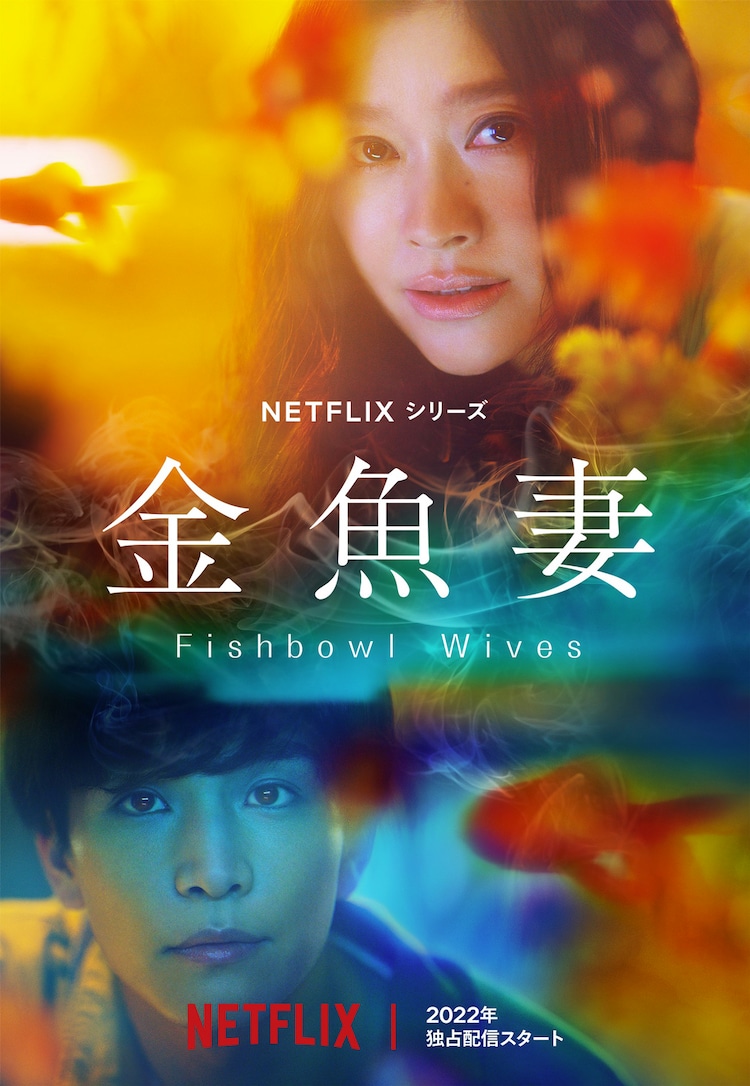
金魚妻 (Kingyo Tsuma/Goldfish Wives/Fishbowl Wives) - Netflix/2022
  • Sakura (Shinohara Ryoko from 'Otona Joshi') runs a high-profile hair salon business with her abusive husband. In their ritzy apartment building where social hierarchy is reflected by floor number, they live at the very top. Sakura used to be a gifted hairdresser, but since getting injured, she mostly just does what her husband tells her to do. This includes handling the management and PR aspects of their business, playing up their "perfect couple" image for the press, and not saying anything about him sleeping with other women (one of whom is their neighbor). 
  • Sakura visits a goldfish shop and becomes acquainted with Haruto (the shop owner) when he accidentally sprays water on her. He's young, kind, and passionate about nursing sick or wounded creatures back to health. Haruto is actually connected to Sakura's past injury, but neither of them realize this at first. Later, when Sakura's husband attacks her one night, she flees to Haruto's place and they carry on an affair while Sakura helps him run the goldfish shop.
  • But Sakura and Haruto can't live in their own world forever. While her husband tracks her down and tries to manipulate her into coming home, Haruto's wealthy family pressures him to quit both Sakura and the goldfish shop so he can take over his father's corporation. Meanwhile, five housewives from Sakura's building start having or considering extramarital relationships of their own.
I planned to watch this show once I saw the trailer for it on YouTube and found out about its February release date. I recognized Shinohara Ryoko in the trailer, assumed the show would be like 'Hirugao' (a 2014 J-drama about cheating housewives and why they cheat, which was groundbreaking at the time), and when I began episode 1 the floor-number-as-social-status element immediately reminded me of 'Suna no Tou' from 2016. So even though I didn't recognize anyone other than Shinohara Ryoko at first, 'Fishbowl Wives' had more than enough to retain my interest. And I actually did recognize more actors as I watched more of the show. Yuriha, the neighbor who brazenly sleeps with Sakura's husband and smirks in her face about it (played by Hasegawa Kyoko) also appeared in 'Cecile no Mokuromi'. Haruto (Iwata Takanori) was also Ishihara Satomi's baby daddy in 'Dear Sister'. And the man whose wife is a former runner and current alcoholic (Inukai Atsuhiro) was the object of the heroine's unrequited love in 'Oh! My Boss!'. 

It might merely be a convention of this show and not a reflection of real life, but I had no idea that goldfish could be such a big deal (especially not the small kind that Haruto sells, when koi fish also exist and are more impressive-looking to me). In the States, unless you're some kind of aquatic nerd like Haruto, fish as pets are basically living, breathing decoration pieces. In my mind they've always been rather inconsequential. But so many characters in the show are interested in having goldfish in order to feel less lonely, or hold onto a remnant of their estranged family, or repair their childless marriages, and so on. (The child thing is actually why Sakura goes to Haruto's shop in the first place, because this mysterious fortune teller/feng shui expert in her apartment building suggests it... while at the same time encouraging Sakura and the other women in the building to cheat on their husbands? As if cheating is the key to their personal growth and spiritual well-being? Because women pursuing their true soulmate or "twin ray" is more important than staying loyal to their unfulfilling marriages? Well, I honestly can't say I disagree with that last part.) I was genuinely surprised by the show's ability to use goldfish not only as a metaphor for how stifled and vulnerable these wives feel, but also as a believable vehicle for multiple characters' wishes and healing journeys.
 
Cheating is not merely a tawdry or simple thing in 'Fishbowl Wives'; each instance of cheating is given its own context. And not all of the wives follow through on their impulse to cheat, either. The one exception is Saya (the aforementioned runner-turned-alcoholic, also "Bansou no Tsuma"/"The Chaperone Wife" from episode 4), who is almost seduced by Sakura's husband. That is, until she receives a call from her own husband that makes her realize that they both just want to slow down the pace of their life, spend more time together, and get their relationship back on track (no pun intended). The rest of the wives featured on this show, though? Oh, they're getting busy and they've each got their own reasons! Episode 2 ("Gaichuu no Tsuma"/"The Outsourcing Wife") frames cheating as "outsourcing" sex when a woman and her husband aren't sexually compatible. Or, in Yuka's case, when the wife wants a baby but the husband isn't interested in sex at all, and her chaotic trash bag of an ex-boyfriend is aggressively making her feel wanted again. Episode 3 ("Bentou no Tsuma") centers around a cuckolding fetish, which surprised the heck out of me! Noriko's husband pressures his co-worker and her to touch each other in front of him so he can get aroused, only for Noriko to leave him for the co-worker when she realizes that the co-worker cares about her comfort and appreciates her homemade bentou lunches more than her husband does. And as much as I hated Yuriha's stank attitude toward Sakura and how she flaunts her affair with Sakura's husband, I was deeply intrigued by what episode 7 ("Kaisou no Tsuma"/"The Renovation Wife") sets up between Yuriha and one of the carpenters working on her overbearing mother-in-law's house. Two people with perceived blemishes on their bodies—both Yuriha and the carpenter have large dark spots on their faces, and the carpenter has a gigantic owl tattoo on his back that his wife resents—finding intimacy and acceptance through each other. That's a beautiful story, and I wish I could've gotten more of it. Yuriha's story gets less runtime than each of the other featured wives, and it felt like something was missing.
 
Hisako ("Zutsuu Tsuma"/"The Headache Wife") from episodes 5 and 6 is probably the wife I felt for the most besides Sakura, since Hisako and I have constant migraines in common. Unlike the dull ache I deal with on the daily, however, Hisako's migraines are frighteningly sudden and debilitating, striking whenever she gets stressed out or feels guilty about something. Her arc also illustrates how even the most principled or uptight person needs sexual gratification and tenderness, and sometimes attaining those things involves wrongdoing that they supposedly despise. Which would be, in Hisako's case, spending afternoons getting railed by a man she met in a park. However... PLOT TWIST (it's too good not to spoil, I'm sorry)! Her paramour is really her own husband! He cheated on her and she kicked him out, but the ordeal was so traumatizing that she disassociated to the point of erasing all memory of him from her mind. So when they first run into each other again in that park, she doesn't recognize him and thinks she's meeting this man ("Baba") for the first time. He eventually comes clean, sincerely apologizing to her and asking to reconcile, but I can't help but wonder what their tryst means in terms of consent because he initiated their sexual relationship under false pretenses. (Hisako consented to doing the do with "Baba", not with her estranged husband.) However, she accepts his apology and also wants to give their relationship another try, claiming that he always felt physically familiar to her but she couldn't figure out why until he revealed the truth. So I guess it's okay? Maybe?
 
'Fishbowl Wives' gave me much to think about, but at the risk of sounding too simplistic, I thought the ending was so dumb! Once Haruto's family learns that Sakura is a battered woman who previously did a huge favor for them in the past, then they (especially the family lawyer, who's also Haruto's ex-girlfriend) stop treating her like scum and help her get a divorce. Haruto also rejects his dad's offer to take over the corporation once and for all. So there is literally nothing keeping these lovers apart. All obstacles have been removed. And what does Sakura do? She breaks up with Haruto because she wants to work with her now ex-husband on reviving their business, which has fallen into disrepair since she initially left. But I don't understand why she couldn't have done that and continued to be with her new man at the same time! It's not like she wanted to get back together with her ex-husband in a romantic way. Besides, she ends up cutting ties and opening her own salon two years later anyway; that's two years that she and Haruto could've been enjoying their relationship on non-adulterous terms! Ugh! So yeah, 'Fishbowl Wives' has a steamy premise and an anthology-esque approach to exploring women's adultery that I found smart and engaging, but the conclusion made the show just aight to me overall. As for our lead actress, Shinohara Ryoko's acting was brilliant as usual, and I don't know why she was giving me Jennifer Lopez vibes with how she played Sakura, but J.Lo definitely kept coming to mind. Maybe it was some of Shinohara's facial expressions when delivering certain dialogue? Or because the initial meekness of Sakura combined with her arduous attempts to escape her abusive husband reminded me of J.Lo's performance in the movie Enough? No clue, but even now I can't shake the thought.

Am I feeling just "aight" about my remaining J-drama selections as well? Gotta read part 2 of this review to find out!

Monday, February 28, 2022

BOOKS! (Sometimes I Trip On How Happy We Could Be + Black Love Matters)

I'm back! Took me a bit, but I'm finally writing my first book review of 2022, featuring the first book that I finished this year along with the first book that I both started AND finished this year. I tend to read fiction more than nonfiction, and I can't remember ever abiding by the theme of the month that my reviews are written in, but nonetheless, here I am focusing my February review on two nonfiction books about love! Both are essay collections, written and curated by Black women writers/podcasters, that were published within the past six months or so. First up is a memoir-in-essays examining dating, sex, body image, and pop culture from the author's early days growing up in 1980s Nashville to her current life as a forty-something writer in Brooklyn. And then, an anthology of essays about why Black representation matters in romance media and especially romance novels, edited by a librarian who was the 82nd guest on my podcast (Young, Gifted and Abroad).

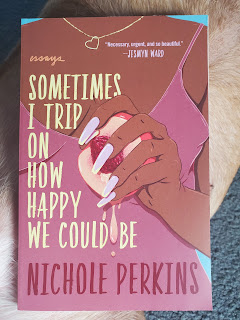
Sometimes I Trip On How Happy We Could Be: Essays by Nichole Perkins
 
I was introduced to Nichole Perkins through her guest appearances on a charming yet honest race, current events, and pop culture podcast called Another Round (thanks and RIP as of 2017). However, it wasn't until I became an avid listener of a different podcast called Thirst Aid Kit (thanks and RIP as of 2020) that I gained a good grasp of her voice and her writing. On Thirst Aid Kit, Perkins and her friend/co-host Bim Adewunmi explored how desire ("thirst") functions within pop culture, and what makes certain Hollywood men so thirst-worthy. My favorite segment was when, toward the end of each episode, Perkins and Adewunmi would compete by reading aloud the fanfiction-style "drabbles" they'd written, usually depicting imagined meet cutes or scenes of intimacy with the male subject ("thirst object") of the week. These drabbles were exquisitely written—sometimes adorably sweet, more often disarmingly hot—and knowing that Perkins already published a book of poetry and had a memoir on the way, I was excited to read more of her romance-related writing. Released in August 2021, Sometimes I Trip On How Happy We Could Be was the last book to arrive from my four-book Harriet's Bookshop order that I placed as a podcasting anniversary gift to myself last summer, and it's the third of the bunch that I can now say I've had the honor of reading in its entirety. (See also While We Were Dating and The Secret Lives of Church Ladies.) 
 
Though not in strictly chronological order, Sometimes I Trip features around 20 essays about Nichole Perkins's journey as a Black woman who spent her whole life from birth to undergrad in the South, and how she developed her sense of self as a culture critic and a deeply sexual person. She shares the facets of music, TV, and film that have profoundly influenced her understanding of desire and desirability, including Prince, whose 1987 song "If I Was Your Girlfriend" inspired the title of this memoir. (I'll go ahead and embarrass myself by volunteering that as girl who was born in the '90s and who respected Prince but wasn't in any way a committed fan, when I first saw the cover reveal for this book I initially assumed that the title referenced Beyoncé and Jay-Z's "'03 Bonnie & Clyde." Obviously Perkins, a Prince super-fan, learned me something in her essay dedicated to Prince, because of course she wrote one. It's titled "Prince's Girl." ) Additionally, Perkins shares about her family, growing up in Black Nashville, HBCU campus life ("HBCUs Taught Me"), social media/dating app culture, her complicated relationship with academia from New Orleans to Los Angeles to Columbus, her faith journey (deconstruction?), and her experience with depression and low self-esteem in her fluctuating body. And of course, as I've alluded to, there's much talk about sex. Not only in terms of some of the guys she's been involved with and why, but also in terms of how she's flipped the concept of being "fast"—an insult/warning against sexual activity or inviting sexual attention that's often hurled at young Black girls before we even get the chance to understand our bodies as our own—into a catalyst for coming into her own power. Whether as the girlfriend, the other woman, the casual hook-up partner or somewhere in between, with time and experience Perkins has learned to replace the potential shame of loving sex so much with pride in her ability to make men weak overcome, obedient, and well... thirsty. And that sense of power is bolstered by knowing what pleases her. For example, skinny men are high on her list because, apparently, skinny men got that hammer. Also, it's possible for cunnilingus to last for nearly four hours straight. Also also, her first time having sex occurred exactly four months before the day I was born. You learn something new every day.
 
As I tend to do with poetry, story, or essay collections, I marked the essays I liked most so that I could discuss my favorites here, but there ended up being too many for me to pick concrete favorites. So I'll just touch on the ones that stick out the most in my memory as I write this. "The Night I Took Shrooms" (where Perkins tries magic mushrooms in the presence of the white dude she's seeing at the time, referred to as "The Hippie") was revelatory, to say the least. It's a trip that goes from orgasmic to terrifying to guilt-inducing to orgasmic again, and in the end she proves to herself that she can dabble in recreational drugs without losing control or becoming addicted like her abusive father had. I was astounded by the candidness of "Scandalous," where she recounts a lengthy affair she carried on with a married man during her "ho phase"—even unintentionally becoming some sort of friends (?) with his wife—and essentially argues that the other woman isn't necessarily a bad person, that she deserves empathy too. That essay was a difficult one for me to digest, because her assertions that she shouldn't be held responsible for men's actions (as in, the mistress shouldn't be the only one blamed for cheating) and that she couldn't care more about her lover's wife than he himself did (as a response to the guilt of hurting a fellow woman by sleeping that woman's husband) aren't invalid, but still... I don't know. I guess it's the lack of remorse that rubs me the wrong way? She refuses to feel ashamed about getting hers, which I understand. But as grown as I supposedly am, the messiness of the situation was a little too grown for me.
 
On a different note, I was very much touched by the way "The Women" highlights some of the influential female relatives in Perkins's childhood. These include her great-grandmother Muh'Deah who combed Perkins's hair and shared a fluffy bed with her whenever she spent the night, her aunt C who took her on many a Saturday lunch/bookstore/wisdom excursion as a breather from the parental chaos at home, and her older sister Izzie whom she's always strived to emulate and comfort. Furthermore, her discussion of sexism in the church, being mad at God, and why she's still a believer but doesn't attend church anymore ("A Woman Who Shouts") was realer than real. And her retelling of how the procedural drama 'Bones' helped her crawl out of a depressive episode ("Bones, Depression, and Me") definitely struck a chord with me. There are only two essays I don't wish to revisit, and only because they're nightmarish accounts of boundary violation and rape. One is "Don't Take Roses Away from Me" (which involves a sex partner who stealths her, then stalks her after she ends things), and the other is "Call It By Its Name" (which involves her being raped by a male friend while incapacitated at a party, not being able to call it rape until 10 years later, and still keeping that person in her life in the present). They're definitely worth reading, even if only to honor Perkins's courage in publicly divulging such ordeals; I just don't think I can handle reading them again, is all.

I like Sometimes I Trip. I was hoping to LOVE it, given how much I've enjoyed Perkins's podcast work and online presence. But it's very clear that Perkins believes in romance and wants to be in a long-lasting committed relationship, and thus she writes about men a lot in this book. Granted, I fully knew to expect this, but for some reason it still felt like... a lot. Her writing about men so much isn't because she can't see herself outside of them (quite the opposite), but because being married to a worthy man is something she still genuinely wants so that she can express all the love she has to give. And instead of just waiting around until she finds The One, she gets it in in the meantime and has tons of stories to tell about doing so. Those are things I sometimes found hard to relate to as someone who simply isn't trying to be bothered with men like that, at least not right now. (My "I'm not like the other girls" phase definitely included turning my nose up at those who devoted what I believed to be too much of their brain space to boys. Even now with the ubiquity of dating and relationship discussions on social media, I resist the impulse to dismiss or judge but sometimes find myself wondering, Don't y'all have anything else to talk about?) But that has more to do with my own positionality; it's not a fault of Perkins's writing at all. Although I do enjoy escaping into the sensual and emotional scenarios that romance writing offers, I'm realizing that I'm not much of a romantic in real life. I almost wish I were, though, so that I could appreciate this memoir even more. Still, it's a very solid "like" for me! If you're interested in the experiences of Southern Black women, sexual exploration, book/TV/movie/internet references, liking what you like even if it's considered taboo or basic, or memoirs that get really personal, then read this book!
 
Favorite quotes:
"In adulthood, the names for sexually adventurous women were worse, but I still wanted to explore the power I felt when men shook in my arms... I chose to lean in to the desires pulsing through me, and maybe that's what saved me" (15).
 
"No, this tingling sat at the top of my spine, waiting for me to notice it, and when I did... I thought I heard a deep voice, which sounded like it was smiling at me, say 'I'm here'... I started to worry, until I realized maybe God didn't want anything from me at all. Maybe He just wanted me to know He knew who I was... it seemed like that was the answer and it was enough: I think I needed to now God knew I existed. Church made me feel lonely, but that sprinkle of the Holy Ghost let me know God knew me" (21, 23). 

"I made sure to rub my damp crotch all over the arms of her furniture. I hoped that whenever she napped on her sofa, she dreamed of Black women with big butts parading naked through her home" (58).

"We went to high school together but didn't become close until adulthood brought us back home in ways neither one of us expected. We bonded over the special misery you're in but not allowed to complain about when your plans go to shit and you come back home... people think you have nothing to do. We were also both creative women who tried to be 'good girls' when we're really magic" (213-14).

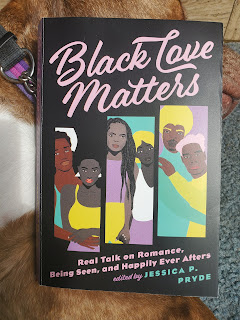
Black Love Matters: Real Talk on Romance, Being Seen, and Happily Ever Afters edited by Jessica P. Pryde
 
I met Jessica P. Pryde—a librarian and co-host of Book Riot's When in Romance podcast, among other things—virtually last summer. I was looking for potential guests for Young, Gifted and Abroad and returned to an old Twitter thread I'd found where tons of writers, including Jessica, had chimed in about their study abroad experiences. In late July 2021 I interviewed her about her time in Arezzo, Italy and we had a lovely conversation about that and her journey as a romance enthusiast. When I first looked through her website to prepare for that interview, I'd skimmed through info about her upcoming essay anthology called Black Love Matters being slated for release in February 2022, so I knew that it was on the horizon. However, the enormity of how significant this book was didn't set in until after I'd spoken to Jessica and looked even more into her work than before. (Sadly, I got caught up in the moment of the interview and missed an opportunity to ask her about the book itself.) From there, I was already sold on Black Love Matters because Jessica had edited it, but I was doubly sold when I discovered that one of the essays was written by Jasmine Guillory (the author whose work first set me on a path toward embracing romance novels at the end of 2019). So I ordered my copy in late January when I happened to learn that Barnes & Noble was having a 25% off preorder sale that week. BLM is not only Jessica's first book, but according to her "Acknowledgments" section it's also the first nonfiction book that Berkley Romance has ever published.
 
I have to say, more of the essays in BLM focused on historical romances than I was anticipating. Historical romance (historical fiction overall) is generally not what I'm into, but I appreciated reading the praises that multiple essayists sang to Beverly Jenkins—who is stunningly thorough in "A Short History of African American Romance", and who is the "queen of the Black historical romance" according to fellow essay contributor Piper Huguley. And how could I not be moved by contributors' passionate and well-substantiated arguments for Black love throughout the centuries (yes, even during slavery times) deserving more attention, research, and care in romance novels set in the past? It's not "inaccurate" to acknowledge Black people loving each other and guarding their love fiercely in places and time periods where many don't believe them to have existed, or to have been capable of knowing love at all.
 
As for favorite essays, I've got a few. First off, I didn't realize until after reading Carole V. Bell's "I'm Rooting for Everybody Black: Black Solidarity, Black World-Building, and Black Love" that I was already following her on Twitter, and now I feel wonderful about that choice because Bell sure knows how to analyze the mess out of a book! She calls Black romance "the literature of hope and progress", and of the three books she focuses on I was very nearly sold on How to Catch a Queen (Alyssa Cole), thanks to Bell expertly parsing out how Black solidarity and social justice are integral to the main couple's HEA (Happily Ever After). And I actually was thoroughly sold on I Think I Might Love You (Christina C. Jones); the excerpts Bell includes from it are excellent in getting the novella's sense of humor across, so I'll definitely be reading that one. Also, I'm so delighted to have now been introduced to Sarah Hannah Gómez through "Romance Has Broken My Dichotomous Key"! Her analytical yet accessible and blunt yet compassionate writing style, her hilariousness, and our similarities in personality made me almost say aloud while reading, "Ooh. I like you." I kid you not, my notes in the margins of her essay included, and I quote: "Holy crap. Are you me?" (re: being resistant to reading romance and then changing her mind), and "Oh girl. You and I were the same child" (re: deciding in grade school that age-appropriate books were too immature, and casting those aside for adult books in order to seem more impressive to others). Gómez's essay is a true joy, offers phenomenal insight into academia/libraries/publishing, and is the one that I'm still thinking about most.

Another favorite is the essay Jessica wrote herself, "Interracial Romance and the Single Story". I respect the self-awareness with which she, a Black woman married to a white man, examines the predominance of Black romance characters being involved in interracial (especially Black woman/white man) relationships. She draws attention to a concerning trend where mainstream American media and their consumers would rather see "half a Black couple instead of a whole one." I've mentioned in previous reviews about how so far I've chosen to read romance novels that feature two Black people (or more than two, shout-out to Harbor) falling for each other. And being a person with no romantic experience who doesn't spend much time thinking about "Black Love" outside of the romances I read, I still haven't been able to articulate why this reading preference of mine persists. (Other than it possibly being a holdover from my attempts to limit white infiltration into my life via the media I consume as a trauma response to 45 being elected in 2016. That's another story for another day.) But since searching more earnestly for steamy reads that'll be up my alley, one thing I've noticed is that in American romance novels, most of the male love interests seem to be white men, and I can admit that this bothers me. Because it's like, why are white men the prize? Do they deserve love more than any other variation of man out there? 
 
I've seen glowing online recommendations for romances written by Black women and other women of color, but when I look up some of those authors' work and see a white man framed as The Guy in most or all of their books, it gives me pause. I don't take offense to interracial relationships at all, it's just that the prevalence makes me wonder, Why do you specifically desire white men so much, sis? What's with this fixation? Of all the dream men you could've conjured up to write about, why are so many of them white? Some of it's a consequence of the industry, as Jessica explains that having a prominent white character makes a story more likely to be produced or published in the mainstream, and more likely to be marketed well and thus sell well. But still. Obviously this is my own hang-up, and my intention isn't to cast judgment, especially not with me being relatively new to valuing the genre. My point in saying all this is simply that I appreciate Jessica's essay for making me feel like I'm not crazy for noticing what I've noticed. In her summation, it's not that portrayals of interracial romance are a negative thing; it's that they shouldn't eclipse Black romances just because they're a convenient way for publishers, production companies, and consumers to appear diverse without confronting their discomfort with Black lovers loving each other. And color me elated when Christina C. Jones further echoed my sentiments in her essay, "Black Indie Romance", which is the final full essay of the anthology. I love the way she breaks it down, "I asked for blue. Purple is fine. But it is not blue." (See my favorite quotes below for the full quote.) Jessica gets it, and so does Christina!
 
Last but not least, I can't say that "(Black) Love Is... (Black) Love Ain't" is one of my favorites in terms of enjoyment, but I also can't deny how thought-provoking it is in acknowledging the ways non-conventionally beautiful people get left out. The guts! The guts with which Da'Shaun Harrison refutes the notion that Black Love is revolutionary, because it's still largely reserved for people and characters who are deemed to be conventionally desirable according to white supremacist standards ("Black people who are thin, light-skinned, non-disabled, cisgender, heterosexual, Christian, and/or moneyed"). They go on to argue that the concept of Black Love as we call it, as shaped within the prevailing anti-Black world's definition of "love", is neither possible nor something we should want because it's a concept that continually harms and fails us. Which is a downer, sure, and not an argument I can say I fully agree with at this time. But as someone who falls under multiple categories of undesirability just like Harrison does, I think it's impressively bold to declare that Black people loving each other is necessary and worthwhile for community-buidling's sake, while still pointing out the flaws in believing that Black Love in and of itself will save all Black people from the ills of this world. I respect that boldness.

So, with all that being said. If you are looking for greater context on how Black romance writers and Black romantic characters fit within the history of romance as a genre, want book or author recommendations, want to know why romance novels should be taken seriously (and why some people in romance won't be begging you to take them seriously either way), are curious about how Black romance writers and enthusiasts got their start in a similar style to the Well-Read Black Girl anthology, or simply want to support a Black woman's first book, then read this essay collection!

Favorite quotes:
"I have done what people who look like me often do; I've found slivers of myself and constructed my own belonging in that mosaic, and I am better for it. But queer Black readers of romance should not have to piece themselves apart for the tiniest bit. They should be able to walk into a bookstore and be spoiled for choice. And the next time some tired student needs a release from her coursework, she should be able to find more options to build a queer Black girl TBR than she reasonably has time to read" (Nicole M. Jackson, 76-77).
 
"How can Black Love be the entity that creates room for Black subjects to love, with all its limitations, if the Black fat is excluded? If the Black queer is reduced only to sex and not their ability to be intimate in myriad ways? If the Black trans person can only ever be a fetish one takes part in and not a living being one gives love to? What is the utility of Black Love if disabled persons are requested, or demanded, to 'cure' or hide their disabilities?" (Da'Shaun Harrison, 214).
 
"...Black romance gets pushed out. And we're expected to accept it as representative of something it is not. I have not, am not, and will not argue against interracial relationships having their time in the sunthose relationships are just as important and valid as any other.

What I don't accept, though, is being inundated with purple when I asked for blue.
Purple is fine.
But purples is not blue" (Christina C. Jones, 226).

 "I can probably guess who I might be without you, but I don't care to ever find out if it's true" (Jessica P. Pryde, 239).

Friday, January 28, 2022

Why "As" Is My Most Favorite Song Ever

That part where Stevie Wonder ad-libs,

Do you know you're loved by somebody?

Makes me cry every single time. Because when he sing-shouts that line, what I hear is, "Don't you know there are people out there who love you? Don't you know you're loved by the universe? Don't you know that God loves you?"

We all know sometimes life's hates and troubles
Can make you wish you were born in another time and space
The desire to not be alive, or to be able to dip out of life for just a little while, has visited me many times in my 29 years. However...
But you can bet your life times that and twice its double
That God knew exactly where he wanted you to be placed
...These lines are what finally contextualized 1 Corinthians 12:18 for me personally when I was in my early-mid twenties and desperate for answers/guidance: "But in fact God has placed the parts in the body, every one of them, just as he wanted them to be." I am still desperate for answers and guidance, but somehow this verse gives me comfort, as maddening as it is for me to feel so out of control of everything.

"As" is a song about unconditional love that never ends between two people, but I always imagine it as the Creator reassuring me that I'm still worthy of being loved (even if it doesn't show up from the direction I'm expecting or in the timing I'm expecting, or it does show up but I can't internalize it). Reassuring me that I still have a place in this world and at this moment in time.

Thursday, December 30, 2021

BOOKS! (Harbor + The Secret Lives of Church Ladies)

Well, what do you know? Look at me writing two book reviews in one month! For the holidays I've been chilling in Louisville, and my only real goal for these last few lingering days of December has been to write another book review before "this year" becomes "last year". So here I am doing just that! This review features two novels, each of which I read cover-to-cover in two days, and one of which is the last book I'll be finishing in 2021. Both of them were written by Black women and both contain romance in varying degrees of graphic detail. First up is a very NSFW romance novel about a polyamorous relationship that forms between three Black 30-somethings who've lost their significant others in the same murderous incident. And then, a collection of stories about Black Southern women who grew up in church yet find themselves bucking tradition in favor of desire, self-discovery, and doing what they want simply because it feels good. 

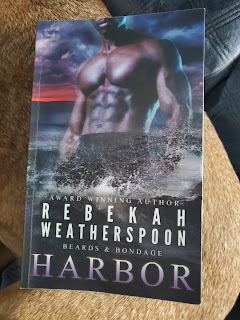
Harbor by Rebekah Weatherspoon
 
I'm not going to divulge the real reason why I chose to read this book, because I don't want to tell on myself (at least not any more than I already have in nearly 9 years of keeping up this personal blog, amirite?). So I will just say... previously I've mentioned how I became aware of Jasmine Guillory because her name seemed to be everywhere in the online spaces I frequented around 2019, which made me want to know what the hype was about. I found out about Rebekah Weatherspoon, another Black woman who writes romance novels, in much the same way. And when I looked through Weatherspoon's bibliography, Harbor (part of her "Beards & Bondage" trilogy) seemed to be her most prominent example of a romance between Black people. But not between just two Black people, oh no. Three. Harbor is a standalone novel and also the third and final part of what Weatherspoon calls, "This sort of bizarre, extremely horny romantic suspense trilogy" in her very succinct thank-you paragraph at the end. In this review I will occasionally refer to the book's characters by their first initials: VS = Vaughn and Shaw. CVS = Corinne, Vaughn, and Shaw. VBS = Vaughn, Brooklyn, and Shaw.
 
Vaughn is a patent and trademark lawyer living in Boston, and his boyfriend Shaw lives on Cape Cod crafting custom wood furniture for wealthy clients. Brooklyn, a Bronx native, is an assistant district attorney living in Brooklyn. There's no reason for VS and Brooklyn's paths to cross, until VS's girlfriend Corinne and Brooklyn's fiancé Josh are killed in a double murder-suicide—Corinne was being stalked, and the stalker killed her and Josh while they were in bed together. In other words, Brooklyn and VS learn of their significant others' deaths and their infidelity at the same time. Blindsided, they each mourn their dead lovers while nursing their anger at being lied to and cheated on. (From the little I've learned thus far about polyamorous relationships, being polyamorous doesn't necessarily mean that partners can have sex with whoever else they want, whenever they want, and without discussing it first. Every relationship is different, and poly partners often have their own agreements and boundaries set in place. For CVS, being polyamorous meant that they were all in a committed relationship with each other, and so Vaughn and Shaw rightfully feel betrayed by Corrine's secret involvement with someone else.) 
 
Feeling emotionally raw and desperate for answers, Vaughn seeks Brooklyn out at Josh's funeral, and they agree to meet at a Boston hotel with Shaw reluctantly in attendance as well. Although Shaw doesn't initially think any good can come from this meeting, and the concrete answers that Vaughn and Brooklyn seek will elude them forever, the trio find unexpected comfort in each other since only they know exactly what it's like to be dealing with this uniquely messed-up predicament. And although VS are attracted to Brooklyn and vice versa—while in Brooklyn's hotel room, they all acknowledge that each one of them is foine—the three agree that the loss is too new, and that they're too close to the situation to become sexually involved with each other so soon. They don't want to "trauma bond" (at least not yet), so Brooklyn and VS go their separate ways, but not before Shaw returns to her room to make out with her a little bit. Sixteen months later, Brooklyn randomly texts Shaw about just having "the worst sex of my life," and Shaw invites her to spend a weekend at his house on the Cape so that he and Vaughn can rectify that for her. Thus begins Brooklyn's introduction to Vaughn and Shaw's BDSM lifestyle, which includes a secluded beach, Shaw's sex dungeon, and agreed-upon terms and conditions.

While Vaughn is the one to initiate contact with Brooklyn and he technically has sex with her first (at Shaw's instruction), to me Brooklyn and Shaw still seemed to have a more intense connection between just the two of them. What Corrine did is clearly called "cheating", but when Shaw visits Brooklyn alone and kisses her, that's not considered crossing a line, and I was confused about that. V knew S was going to visit B's hotel room again, and V knew S probably wasn't going there just to talk, but it's not clear whether V and S discussed the kiss afterward or not. Additionally, there are two occasions where B and S play without V (one occasion V knows about and is partially present for via FaceTime, the other one he's completely left out of and doesn't know about until after the fact). So jealousy is briefly addressed within VBS's arrangement, but it wasn't always clear to me what counted as boundary-crossing for them and what didn't. 
 
There's an obstacle that's somewhat randomly thrown in to manufacture what I now understand to be a common or even expected trope in romance story structures: The couple (throuple?) break up or otherwise separate in the third act, making it all the more rewarding and meaningful when they manage to find their way back together again by the story's conclusion (happily ever after/happy for now). One of the detectives investigating the double murder-suicide shockingly rolls up on VBS when they're at brunch during one of their kinky weekends on the Cape, and he clearly questions and disapproves of VBS being together. This scares Brooklyn and VS into ceasing contact so as not to raise further suspicion and potentially be treated as suspects in the case. However, that obstacle arises and disappears in a matter of 13 pages (I counted). The more important conflict lingering from that scare is B and VS needing to admit that they want more than just sex with each other; they want to be a polyamorous "unit", even with the emotional and professional risks that come with being committed to (and public with) such a relationship. For Brooklyn in particular, who's new to this and whose career would be most at stake out of the three, the run-in with the detective forces her to decide whether she's willing to break norms and potentially be exposed in order to pursue love with these two men.
 
Speaking of their love, I would've liked to read more of VBS's relationship after they made up, like how they grew to further understand each other's likes and dislikes (one more play scene wouldn't have hurt). We go from them reconciling on Brooklyn's sister's farm to them having a commitment ceremony—as close to a wedding as they can get, since their union won't be legally recognized—on that very same farm 16 months later. And Brooklyn does recap the major happenings of that in-between time, but I wanted to know more of the details. For example, there's a specific act that B keeps thinking about once she and VS first start doing their kink stuff together, and she finally gathers the nerve to request it, only for S to insist on delaying it until the three of them have discussed all the health concerns related to it. Which I thought was excellent! A thoughtful approach to doing-the-do safely. Wonderful. But then it never comes up again. I'm sure that over the 16-month course of this trio's revived relationship leading up to the commitment ceremony, B got to experience the act that she wanted done to her, but it just seems strange to keep mentioning something, as if the reader is being primed to look forward to it, and then never actually show it happening.
 
I learned so many new things from reading Harbor, and one of them is a potential reason for why some folks prefer poly relationships in the first place. This was fascinating to me because as an introvert with no romantic experience, being in a relationship with multiple people at once is not the first idea that comes to mind when I think about dating. And admittedly, in the past I did entertain the heinously ignorant supposition that bisexual, pansexual, and/or polyamorous people might simply be indecisive or greedy. But thankfully, Vaughn helped me consider that there are some people who overflow with so much love and affection that they can't help but want to share it with as many others—selected and vetted others, in Vaughn's case—as possible. Furthermore, if that's the case, then perhaps it's necessary to share one's affection with multiple partners, rather than risk smothering one partner with all of that love and the needs that come attached with it. That's an idea that had literally never occurred to me before, and through Vaughn, Rebekah Weatherspoon presents it in a way that makes perfect sense.
 
Something else that I find brilliant about Harbor is how it contests whether bonding over trauma is really so dangerous if the parties involved prioritize honesty at every step. The novel contains lots of talk about feelings, as VS and VBS are constantly checking in with what each person needs or wants in the moment. "What do you need?" is a question that is asked quite frequently. Brittany, Vaughn, and Shaw are each recovering from the trauma of death and infidelity as they probe the potential of this new entanglement, and they want to take care of each other while still processing their respective emotions as authentically as possible. Not too long ago, I read a Korean webtoon called "Ouroboros" (by Songhyel) that was somewhat similar to Harbor in framing polyamory as a means of exploration and healing amidst PTSD. A cop is abducted, held hostage for days, and repeatedly raped by his brother-in-law, and after losing his wife and being suspended from his job, he starts dating a younger colleague and a rich heir/party boy at the same time. And what you assume is a love triangle gradually morphs into a poly situation where the colleague and the heir's respective desire to have the cop to themselves takes a backseat to them collaborating to support the cop through the trauma responses he's exhibiting. In hindsight, I'm glad that I read that webtoon before arriving at Harbor, because it enabled me to approach the novel with a more open mind. If you're curious about kink/BDSM, recovery from loss, and how a polyamorous relationship might play out between 30-something Black professionals, then read this book!

Favorite quotes:
"But none of that is going to happen 'cause as it turns out this motherfucker was cheating on me... and I can't even take this giant diamond ring off my finger and throw it in his face, because he's dead" (15).
 
"I can want good things for myself. I can want real happiness. I can want whatever the fuck I want. If I want sex to be a part of my life again, why wouldn't I want it to be good? No use in wishing for mediocre" (71).  

"On top of that, she's a plus-size Black woman. How many times a day do you think she's getting some messaging that she's undesirable? Fifty? A hundred?... So, I think it makes sense that if we want her to be with us in any long term way we prove to her that we aren't using her and that her needs and her very real fears are being met" (151).
 
"Trust me. It's part of the process. You've done the mourning. It's time to do something stupid. It's another signpost on the road to better health" (205).

"You don't have to apologize for getting off" (210-211).

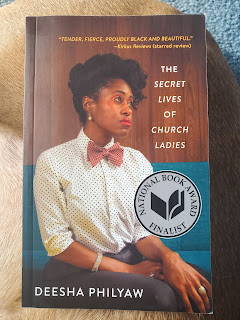
The Secret Lives of Church Ladies by Deesha Philyaw
 
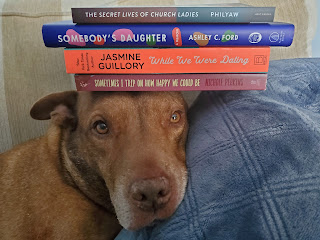
I've been hearing about this story collection almost nonstop since it was published in 2020; people have been raving about it, and apparently it was a surprisingly huge critical and commercial hit for West Virginia University Press (a relatively small publisher). With the beginning of summer 2021 came my copy of The Secret Lives of Church Ladies, one of four books that I ordered from Harriett's Bookshop in Philadelphia as a 3rd podcast anniversary present to myself, thanks to a gift card from my very generous friend Marlee. (See also While We Were Dating.) I called myself starting to read it in November, but set it aside, then re-started it on Christmas Eve, and finished it the day after Christmas. Also, I would like to add—purely for bookworm and slight fangirl purposes—that I posted this photo of my dog Julia with my Harriett's purchases on IG (see the bottom of this review), tagged the authors of each one in said photo, and Deesha Philyaw followed me as a result! That was on August 20th, and as of this writing she's still following me! How cool is that? I've never had a famous author follow me before. But let's stay on topic. Moving on!

In nine stories ranging from the 1980s to Y2K Eve to the present, Black Southern female characters (ages 14 to super grown) narrate their romantic and sexual discoveries. They give into temptation with intention, hone in on the desires of their hearts, and amend or discard the limiting beliefs they learned from growing up in church as need be. From two closeted 40-year-old teacher besties having an annual New Year's Eve date-night-in at a hotel far from home, to a real estate agent entertaining her man friend while her Eddie Levert-obsessed and dementia-diagnosed mother sleeps in the next room, every story in TSLOCL makes some direct or indirect mention of women getting it on, enjoying sexual pleasure even in taboo or supposedly forbidden situations. In fact, seven of the nine stories include characters who sleep with married men, or used to. (There's even a story titled "Instructions for Married Christian Husbands", which is one woman's detailed set of stipulations that married men must agree to before she allows them to have sex with her.) Such characters are not "chosen" in the way that Black women are conditioned in church to value being chosen, but then again, becoming someone's wife isn't an objective that they've based their entire identities and personalities on anyway.
 
Of the stories, an undeniable standout (and the source material for the book's peach-focused 2022 UK cover) is "Peach Cobbler". Marvelously, it uses a girl named Olivia innocently confusing the local pastor for God—the married Pastor Neely to whom her mom secretly provides both culinary and carnal sweets for over a decade—to examine how often grown church ladies also treat their male church leaders like God, and how silly that is. Olivia's mom even treats Pastor Neely as if he's the head of her own household, letting him hit it once a week, not allowing Olivia to badmouth him or ask questions about his presence in their home, and making a peach cobbler every week (EVERY WEEK!) that only he gets to eat when he visits, otherwise it gets thrown in the garbage. The titular peach cobbler works as a metaphor or stand-in for, to put it most plainly, pussy. ("My mother's peach cobbler was so good, it made God himself cheat on his wife", "You got the best cobbler in the world right here", and so on.) Peach cobbler also represents sweetness, something that Olivia's mom intentionally deprives her of. Whether that sweetness be a taste of the dessert her mom expertly makes, or permission to attend her wealthier classmate's birthday party, or her mom being a little softer with her sometimes, Olivia mustn't grow up expecting too much from life. Or so her mom asserts.
 
Come to think of it, Olivia and her mother remind me of Dana and her mother Gwen from  Silver Sparrow (Tayari Jones), wherein Gwen welcomes Dana's polygamist father to her home like a king once a week while Dana is expected to stay in a child's place, abiding by this arrangement and not revealing their existence as her dad's secret second family to anyone. Gwen at least cares a bit more about how her relationship with her man impacts her daughter. But Olivia's mom doesn't seem concerned at all about the uncomfortable and unfair circumstances that she's forced her daughter into, practically screwing the pastor right under Olivia's nose, well into Olivia's teenage years! And just like I did with Gwen, I tried and failed to not judge Olivia's mom for her choices. Granted, I've never been "sick with desire" or taken under by it, as Olivia describes her mom in the story. So maybe I just don't get it due to lack of experience. Maybe it's just something about certain Black women of a certain age from a certain time period (much of the action in both Silver Sparrow and "Peach Cobbler" takes place in the 1980s and early 1990s, in the South). But come on! What kind of subservient behavior are these characters modeling for their daughters, prioritizing men's pleasure and security over their own just to hold onto a fraction of said men's time and attention? Don't mothers owe their daughters better than that? Lord have mercy, did "Peach Cobbler" blow my socks off and horrify me at the same time.
 
Despite the amount of time I've just spent addressing "Peach Cobbler", my favorite story in TSLOCL is actually "How to Make Love to a Physicist" for the same reason that my favorite story in Love in Color (Bolu Babalola) was "Thisbe". It's about a plus-sized Black woman finally learning to feel more at home in her body, while taking hold of the fulfilling kind of love and physical intimacy she's just now realizing she deserves. Extra points for this particular Black woman (Lyra) working with a therapist to overcome her self-sabotage—she and the handsome physicist she's met at a STEM conference are feeling each other, but she ghosts him twice—ditching the girdles and the sucking-in that her super religious mother has always insisted on, and being a late bloomer at owning her curvy and jiggly body at 42 years old. With all that said, "Peach Cobbler" is definitely a close second favorite. And my goodness, these character names! Caroletta, Tasheta, Arletha, Mayretta, Kachelle, Timna, Lajene... and those are just the names I'd never heard of. Others I'd heard before but hadn't anticipated seeing in print, attached to characters in a much-publicized, much-nominated, and much-awarded novel like this one. Now that I have, I couldn't be more delighted. Another delight was recognizing quite a few names that Deesha Philyaw listed in her acknowledgments, and I was most pleasantly surprised to see Bassey Ikpi (I'm Telling the Truth, But I'm Lying) and Melanie Dione mentioned. Before I realized they were writers and also friends of TSLOCL's author, I was first introduced to them both via podcasts (Bassey on the "This Too Much" spin-off from The Black Guy Who Tips, and Melanie on The Bad Advice Show).

Earlier this week I encountered an application question asking me to talk about a Black woman, femme, or non-binary person I've learned from, and I impressed myself with my response, so I'm including it here to conclude this review:  
Speaking of The Secret Lives of Church Ladies, there is one story called "Eula" where Deesha Philyaw likens cunnilingus to prayer, and another called "How to Make Love to a Physicist" where she likens consummation to consecration, and I have never read the sexual and the spiritual juxtaposed in that way before, the way she does it. I no longer subscribe to the purity culture I was raised in, but I was still surprised to read the comparisons that Philyaw made. I am still thinking about those comparisons, and I feel myself being challenged to more deeply contemplate sex—especially unmarried and non-heterosexual sex—as sacred and holy.  
If you've ever questioned the faith you were raised in (especially its rules about what women and girls  should or shouldn't be doing), longed for someone to love you back, wanted to act on your desires without being judged, or if you want to read these stories before they're adapted into an HBO show written and executive produced by both Deesha Philyaw and Tessa Thompson, then read this book!
 
Favorite quotes:
"Do you think God wants you, or anybody, to go untouched for decades and decades? For their whole lives?... all those women at church who think they have to choose between pleasing God and something so basic, so human as being held and known in the most intimate way. If God became human once [then] why would he make rules that force such a painful choice?" (9-10).

"Closed mouths don't get head!" (25).
 
"'So you don't have to worry, anymore, Mama,' I said, 'about me wanting to be anything like you. I swear, my life won't be anything like yours. Because it will be sweet, and it won't be crumbs'" (74). 

"I say all of this to say that sometimes wheels are set in motion long before the spark is manifest. Is that the same thing as fate? I don't know, but I do know that rare, brilliant events take time" (113).

"You, the infantilized husbands of accomplished godly women, are especially low-hanging fruit. Ripe for the picking with little effort on my part... I build monuments to my impulses and desires on the backs of men like you" (146, 153).

"You're not a nobody, Mama... You're... someone who can't give me what I need. But you're not nobody" (174).

Sunday, December 19, 2021

BOOKS! (Quicksand + Passing)

Believe it or not, I had my November book review all planned out in advance! I was going to write about Nella Larsen's Passing and Viet Thanh Nguyen's The Sympathizer, and even gave myself deadlines for finishing those books! (The Netflix release date for Rebecca Hall's film adaptation of Passing was set for November 10th, and my local Phi Beta Kappa chapter had a virtual book club discussion scheduled for The Sympathizer on November 17th.) And did I finish either of those books by those deadlines, or even before the month of November ended? Nope! Hence, no November book review. 
 
However! I'm proud to announce that now, not only have I finished Passing (1929), but I've also finished another Larsen novel titled Quicksand (1928), which is semi-autobiographical. You see, when I first heard in 2018 or 2019 that the Passing film was in the works, I planned to read the book ahead of time just like I did with Ma Rainey's Black Bottom. But when I got on Thriftbooks back then, I didn't just order a copy of Passing by itself. No, I ordered The Complete Fiction of Nella Larsen: Passing, Quicksand, and the Stories (edited by Charles R. Larson, no relation), which includes three short stories, Quicksand, and then Passing at the very end. And since the residual straight-A student in me felt obligated to read the entire collection, it took me a while to finally reach the work that Larsen is most known for. Today I'm reviewing both novels, which were each set, written, and published in the latter half of the 1920s, during the Harlem Renaissance.
 
Quick note about the short stories, though. "The Wrong Man" is about a fancy Long Island wife who worries about her past as a kept woman being exposed, when her ex shows up at an elite party that she and her husband are both attending. "Freedom" is about a man who uses a business trip to NYC as an excuse to permanently escape the girlfriend he wishes to be rid of, only to be overcome with guilt and grief when he learns that she has died giving birth to their baby (who also died). And "Sanctuary" is about a young man somewhere in the South who convinces his friend's mother to hide him from the police, but he might not be safe with her either once she learns what crime he committed. If those sound interesting to you, then feel free to read the collection that I got. Otherwise, I'm sure Passing is available on its own, or there are editions out there that just have Passing and Quicksand together and nothing else.

Quicksand by Nella Larsen
 
Helga is a chronically dissatisfied woman (likely dealing with depression), and no matter where she goes, her misery sets in at some point. As the daughter of a Danish immigrant mother and a Black absentee father, she grew up in Chicago among her white stepdad's relatives, and as the only Black (biracial) person in her family, she always felt out of place. But that sense of feeling out of place endured as she got older, even at the Black boarding school that her uncle sent her to after her mother's death; Helga found comfort in being among kids who looked like her, but also felt alienated by not having a loving family to go home to like her peers did. In the present, Quicksand opens with Helga working as a teacher at a boarding school for Black girls in the Southern town of Naxos. She's frustrated with the school's restrictive codes of dress and conduct, and disgusted by the fact that the school is clearly a project for white Southerners to make a show of being charitable to the Black students and staff; the school can cultivate a new generation of good Negroes who will stay in their place and entertain no lofty ambitions that might threaten the white Southerners' sense of social and financial superiority. Helga is fed up with the school and never fit into Naxos anyway, so she quits her job, boarding a train back to Chicago that same day. Thus commences a cycle of Helga fleeing from location to location, believing upon arrival that she's finally found the happiness she's been searching for and an environment that suits her, only to feel the urge to escape to greener pastures again once she gets tired of the place or it somehow doesn't meet her expectations. 
 
She nearly goes broke in Chicago (without references, she can't even get hired to do domestic work, which seems to be the only thing people are hiring Black women for at the time), until the YWCA hooks her up with a gig as an assistant to a Black woman who gives lectures on "the race issue". This gig takes Helga to New York, specifically Harlem, where she finds a circle of educated Black friends who enjoy the finer things in life just like she does. But then she comes to resent being sequestered with so many Black people all the time, and being confined to a lesser life in America simply because she's Black. Then one day she unexpectedly receives some "I don't want to be associated with you anymore because you're Black, so never contact me again" money (that's me paraphrasing) from her Chicago uncle to the tune of $5,000, which would equate to approximately $80,000 in 2021. This windfall has Helga feeling like, "I'm not like the rest of these Negroes!" (I'm paraphrasing again but that's essentially her sentiment when she realizes she has the money to escape America now), and she dips off to Copehnagen, Denmark where her mother's rich sister and said sister's husband welcome her with open arms. Remembering a childhood trip visiting family in Denmark, Helga naively believes that there are "no Negroes, no problems, no prejudice" in Copenhagen, and that she'll find people who appreciate and understand her there. People, I would argue, that she already has in Harlem, until she decides that being just another Black person isn't good enough for her. But I digress.
 
Helga lives the life of luxury that she feels she's always deserved, only to realize that although her aunt and uncle do seem to genuinely care for her as a person, they also want to use her as a show pony for their wealthy associates. More specifically, they hope that Helga's exotic qualities as a Black woman will appeal to a famously arrogant painter that they want her to marry, enabling Auntie and Unc to enter an even higher social echelon. Unfortunately for them, Helga refuses that dude's proposal, and after two years in Denmark she decides that she misses "her people" and wants to be around Black folks again, so she returns to Harlem. But in Harlem, her former roommate and best friend is now married to Dr. Anderson, the man who was the principal of the Naxos school, the man that Nella has been reluctantly in love with, and the only man who ever saw through her and could tell she was searching for something missing in her life. After being kissed and then rejected by Dr. Anderson, Helga drunkenly stumbles into a church on a rainy night and gets "saved". (It's pretty clear that she's just hungover and needs a place to dry off and cry, but she's so in need of relief that she gets swept up in the fervor of the church service and considers herself "saved"). She then immediately latches onto the first man who expresses interest in her, seducing a visiting reverend who walks her back to her hotel that night. Seeing in him a chance for stability and happiness (any man with means will do at this point if it means escaping the dead end she's once again reached in New York), she convinces him to marry her soon after their tryst and lands right back in the South. Helga's living as the reverend's wife in a small Alabama town, shunned by the largely female congregation and encumbered with too many babies born in quick succession. Now with her own children involved, once she inevitably gets tired of her life this time, it's much harder for her to get up and flee again.
 
I genuinely believe that most of Helga's trouble and isolation are due to the fact that for so long, she craves social status and upward mobility more than anything else. From her perspective, Black people are just as unwelcoming to her and rigid about social hierarchy as white people because she doesn't have a family (no recognizable name or connections), but as I understand it that's because she focuses on ingratiating herself with only bougie Black people. If she spent time with more Black folks who weren't so well off or at least weren't so snobbish about wealth and ancestry, I highly doubt that she would've had such a hard time finding people who welcomed her, without judgment or ulterior motive, regardless of her mixedness or lack of family. But she's an educated woman who likes nice things, who's described as having a "craving for smartness, for enjoyment," and for her I guess that's something only high society Black people can give her. Speaking of which, I didn't realize that elite Black people might look down on someone like Helga. With the colorism that often accompanies bougie Blackness to this day, no less back then, I'd figured that our light-skinned protagonist could easily claim a place among the elite. And yes, Helga does have privileges due to being half-white, light-skinned, and college-educated. But she neither comes from a well-established family nor subscribes to elite Black people's ideas of what will uplift the race (rigid standards for ladylike-ness, etc.), nor is she involved with the movement for racial equality, all of which makes her a target of ire or complete disregard.
 
Reading Helga frequently made me feel like I need to check myself, because I too have dealt with the loneliness, crushed idealism, and resentment that she feels as a new working person struggling to adjust to the so-called "real world". Perhaps, like Helga, I'm always looking elsewhere, for somewhere grander, for a place and people who will make me feel like "The king undisputed, respected, saluted, and seen for the wonder I am" (word to Scar from Disney's 'The Lion King', whom I kept thinking about when reading this novel). And if that's the case, and like Helga I never seem to be truly and lastingly happy in any situation, then maybe my expectations are too rigid? Maybe the world hasn't caught up to my wants yet, or maybe I have an over-inflated sense of who I am and what I deserve. It's definitely something to think about. And if I may get a bit philosophical, lately I find myself questioning more and more whether the pain and suffering of this life are actually worth it, and I wonder if it might be more benevolent to not force new people to join us in the turmoil we're already facing on this side (since children don't ask to be born). Helga, however, takes this idea to an extreme and asserts on more than one occasion that Black children in particular are better off not being born, since life in America is so unrelentingly wretched for Black people and there is no escape. These thoughts come up in Helga's bitterest moments, so maybe she doesn't even truly believe what she's saying. But to think that I would have any ideas remotely in common with someone who dares to imply that Black Americans should just die out? That's terrifying! Black people are historically known for making our own self-hood, our own fun, our own art, our own culture, our own wonder to balance out the strife of being in this country, and I could never imagine wishing our stuff away like that. (And that's silly anyway, because in the most generalized terms, if Black people cease to exist then racist white people get what they want. And we can't have that! Think about what you're saying, Helga!) So yeah, maybe the strife hasn't been worth it and still isn't, but we're here now. What I'm finna erase myself for?
 
Remember that the novel is titled Quicksand, as in sinking into something inescapable, so suffice it to say that Helga doesn't get a happy ending. The final sentence of the novel is bone-chilling! Especially considering that it follows multiple paragraphs of Helga on post-partum bed rest, formulating plans to escape and reclaim her life once more, plans that are doomed to never come true. The ending is so incredibly dark and despairing when you think about how limited Black women's options are in late 1920s America, even if they are educated, have mixed/light-skinned privilege, have wealthy relatives, and were once able to flit off to a foreign country when the going got rough. As someone who's not light-skinned I found myself still relating so much to Helga's search for meaning, belonging, and happiness, even in those moments when I didn't want to relate to her at all. And given how men are both the key to Helga's survival as well as the reason why she's trapped in the end, I think it's such a supreme, applause-worthy show of pettiness that Larsen dedicated this novel to her cheating husband (E.S.I., or physicist Elmer Samuel Imes). I don't know for sure that she meant it in a petty way at the time, but that's how I'm taking it now! If you've ever struggled with adulting or are interested in the Harlem Renaissance, the racial politics of the 1920s, how confusing it is to be a Black person living with internalized anti-Blackness, and how an independent woman might fare in this time period, then read this book!

Favorite quotes:
"These were her people. Nothing, she had come to understand now, could ever change that... How absurd she had been to think that another country, other people, could liberate her from the ties which bound her forever... Ties that were of the spirit. Ties not only superficially entangled with mere outline of features or color of skin... Thankful for the appeasement of that loneliness which had again tormented her like a fury, she gave herself up to the miraculous joyousness of Harlem. The easement which its heedless abandon brought her was a real, a very definite thing" (125). 
 
"Not that she intended to remain... No. She couldn't stay. Nor, she saw now, could she remain away. Leaving, she would have to come back. 
 
This knowledge, this certainty of the division of her life into two parts in two lands, into physical freedom in Europe and spiritual freedom in America, was unfortunate, inconvenient, expensive... mentally she caricatured herself moving shuttlelike from continent to continent. From the prejudiced restrictions of the New World to the easy formality of the Old, from the pale calm of Copenhagen to the colorful lure of Harlem" (125).
 
"They say [that] if one stands on the corner of 135th Street and Seventh Avenue long enough one will eventually see all the people one has ever known or met. It's pretty true, I guess. Not literally of course... It's only another way of saying that everybody, almost, sometime sooner or later comes to Harlem, even you" (129).

Passing by Nella Larsen 
 
Irene and Clare are both light-skinned Black women who grew up together in the South Side of Chicago; Irene had a loving family with middle-class means, whereas Clare lived with her alcoholic father and often had to rely on the generosity of their neighborhood. Between the two, only Clare was light enough to "pass" for white. After her alcoholic father died when she was fifteen, Clare was taken in by her white great-aunts (who treated her like a maid) in another part of town, and after a certain point she stopped visiting the South Side altogether. Twelve years later in 1925, Irene and Clare run into each other in the rooftop restaurant of a fancy hotel. Both are married and are only visiting Chicago for the summer; Irene lives with her doctor husband named Brian and their two sons in Harlem, whereas Clare (who lives as a white woman now) spends most of her time in Europe with her white banker husband named Jack and their daughter. Clare claims that she's been trying to reconnect with folks from their old neighborhood, and insists that Irene and another light-skinned female acquaintance of theirs come to Clare's house for tea. The gathering is at best weird and at worst downright dangerous, as Clare introduces her guests to her virulently racist husband. Jack proudly hates Black people—Clare lets the man call her "Nig" as some twisted inside joke!—but apparently has had so few interactions with them that he has no idea that he's in the presence of three Black women at that very moment. Irene receives a letter from Clare before departing Chicago, but vows to never again have anything to do with Clare because she's still angry about Clare selfishly prioritizing her own loneliness over her former friends' comfort and safety.
 
That is, until 1927 (where the novel opens), when Irene receives another letter from Clare, announcing her arrival in New York and requesting to see Irene again. Irene refuses to respond and destroys the letter, but an obstinate Clare shows up at Irene's house, invites herself to the charity dance that Irene is organizing, and keeps showing up at Irene's house and events over the following months, insisting on their friendship and using Harlem as an escape from her white life. While she cares nothing about Blackness and feels no kinship with Black people as a whole, and while she used to firmly believe that immense wealth made passing worth the cost, now Clare misses elements of Black life and dips her toes back into it when she can, sneaking over to Harlem whenever Jack's out of town on business. And at first Irene, who is often swayed by Clare despite her best efforts to the contrary, warms up to the new friendship that forms between them. Eventually, however, she tires of her friend's near-incessant presence, and she even becomes convinced that Clare and Brian are having an affair. With Clare and Jack's move to Switzerland approaching, Irene plans to inform Jack about Clare's trips to Harlem in order to get Clare whisked out of town and out of her life faster. But when Irene realizes that Clare's no longer afraid of being exposed, she catastrophizes that the freedom of divorce will make Clare's behavior more unpredictable than ever (like moving to Harlem forever or skipping off to Brazil with Brian), and she flips her strategy. Now she's dogged about preserving Clare's secret so as not to jeopardize her own marriage and lifestyle. But then Irene, Brian, and Clare attend a house party together one night, and the proverbial ish hits the fan. Irene is determined to not let Clare be free. And she means that.
 
I knew going into this that most of discussion about "passing" would center around Clare, so color me shocked to realize that Irene is technically passing as well when they meet on that hotel roof in Chicago. They've both been allowed entry because of their perceived whiteness (white people can't detect that they're Black), but Clare is the only one who lives as a white woman all the time, and Clare is the only one described as "passing" in that scene. Later in the novel Irene uses the phrase "going native" to describe her own occasional form of passing, which is temporarily blending in with whiter surroundings for the sake of convenience. I'm pretty sure I learned previously that there are varying approaches and gradations to passing, but for some reason the way it's framed in this novel felt like brand new information that I'd never considered before. I'd always assumed passing to be final; once people pass, they're gone forever, striving to never see or be seen by the Black people who knew them, and to never interact with another Black person as if they're fellows. But over breakfast one morning, Irene and Brian discuss the phenomenon of people who pass eventually becoming dissatisfied and risking exposure to return to their old haunts, because all that they've gained from passing somehow isn't enough. That's exactly the predicament that Clare is in.

I've been careful not to look too much into the book or film versions of this story so as not to spoil anything for myself (and so I can formulate my own thoughts), so perhaps this is old news... but I definitely sensed some queer subtext between Irene and Clare. Irene repeatedly analyzes Clare's physical appearance and marvels at Clare's beauty in her mind, and it's just about the only thing she verbally compliments Clare on. She feels caressed or even "seduced" by Clare's smile and voice (attributes that Irene fixates on the most, in addition to Clare's eyes), and she also frequently describes Clare's laugh as musical. In fact, that laugh is what she finally recognizes her old friend by when Clare re-introduces herself in Chicago. Furthermore, as previously mentioned, Irene is repeatedly persuaded by Clare to do things she doesn't want to do, especially when it comes to meeting up with Clare and allowing Clare to join her activities. And sure, being easily swayed by a friend's prodding and convincing doesn't necessarily mean you're attracted to or in love with them. Some people are simply skilled manipulators, adept at getting their way. But it sure did make me wonder. 
 
On the other side of this relationship, Clare (and by extension other deserters who try to dip their toe back into the Black life they left behind) reads like an ex who wants that old thang back. Except rather than a lover, that old thang is the feeling of being around other Black people. But perhaps that old thang she wants back is also Irene? In all honesty, it's still not clear to me why she's so stuck on Irene of all people. Yes, Irene has the sense of community that Clare lost, and Irene's family looked out for Clare when they were children, but it's implied that other people on the South Side helped Clare as well. So why Irene? Was it just her misfortune to cross paths with Clare when she did, and get trapped in Clare's web? Irene doesn't dwell on the "why her" of it all, but she does try her darnedest to impress upon Clare that she should stop coming around or at the very least be more careful given her dangerous situation (as a supposedly "white" woman who doesn't want to be discovered hanging around Black people). And those conversations read to me like arguments between forbidden lovers, where one tries to break it off gently while the other refuses to stay away, preferring to forsake the risks, insert herself into the other's presence, and demand answers for why she's being ignored and rejected. So like I said... queer subtext, yeah?

On the second page of the novel Irene describes Clare as selfish, having nothing sacrificial about her and "no allegiance beyond her own desire", and I really should've taken that as the warning that it is, because that description is NOT an understatement. Lord have mercy! Clare has no consideration or sympathy for anyone but herself—it's like her brain literally can't fathom that her actions have consequences or that other people have both feelings and the wherewithal to tell her no—and when her actions inconvenience others or even put them in danger, she simply expects them to understand her motivations and forgive her. Not that she truly cares about forgiveness anyway, so much as she cares about getting her way. To put it plainly, Clare shows up at Irene's house one October, and proceeds to turn Irene's life upside down within the span of a few months. Blows it up. And while Irene takes it upon herself to match Clare's ruthlessness and is eager to spill the beans to Jack at one point, she still can't bring herself to out Clare as Black. As a fellow Black person, Irene still feels a duty (more to their race than to Clare specifically) to not put Clare in danger by exposing her truth. And it's a duty that Irene resents, but no matter how frustrated she gets, she just can't shake it. Obviously she winds up keeping the secret for more vindictive reasons by the end, but I couldn't help but be struck by the way loyalty to the race manifests within this toxic friendship.
 
Don't be mistaken, though. Passing has some fun bits in it too! During their encounter in Chicago, Irene tells Clare about an upcoming vacation to Idlewild, Michigan (which was a resort town for Black people in the first half of the 20th century), and as a lifelong Michigander that was a pleasant surprise to me. I just learned about Idlewild within the past couple years, so I was glad to see its significance confirmed in this novel. On another note, it made me chuckle to later read Irene's anecdote about belatedly realizing that a woman she'd met multiple times was "fay", as in "ofay", as in white. Even though it's not a word I've ever used—some might call it a slur but in my opinion it's a word that doesn't really have teeth, much like "cracker"—for some reason it amuses me to know that Black people have been calling white people "ofays" for so long, even all the way back in 1927 and probably before then too. If I were to compare the two novels, although both address the dilemmas of being a light-skinned and/or biracial Black woman in America in the 1920s, Passing is shorter, more tightly-written, faster-paced, and has more interpersonal drama, whereas Quicksand is more introspective and covers more ground both emotionally and geographically. I was thoroughly impressed by both, and continue to marvel at how Nella Larsen was able to write works which, even through linguistic changes that have happened over the decades, are still so easily readable nearly 100 years later. With that said, I feel drawn to Quicksand more because of how much I related to Helga's lows. But as for Passing, if you're like me and must read the book before watching the movie, or you're interested in frenemy situations, strained marriages, colorism and social mobility, the intellectual milieu of the Harlem Renaissance, and the potential regrets of passing, then read this book!
 
Favorite quotes:
"White people were so stupid about such things for all that they usually asserted that they were able to tell; and by the most ridiculous means: fingernails, palms of hands, shapes of ears, teeth, and other equally silly rot. They always took her for an Italian, a Spaniard, a Mexican, or a Gypsy. Never, when she was alone, had they even remotely seemed to suspect that she was a Negro" (178).
 
"If, at the time of choosing, Clare hadn't precisely reckoned the cost, she had, nevertheless, no right to expect others to help make up the reckoning. The trouble with Clare was not only that she wanted to have her cake and eat it too but that she wanted to nibble at the cakes of other folk as well" (212). 

"She paused in her dressing, seeing with perfect clearness that dark truth which she had from that first October afternoon felt about Clare Kendry and of which Clare herself had once warned her—that she got the things she wanted because she met the great condition of conquest, sacrifice" (268).